
Method and system for maintaining a communications protocol session
a communication protocol and session technology, applied in the field of maintaining connections within the communication network, can solve the problems of client to continue waiting for the actual response, erroneous time out error, and activity may take a significant amount of tim
- Summary
- Abstract
- Description
- Claims
- Application Information
AI Technical Summary
Benefits of technology
Problems solved by technology
Method used
Image

Examples
Embodiment Construction
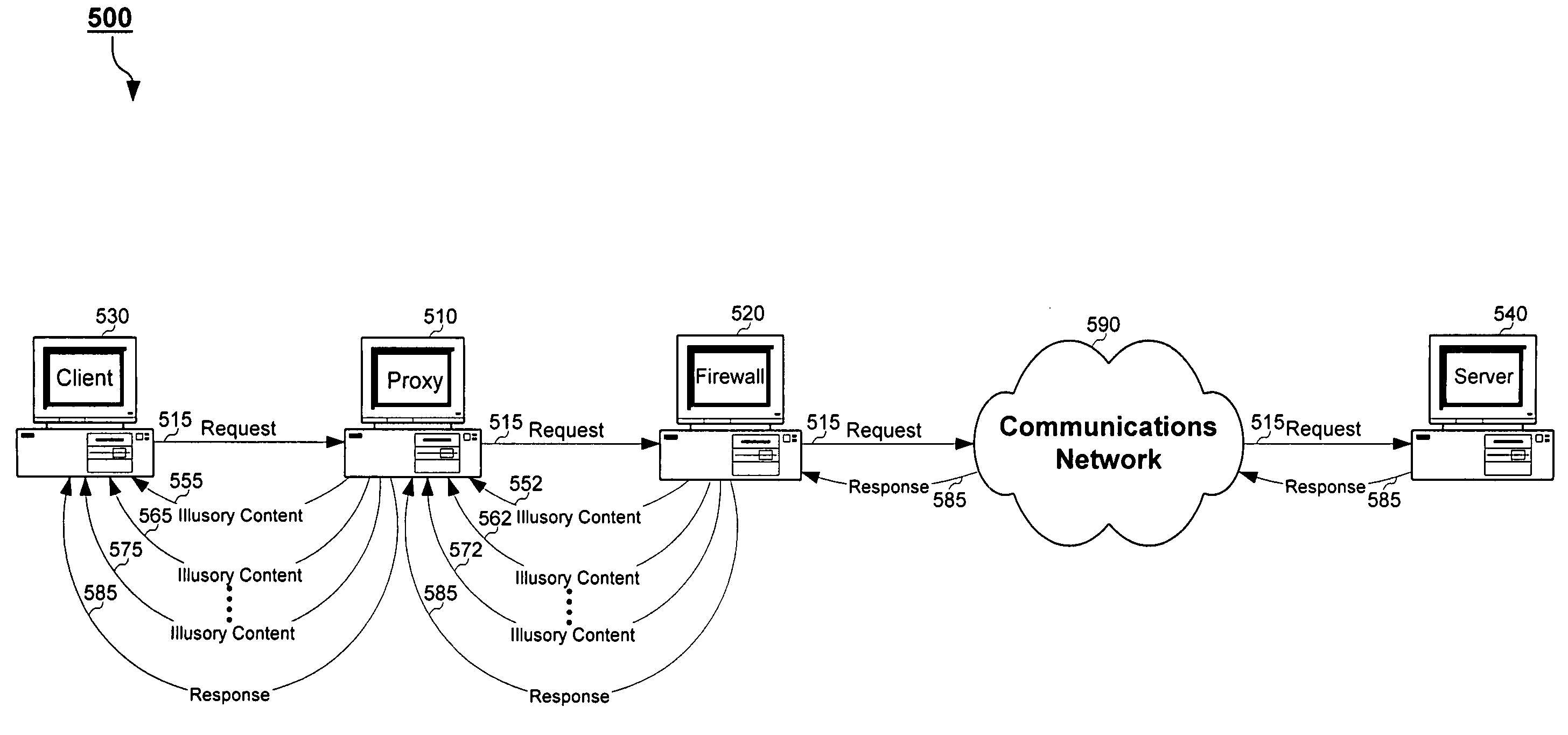
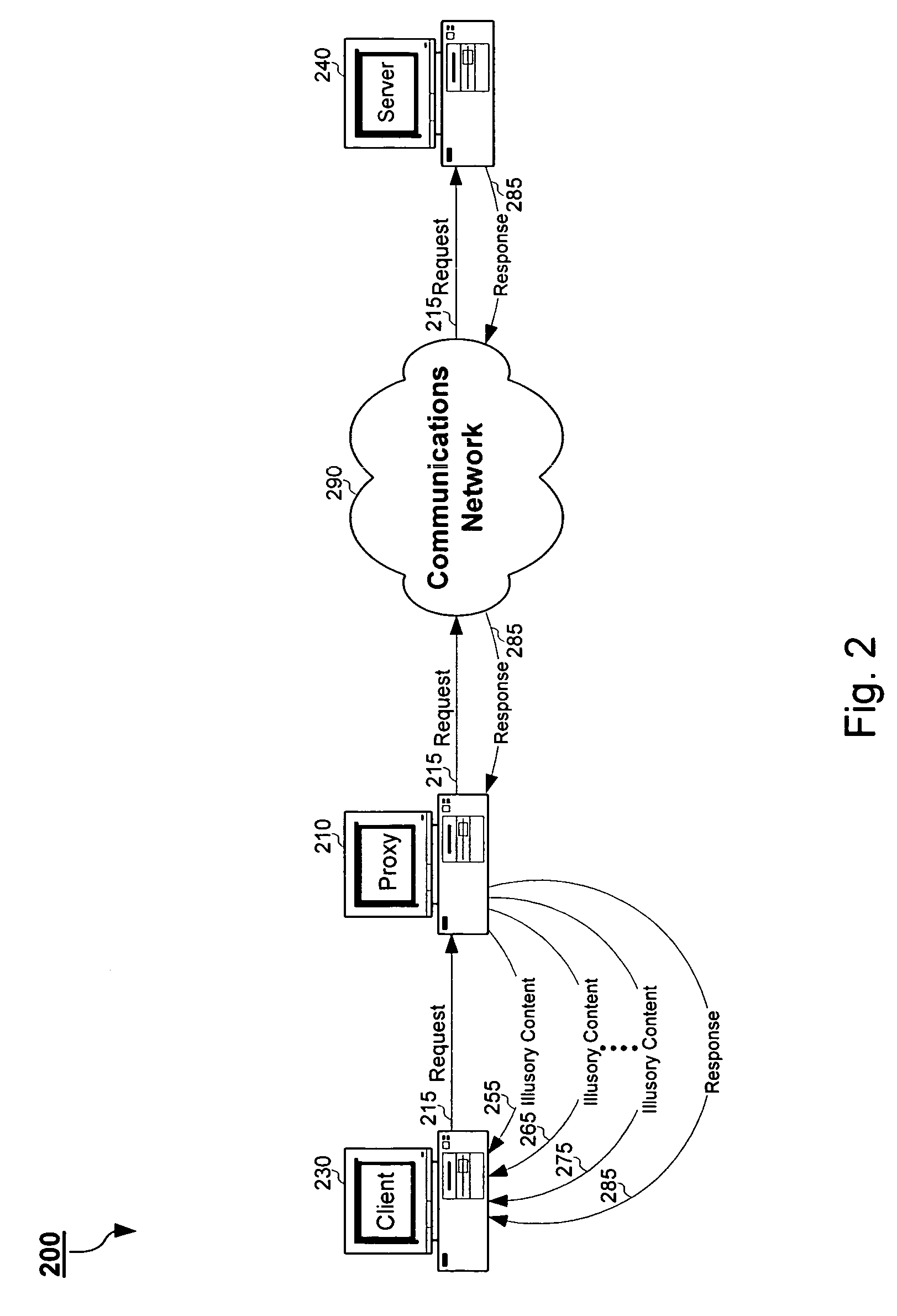
[0017]The present invention can allow an agent of a client in a client-server communications network to prevent erroneous termination of processing at the client that can occur during processing by the agent. By utilizing illusory content, the agent can sustain the communications session with the client and prevent a time out from occurring. The illusory content causes the client to not terminate the current communication session, while at the same time preventing the client from interpreting the illusory content as an actual response.
[0018]FIG. 2 depicts a block diagram of an embodiment of the present invention showing a system 200 in which communications can occur between a client 230 and a server 240 over communications network 290. In general, client 230 can initiate a communications session with server 240 by sending request 215. For example, a user at client 230 may desire a particular file that the user might have found as a result of implementing a search for a data file on ...
PUM
 Login to View More
 Abstract
Description
Claims
Application Information
 Login to View More