
Apparatus for analyzing and sorting biological particles
a flow cytometer and biological particle technology, applied in the field of separation of particles, can solve the problems of large amount of valuable laboratory and clinic space occupied by flow cytometers, time-consuming and costly methods, and inconvenient use,
- Summary
- Abstract
- Description
- Claims
- Application Information
AI Technical Summary
Benefits of technology
Problems solved by technology
Method used
Image

Examples
Embodiment Construction
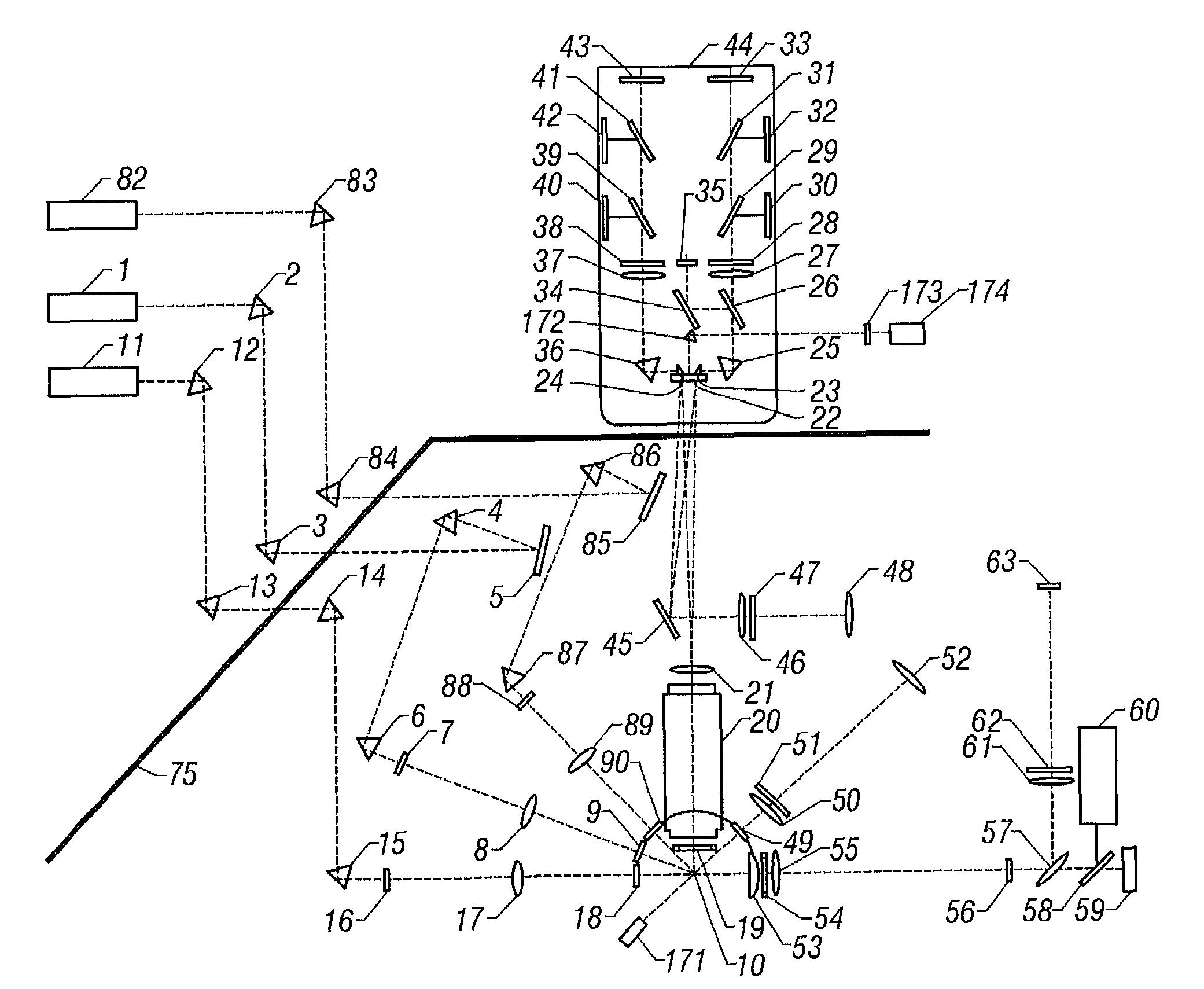
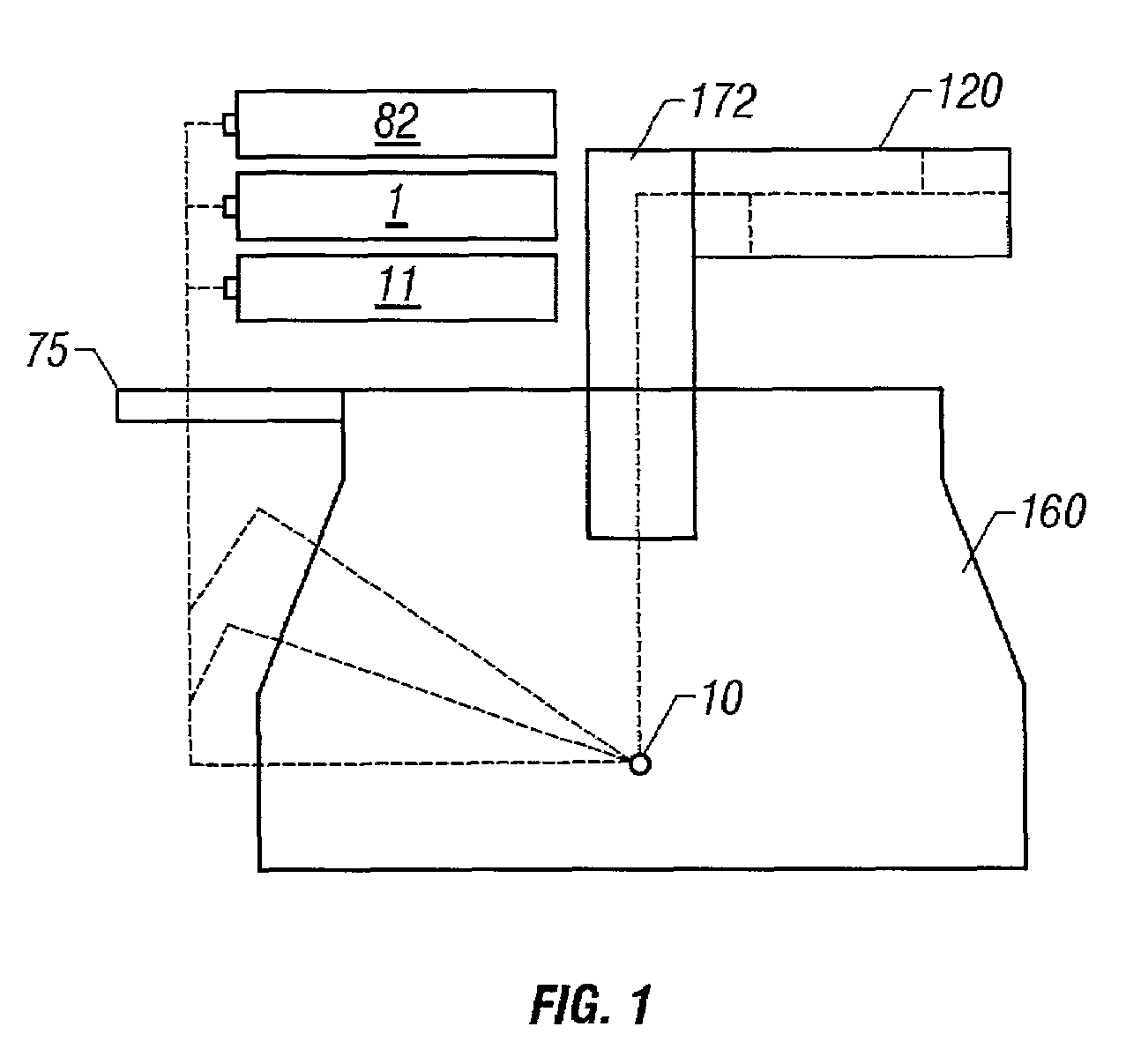
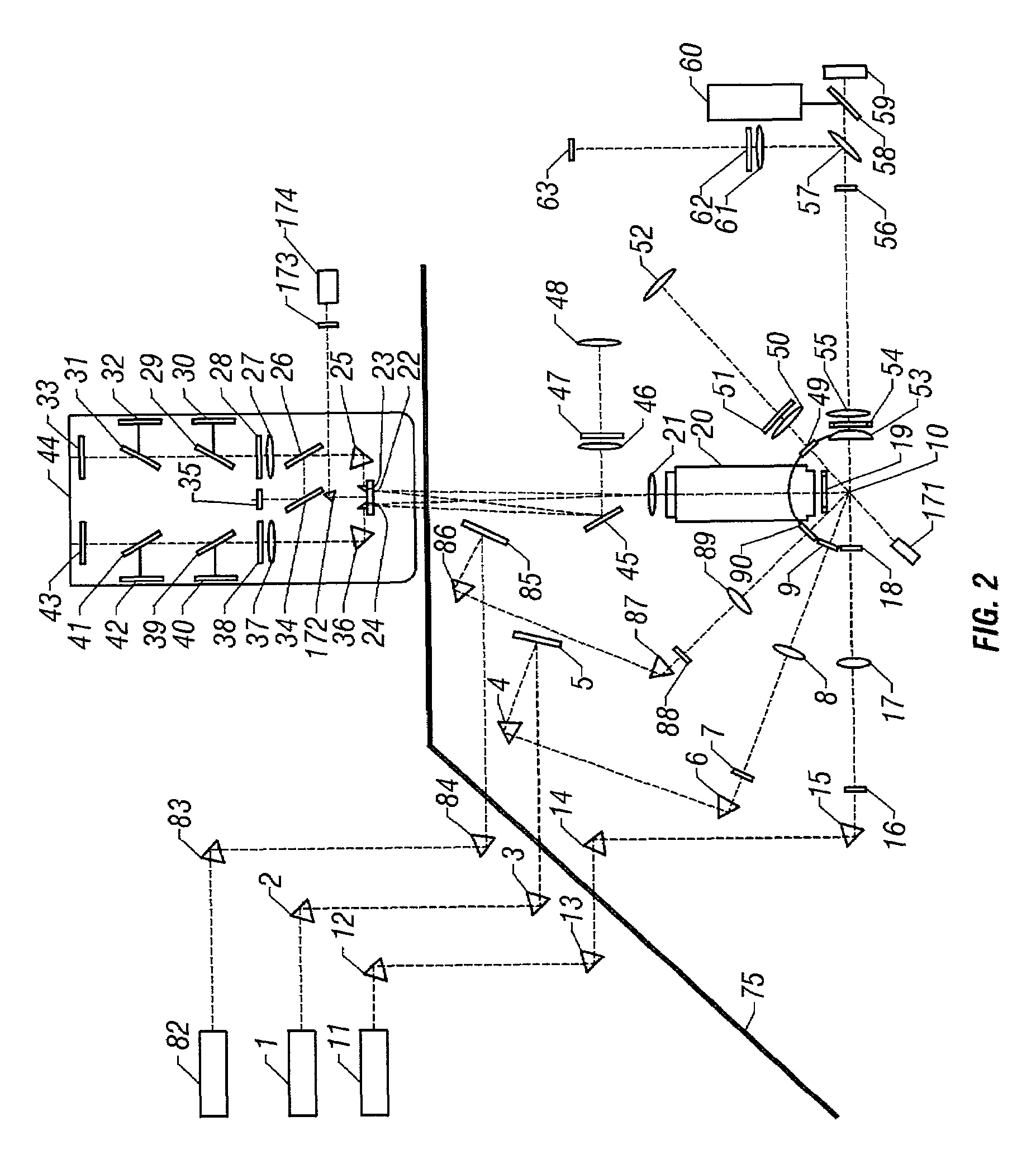
[0014]This invention provides an apparatus for separating and sorting particles in a mixture. In one embodiment, an apparatus of the invention can be a flow cytometer for analyzing or sorting biological particles such as cells, organelles or macromolecules. An apparatus of the invention can include a rigid frame to which optical devices and flow system devices can be attached. Optical devices can be placed on the rigid frame of the instrument such that excitation radiation beam paths propagated from one or more radiation sources are folded within a compact volume prior to contacting a sample stream directed through a flow system to a flow chamber. Optical components can also be placed to direct two or more separate radiation beams from substantially parallel radiation sources to a flow chamber by directing the two or more radiation beams across the same boundary plane of a frame supporting the flow chamber. Parallel placement of two or more radiation sources provides the advantage o...
PUM
| Property | Measurement | Unit |
|---|---|---|
| diameter | aaaaa | aaaaa |
| pressure | aaaaa | aaaaa |
| diameter | aaaaa | aaaaa |
Abstract
Description
Claims
Application Information
 Login to View More