
Radio communication system, radio communication control method, radio communication apparatus, control method for radio communication apparatus, and computer readable medium utilizing a divided transmission frame
- Summary
- Abstract
- Description
- Claims
- Application Information
AI Technical Summary
Benefits of technology
Problems solved by technology
Method used
Image

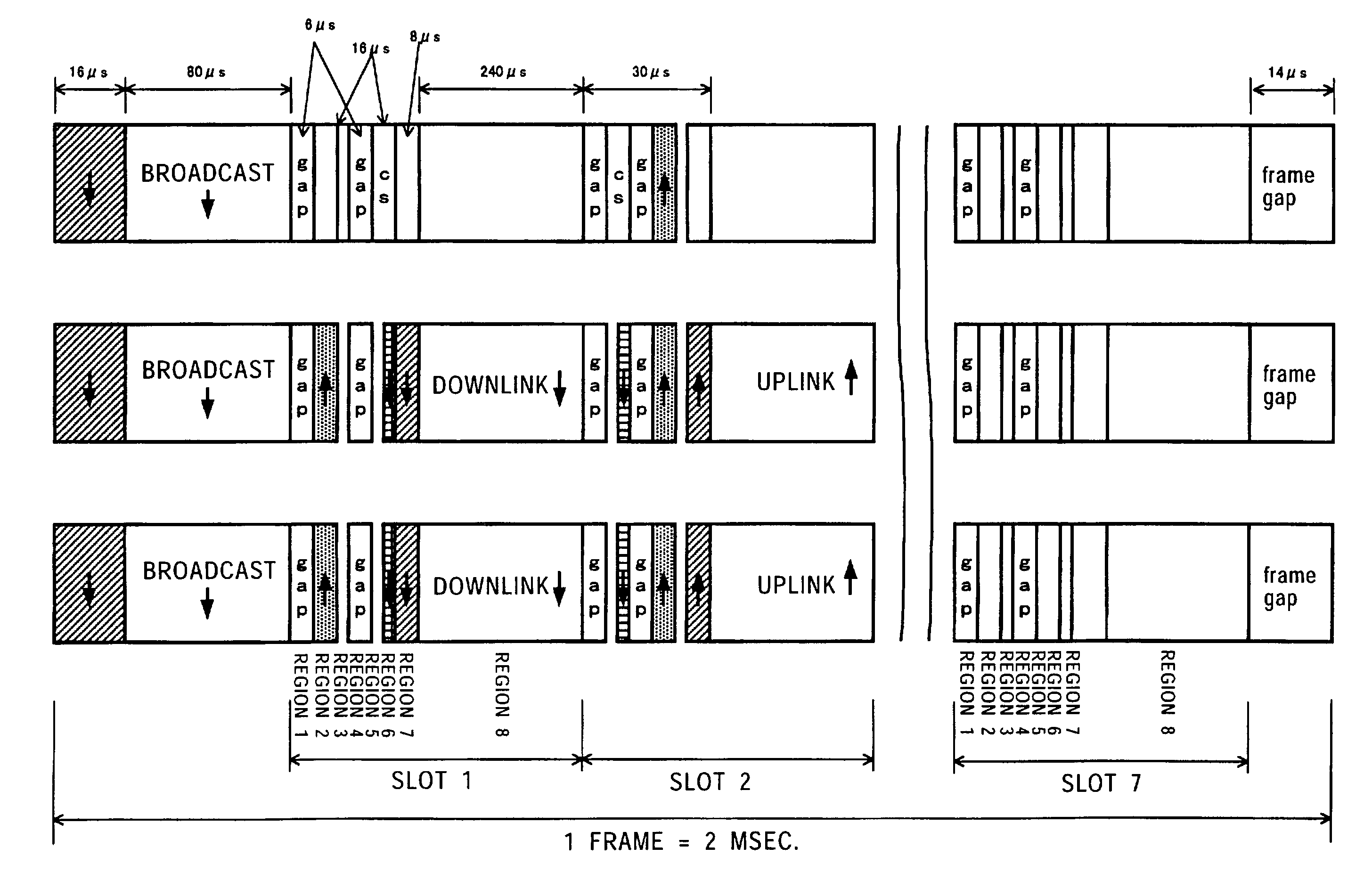
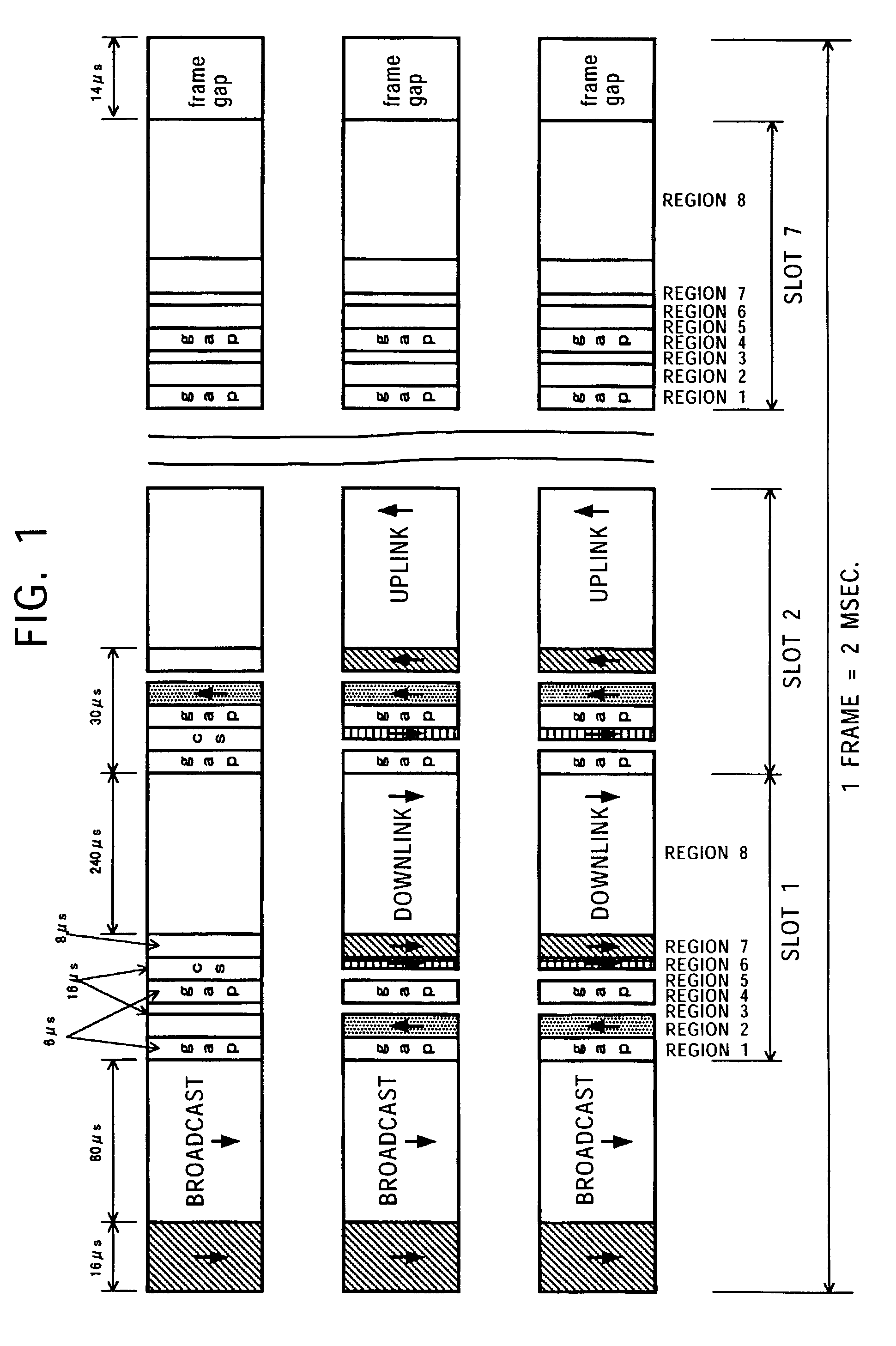
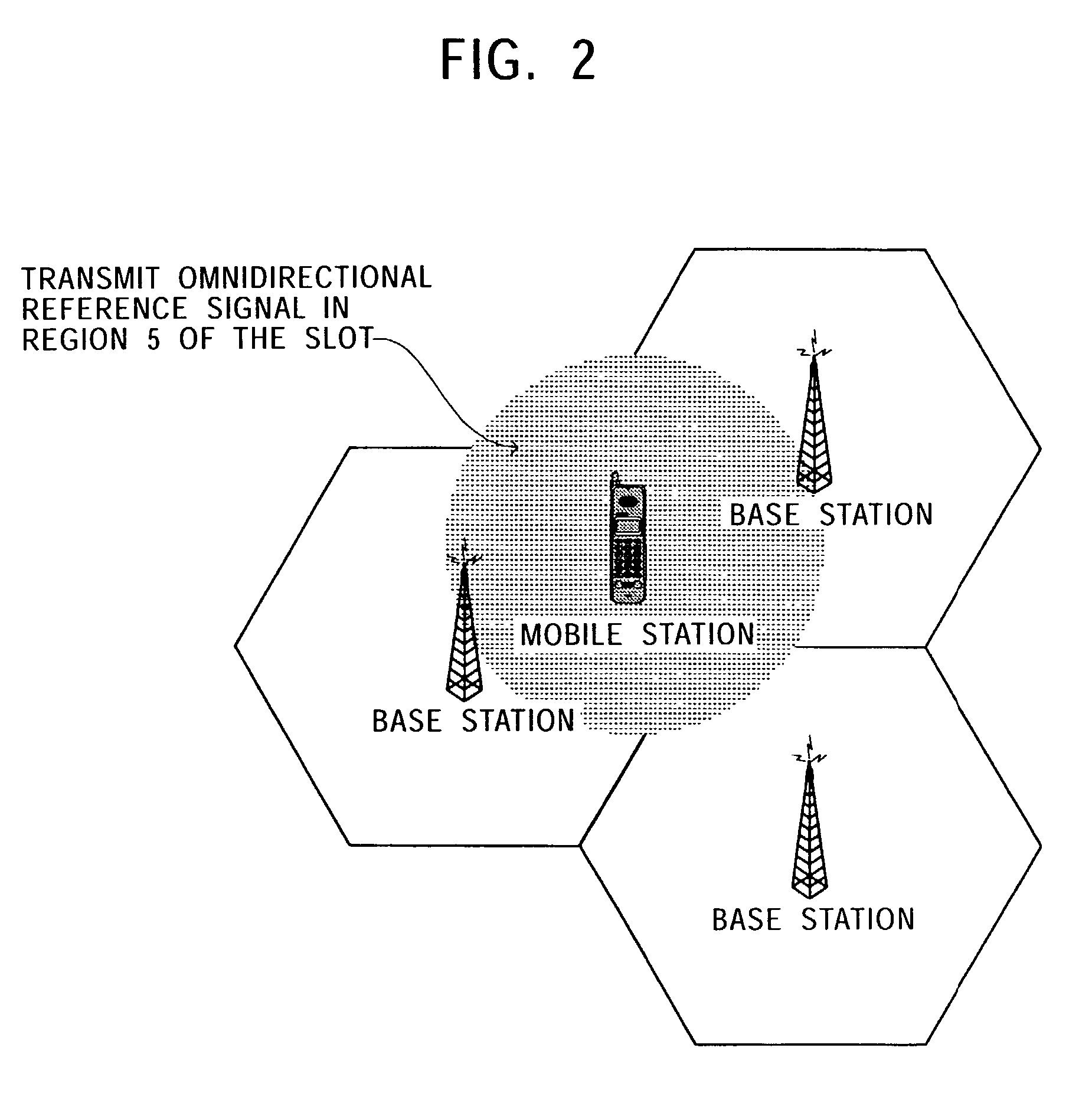
Examples
Embodiment Construction
[0055]With reference to the accompanying drawings, an embodiment in accordance with the present invention will be described in detail.
[0056]A radio communication system according to the present invention is primarily applied to a multi-cell environment formed of numerous micro-cells. The radio communication system is capable of ideally implementing a function for removing co-channel interference attributable to frequency repetition, and permits free adjustment of an uplink / downlink ratio.
[0057]In the radio communication system according to the present invention, a base station is provided with a plurality of sector antennas, while a mobile station is provided with one omnidirectional antenna. Normally, no sophisticated antenna can be mounted on a mobile station because of limited cost. All base stations act in synchronization. Access control is based on the TDMA / TDD method, while whether each slot is assigned to uplink or downlink is decided in an autonomous distributed mode by comp...
PUM
 Login to View More
 Abstract
Description
Claims
Application Information
 Login to View More