
Method and gas sensor for performing quartz-enhanced photoacoustic spectroscopy
a photoacoustic spectroscopy and quartz technology, applied in the direction of spectrometry/spectrophotometry/monochromators, instruments, optical radiation measurement, etc., can solve the problems of extremely high quality factor and fast diffusion time, and achieve the effect of reducing the contribution of wall nois
- Summary
- Abstract
- Description
- Claims
- Application Information
AI Technical Summary
Benefits of technology
Problems solved by technology
Method used
Image

Examples
Embodiment Construction
[0030]As described above, in the present photoacoustic spectroscopy method and apparatus, the absorbed energy from a gas is accumulated in an acoustic detector. The material of the acoustic detector is a piezoelectric crystal quartz. Chemically, quartz is silicon dioxide, and, when properly cut, it will generate electric charge separations resulting in electric field or current when mechanical stress is applied to it; this is know as piezoelectricity. Since quartz deformation can be monitored directly by an electric signal, additional transducers are not needed. For this, as disclosed in US 2005 / 0117155 A1, for PAS quartz tuning forks are used with a resonant frequency close to 32,768 Hz. Such forks are used in quartz clocks and are therefore available at low costs.
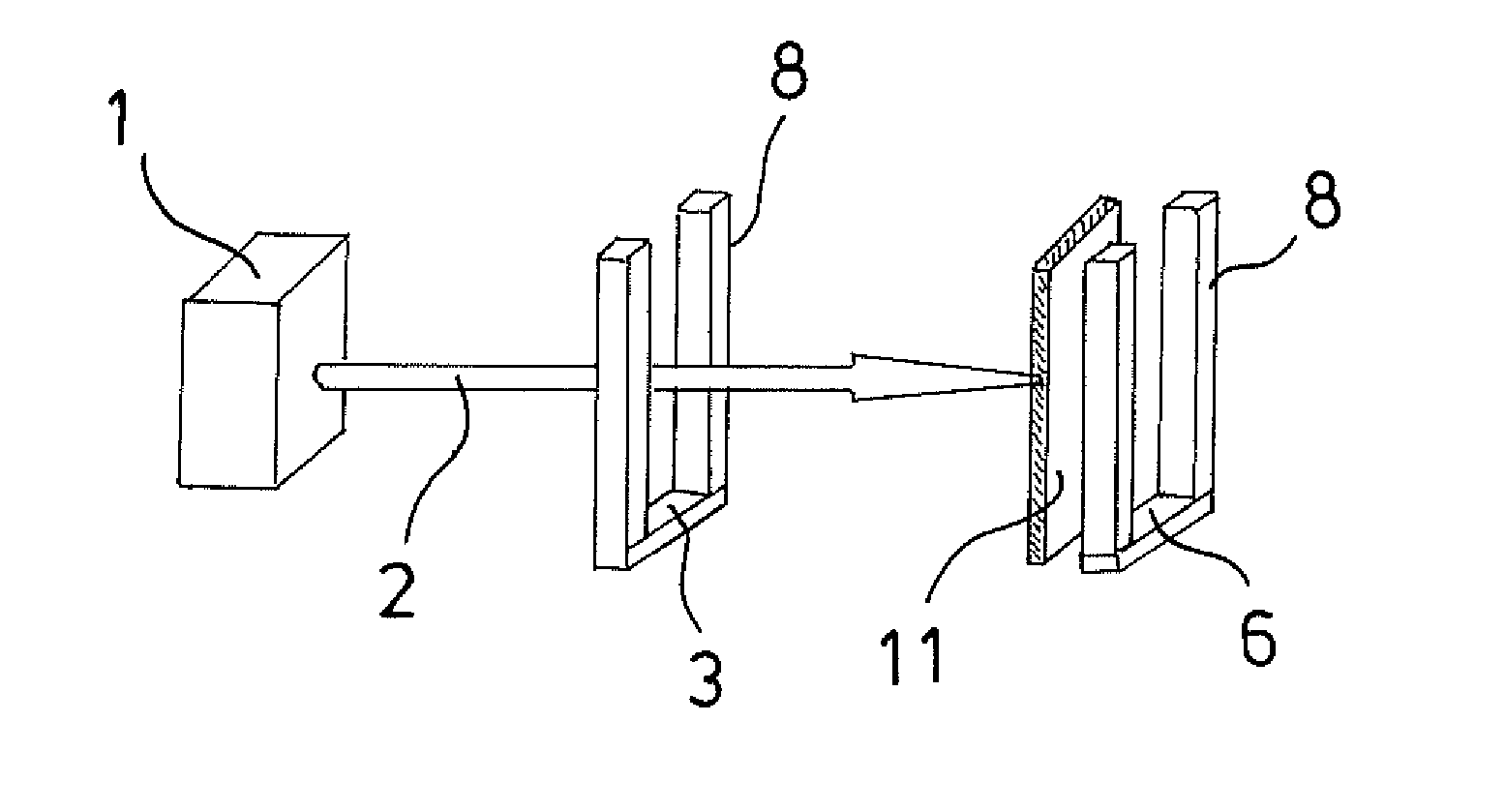
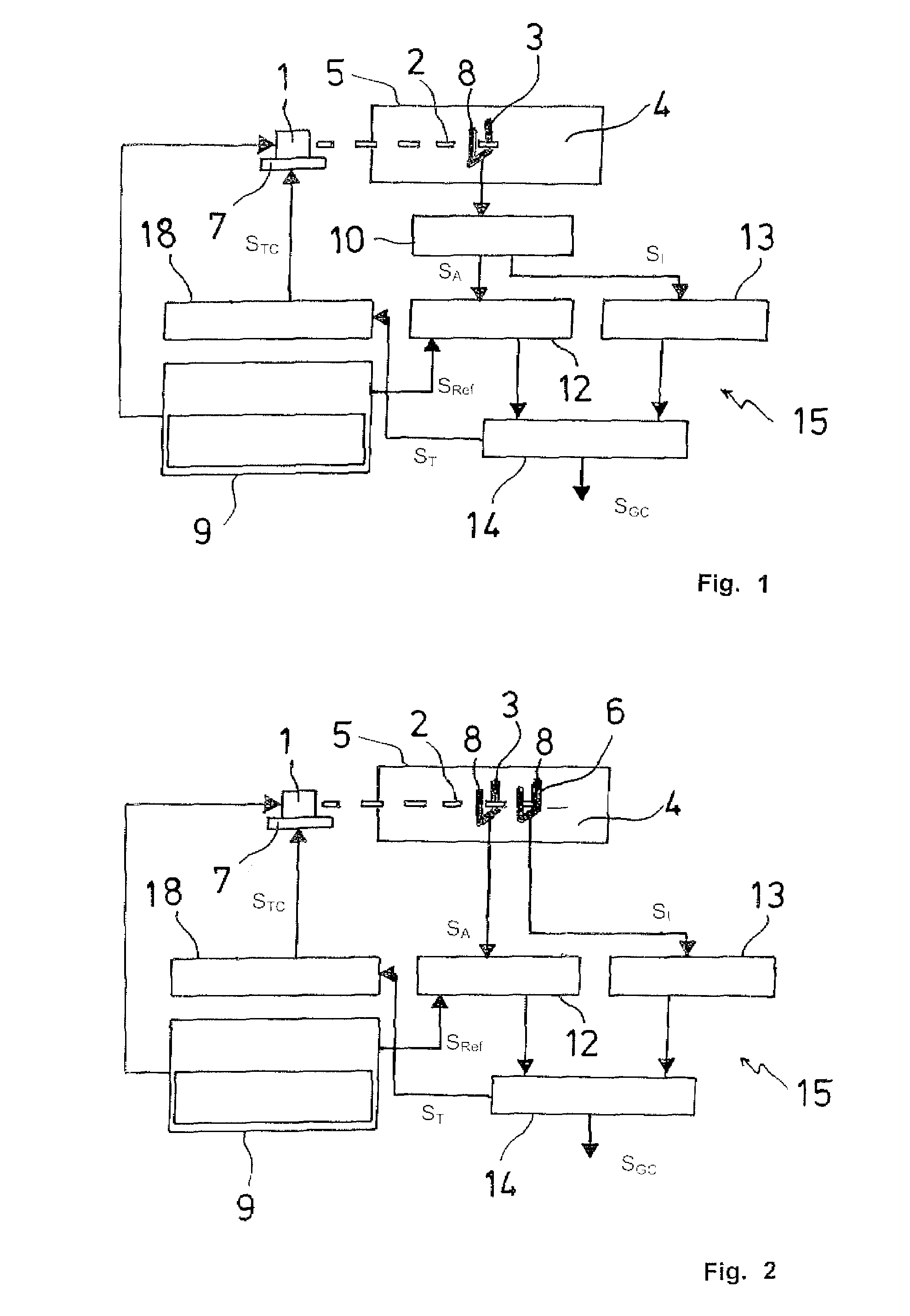
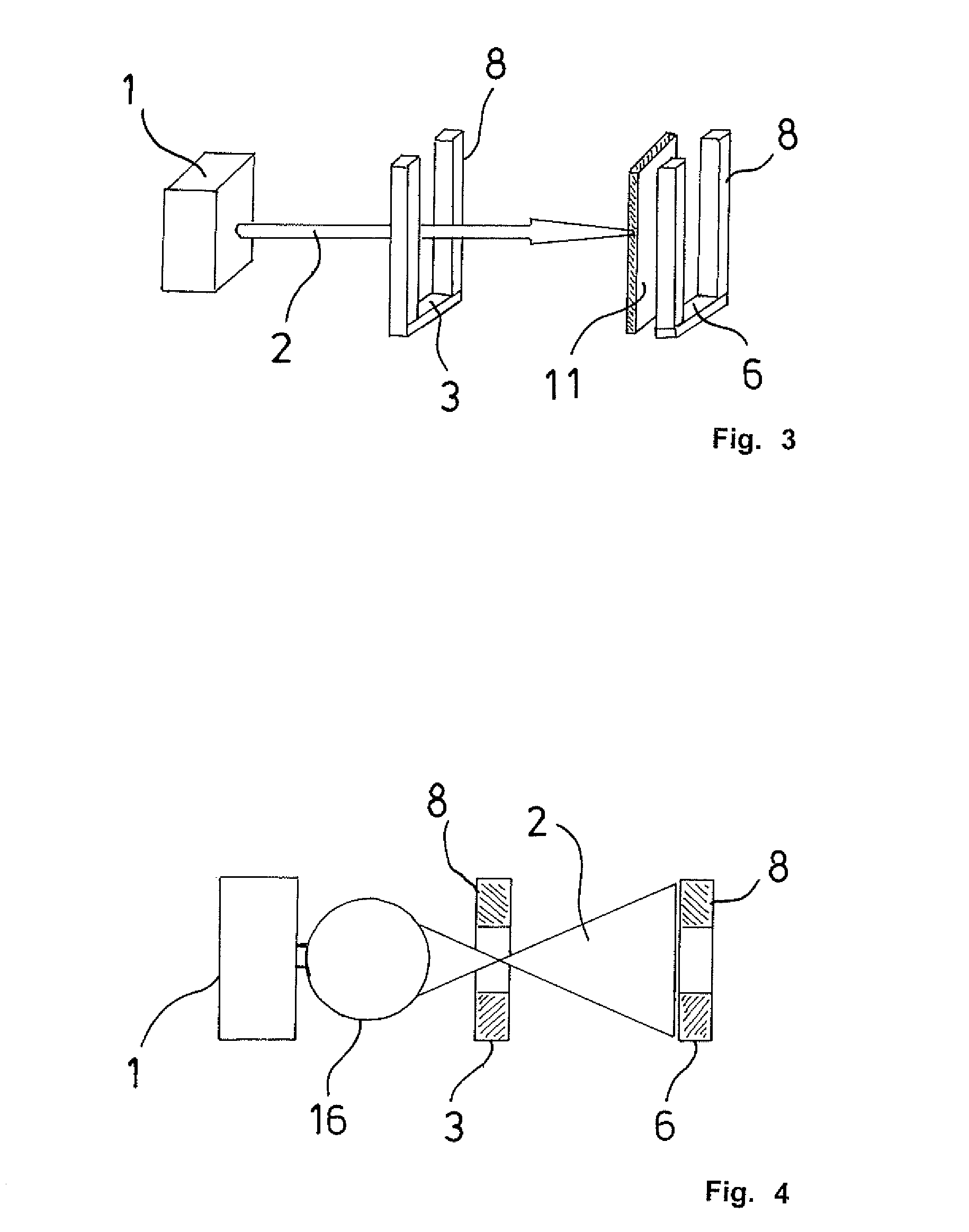
[0031]FIGS. 1 and 2 show the principle of the gas sensor with processing means 15 for processing of the signals. A laser source 1, preferably a diode laser, which is in connection with temperature unit 7 acting as heater ...
PUM
| Property | Measurement | Unit |
|---|---|---|
| frequencies | aaaaa | aaaaa |
| diffusion time | aaaaa | aaaaa |
| resonance frequency | aaaaa | aaaaa |
Abstract
Description
Claims
Application Information
 Login to View More