
Method and apparatus for continuous motion film scanning
a film scanning and continuous technology, applied in the field of motion picture film scanning systems, can solve problems such as changes in film tension throughout the scanning cycle, and achieve the effects of facilitating the safe handling of motion, facilitating high-resolution digital duplication, and minimizing the stress on the film strip
- Summary
- Abstract
- Description
- Claims
- Application Information
AI Technical Summary
Benefits of technology
Problems solved by technology
Method used
Image

Examples
Embodiment Construction
[0045]The invention disclosed herein is susceptible to embodiment in many forms. The drawings and description below in detail are directed to preferred embodiments of the invention. It is to be understood that the present disclosure is an exemplification of the principles of the invention and does not limit the invention to the illustrated embodiments.
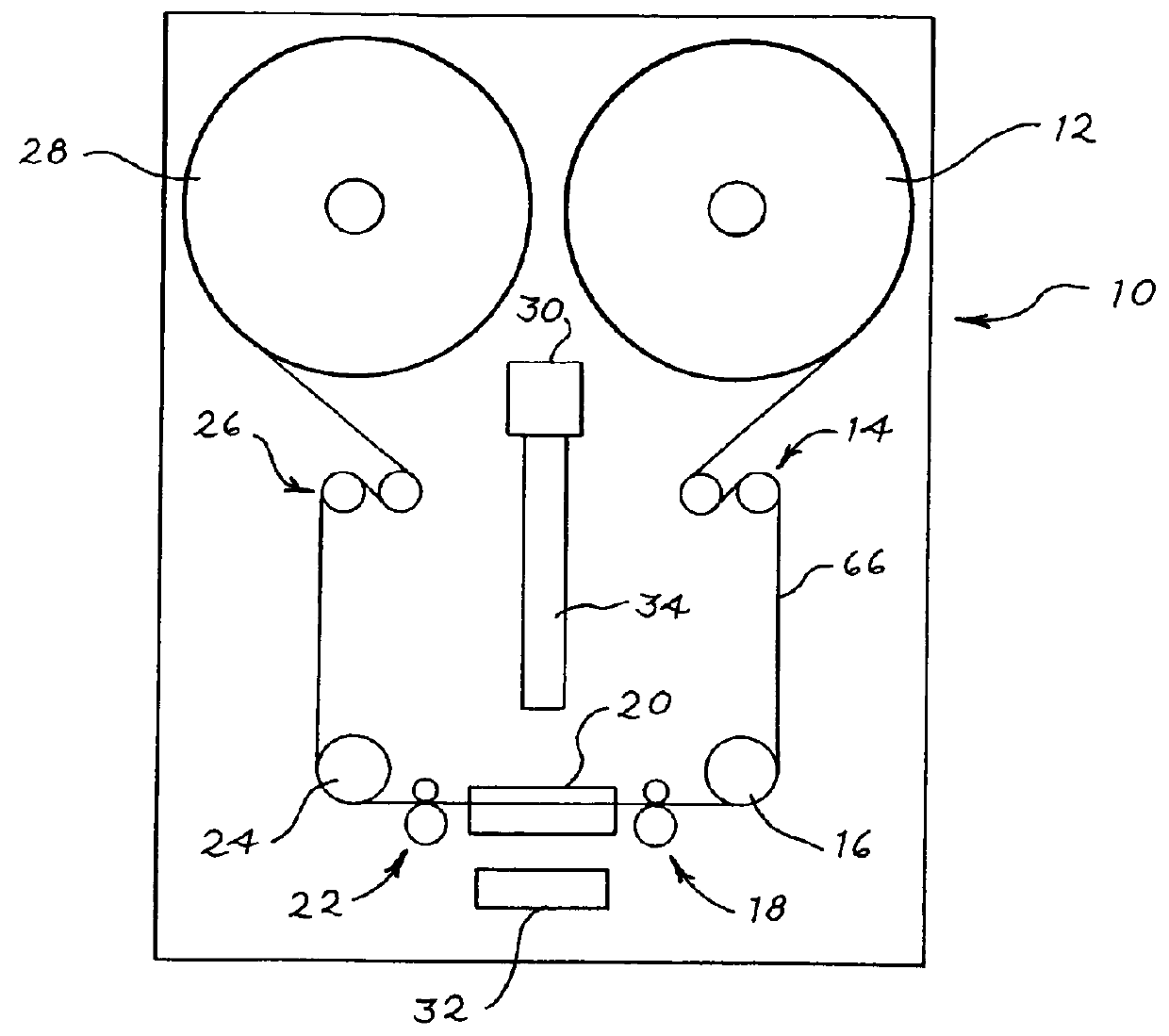
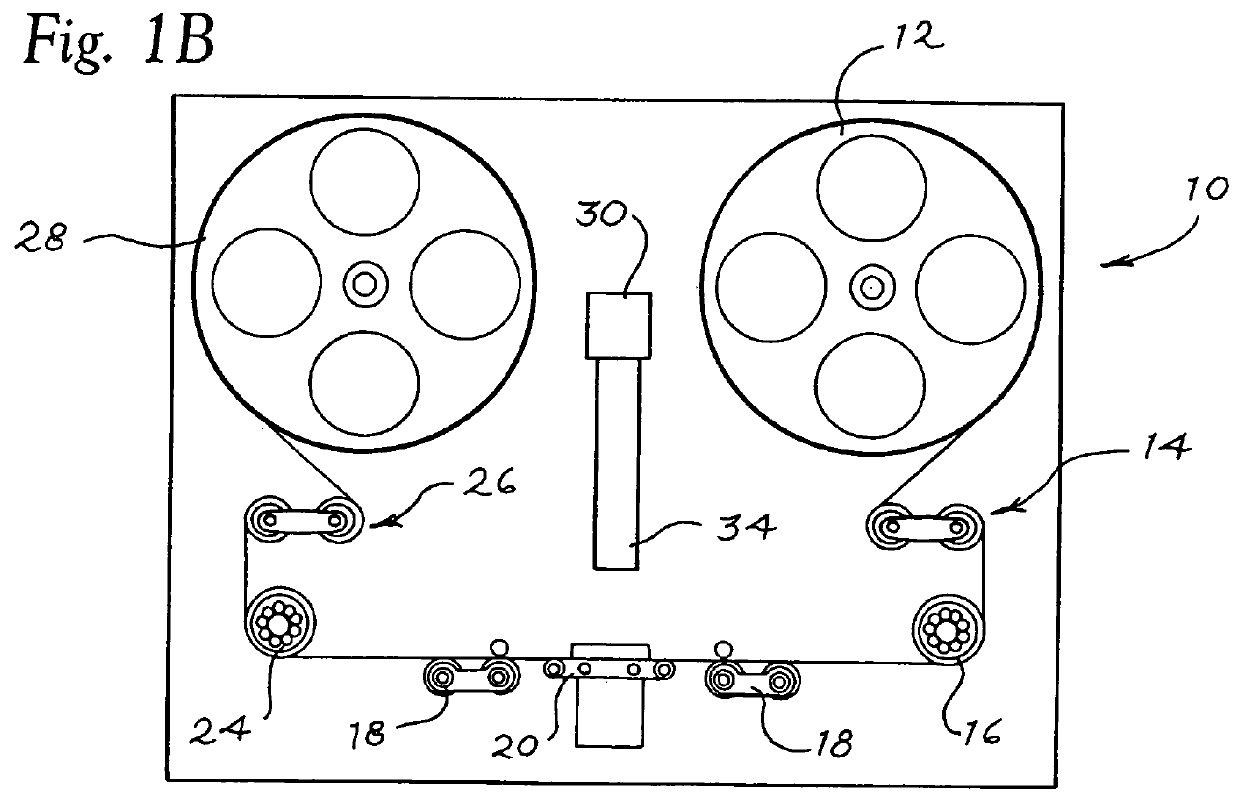
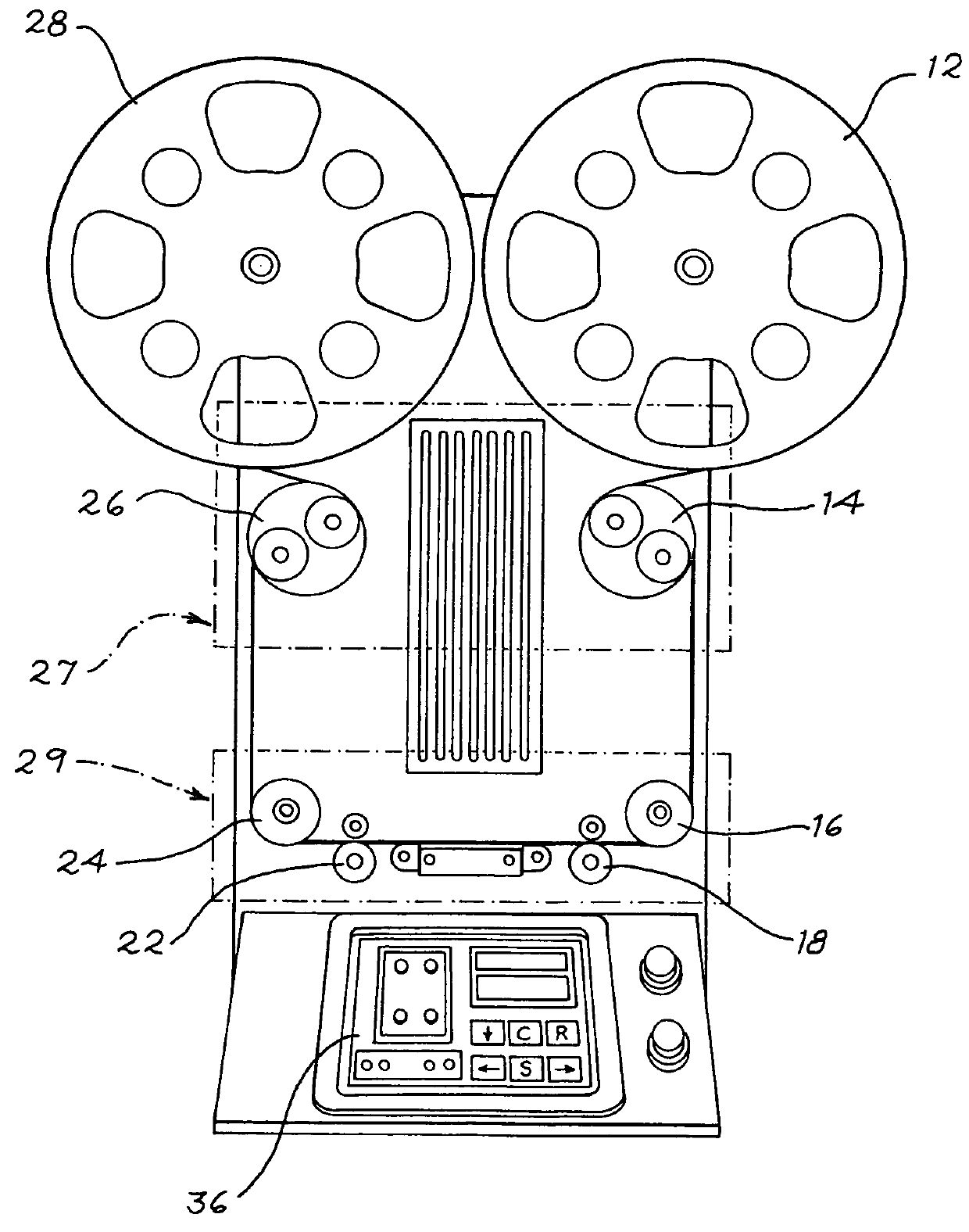
[0046]Referring to FIG. 1A, an overall view of the film scanning system 10 constructed in accordance with a preferred embodiment of the present invention is shown. Film media is loaded into supply reel 12. From the supply reel 12, film is threaded through the supply tension sensor roller assembly 14, around the return roller 16, through a capstan film drive assembly 18, and through a film gate assembly 20 for scanning. From the film gate assembly 20, the film continues through a capstan film drive assembly 18, through the return roller 24, through the take-up tension sensor roller assembly 26, and finally onto the take-up reel 28. Film...
PUM
 Login to View More
 Abstract
Description
Claims
Application Information
 Login to View More