
Preparation method of fluorine-containing acrylate terpolymer emulsion
An acrylate terpolymer and acrylate technology, applied in fiber processing, textiles and papermaking, etc., can solve the problems of high cost of initiators and emulsifiers, unfavorable for large-scale popularization and application, and achieve the effect of improving adhesion
Patent Information
- Authority / Receiving Office
- CN · China
- Current Assignee / Owner
- Publication Date
- 2013-06-05
Smart Images
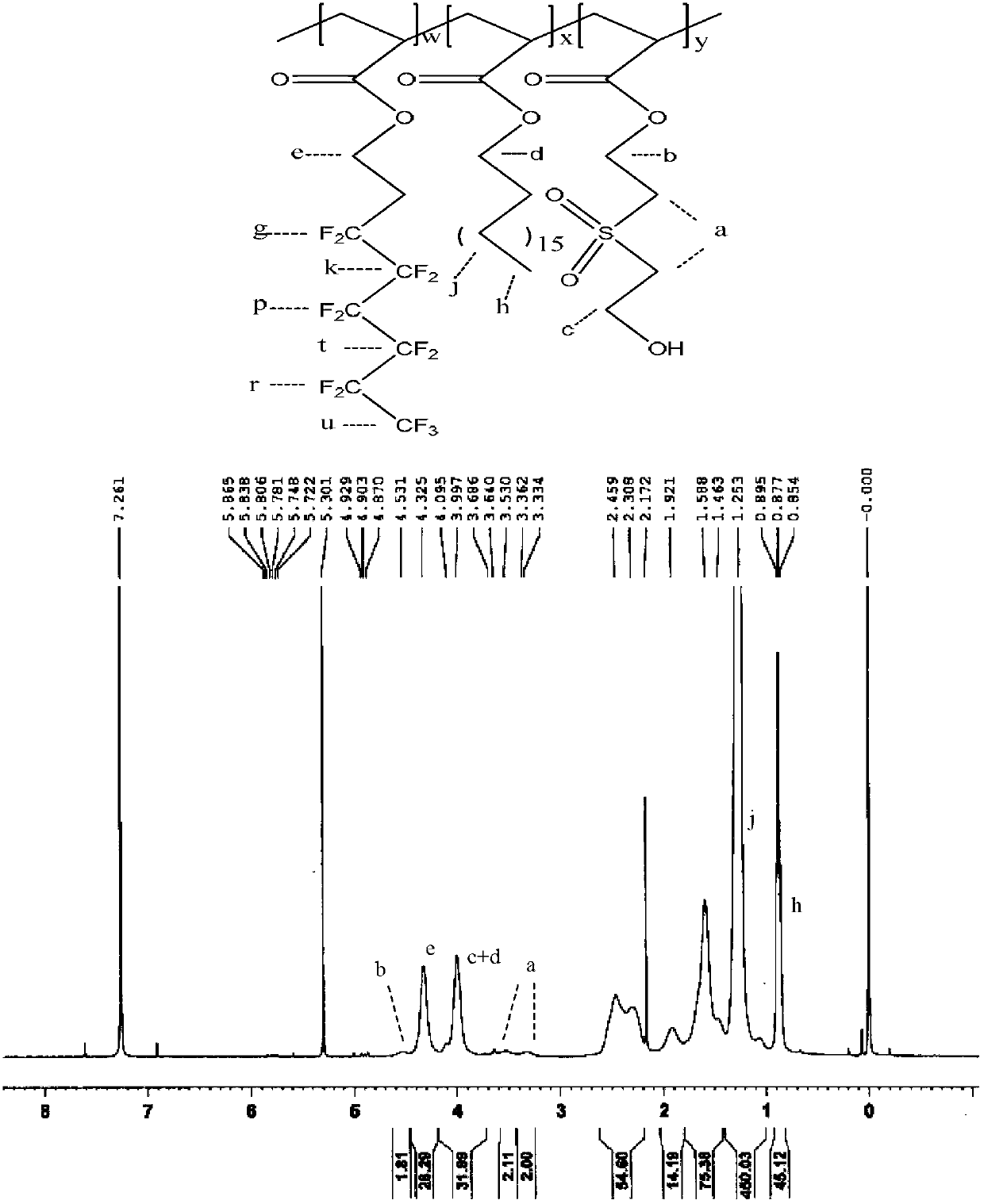
Figure 1 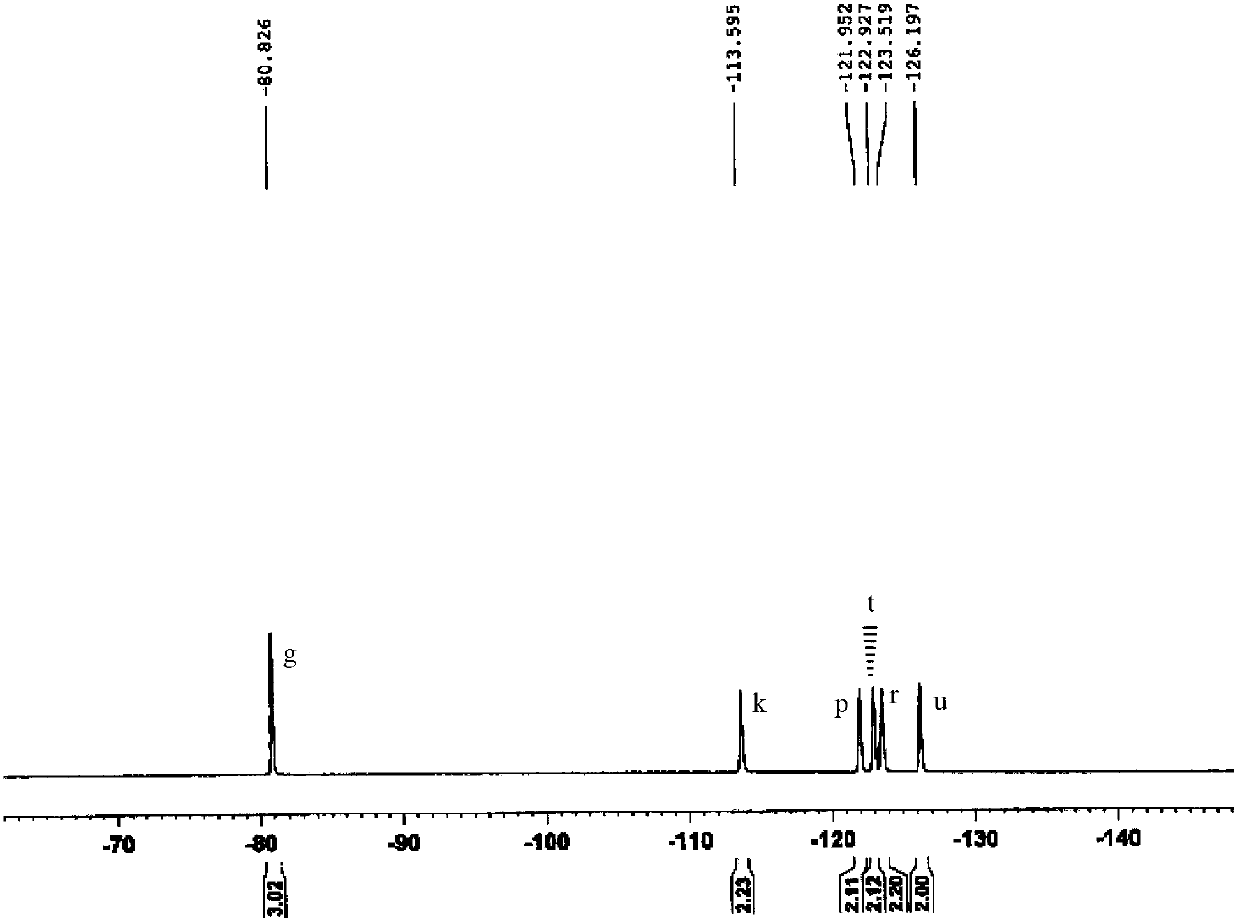
Figure 2 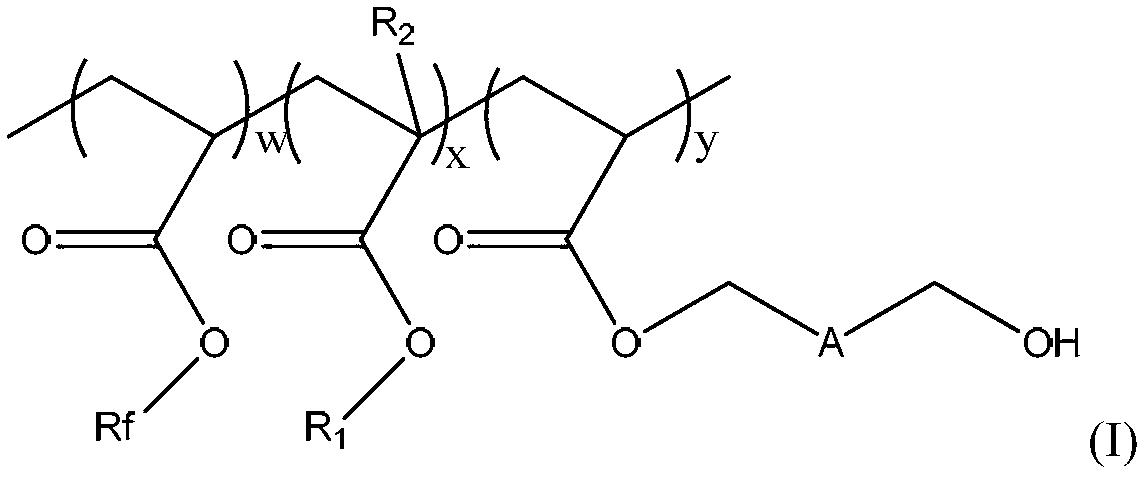
Figure 3
Abstract
Description
technical field
[0001] The invention relates to a method for preparing a fluorine-containing acrylate terpolymer emulsion, and belongs to the technical field of fluorine-containing acrylate polymer preparation. Background technique
[0002] Fluorine is the most electronegative element in the periodic table. After the hydrogen in the carbon chain is replaced by a fluorine atom, the bond energy increases and the polarity increases. Fluorocarbon polymers have strong stability and extremely low surface energy. Fluorine-containing acrylate polymers are mainly used in water and oil repellent finishing of fabrics.
[0003] At present, the fluorine-containing acrylate polymers used for fabric finishing are mainly composed of fluorine-containing (meth)acrylates, non-fluorine-containing (meth)acrylates and cross-linking monomers, and are mainly prepared by emulsion polymerization. Fluorine-containing (meth)acrylates provide water and oil repellency, non-fluorine-containing monomers c...
Examples
Embodiment 1
[0047] (1) Add 35ml of deionized water, 10ml of acetone, 4.55g of perfluorohexyl ethyl acrylate, 9.30g of stearyl acrylate, 2-((2-hydroxyethyl)sulfonyl)ethyl acrylate into a 100ml reaction bottle Esters 1.20g, OP-10 (non-ionic surfactant) 0.46g, anionic surfactant sodium dodecyl sulfate 0.25g, dodecyl mercaptan 0.10g, high-speed shearing at 40°C for 1h, then ultrasonic emulsification After 0.5h, a milky white pre-emulsion was obtained.
[0048] Take 0.11 g of the initiator ammonium persulfate, dissolve it in 10 ml of deionized water, and prepare a solution for later use.
[0049] (2) In a 100ml reaction vessel equipped with stirring, reflux condenser, thermometer, and constant pressure dropping funnel, pass nitrogen protection, add 1 / 2 mass of pre-emulsion prepared in step (1) and 1 / 3 mass The initiator was heated to 80°C to react, and blue fluorescence appeared after 1 hour of reaction, then the remaining pre-emulsion and initiator were added dropwise, and the addition was c...
Embodiment 2
[0051] (1) Add 35ml of deionized water, 10ml of acetone, 6.07g of perfluorohexyl ethyl acrylate, 7.67g of lauryl acrylate, and 2-((2-hydroxyethyl)sulfonyl)ethyl acrylate into a 100ml reaction bottle in sequence 1.36g, OP-100.46g, anionic surfactant sodium lauryl sulfate 0.26g, dodecyl mercaptan 0.072g, high-speed shearing at 40°C for 1h, and ultrasonic emulsification for 30min to obtain a milky white pre-emulsion.
[0052] Take 0.11 g of the initiator ammonium persulfate, dissolve it in 10 ml of deionized water, and prepare a solution for later use.
[0053] (2) The heating reaction temperature is 83° C., and other conditions are the same as (2) in Example 1.
Embodiment 3
[0055] (1) Add 35ml of deionized water, 10ml of acetone, 4.55g of perfluorohexyl ethyl acrylate, 9.35g of stearyl acrylate, 2-((2-hydroxyethyl)sulfonyl) ethyl acrylate into a 100ml reaction bottle 1.44g of ester, 0.49g of NP-400, 0.30g of cationic surfactant cetyltrimethylammonium bromide, 0.062g of dodecyl mercaptan, high-speed shearing at 40°C for 1h, and ultrasonic emulsification for 35min to obtain milky white pre-emulsion.
[0056] Take 0.090 g of initiator ammonium persulfate, dissolve it in 10 ml of deionized water, and prepare a solution for later use.
[0057] (2) The reaction device, operation steps and other conditions are the same as (2) in Example 1.