
FPP (fluoropyridine [3,4-b] pyrazine) compound, fPP-based copolymer material and application of fPP-based copolymer material
A fluoropyridine, pyrazine-based technology, applied in the field of photovoltaic materials, can solve the problems of poor solubility, low photoelectric conversion efficiency of polymers, small molecular weight, etc. Effect
Patent Information
- Authority / Receiving Office
- CN · China
- Patent Type
- Applications(China)
- Current Assignee / Owner
- Publication Date
- 2017-05-24
- Estimated Expiration
- Not applicable · inactive patent
Smart Images
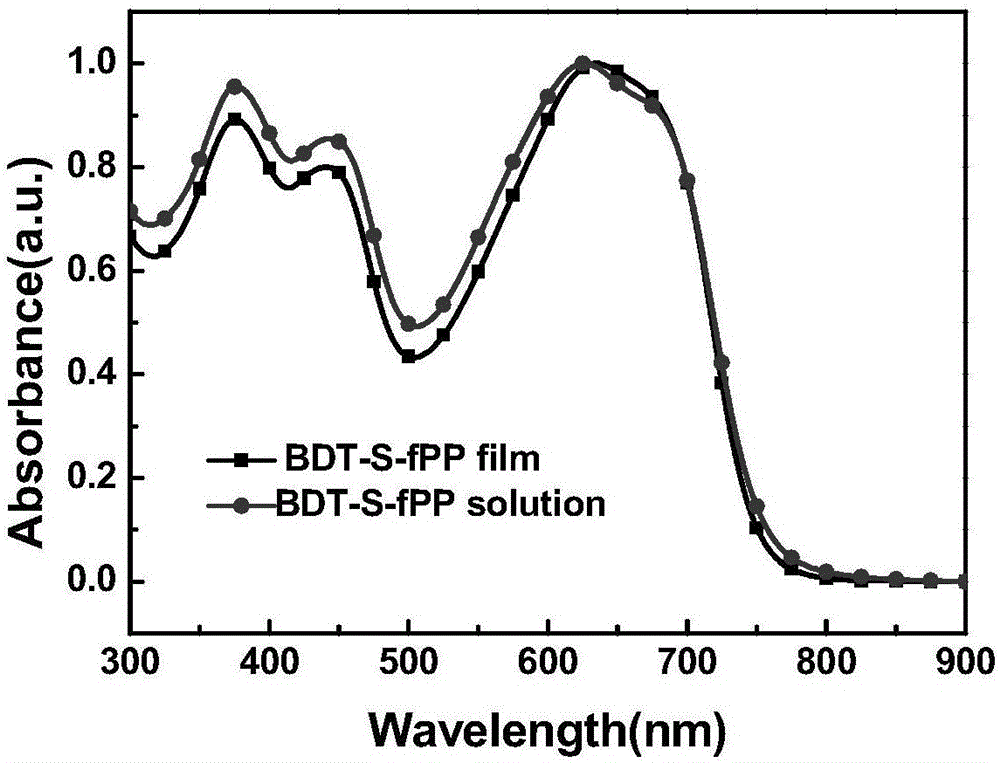
Figure 1 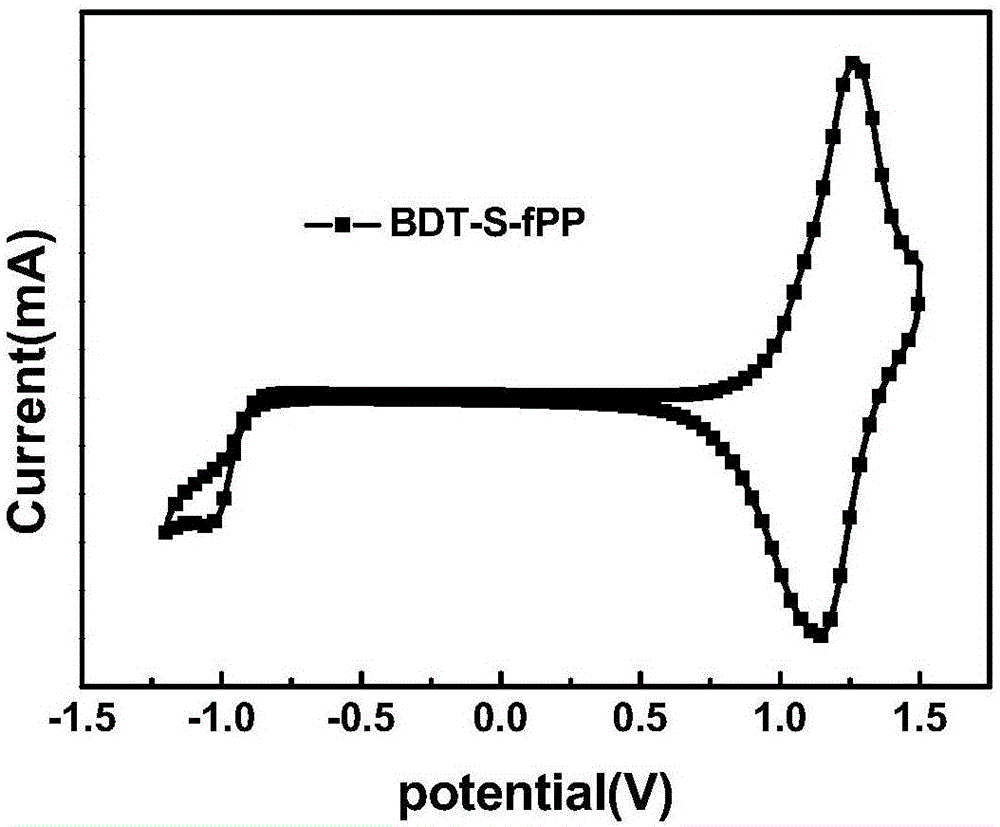
Figure 2 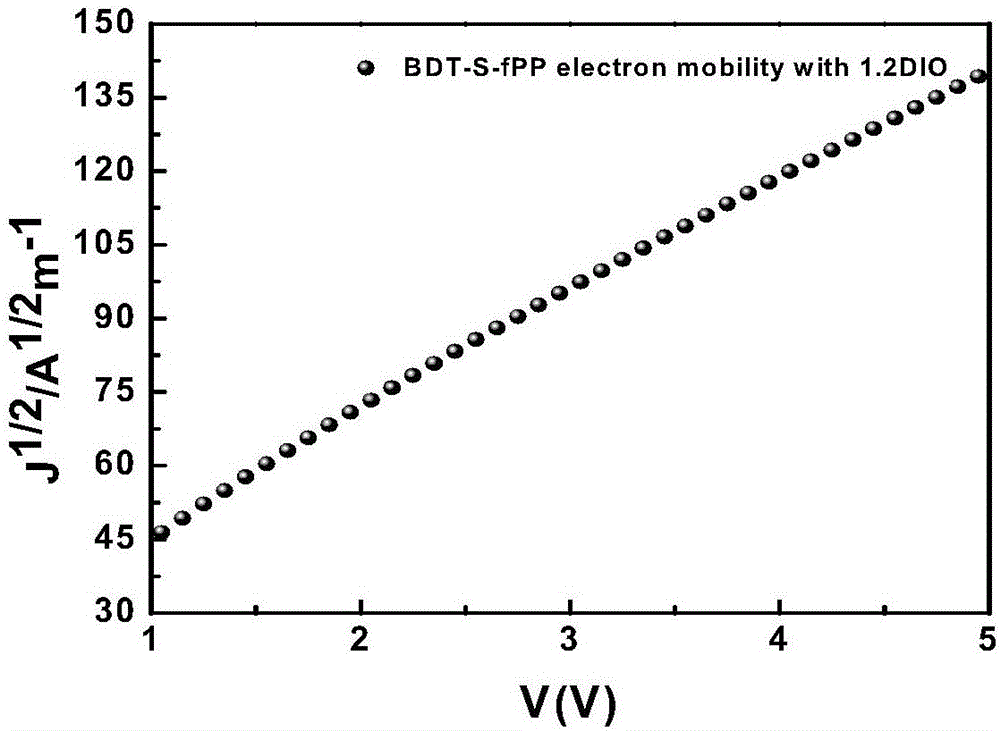
Figure 3
Abstract
Description
technical field
[0001] The present invention relates to a photovoltaic material, in particular to a fluoropyridine[3,4-b]pyrazine (fPP) monomer and a series of fluoropyridine[3,4-b]pyrazines for preparing photovoltaic materials (fPP)-based copolymer materials, and a series of polyfluoropyridyl[3,4-b]pyrazine (fPP)-based copolymer materials linked by carbon-carbon single bonds for the application of organic solar cells. Background technique
[0002] In the last ten years, pyridine[3,4-b]pyrazine (PP) has been regarded as a typical electron acceptor unit because it contains two symmetrically unsaturated N atoms and the N atom on the pyridine ring. focus on. Its series of polymer derivatives exhibit good photoelectric properties and are widely used in near-infrared light-emitting diodes, field-effect transistors, two-photon absorption, bulk heterojunction solar cells and other fields. In 2008, Mario Leclerc et al. reported a series of polymers containing pyridine[3,4-b]pyrazi...
Examples
Embodiment 1
[0042] The synthesis route of fPP photovoltaic materials is expressed as follows:
[0043]
[0044]
[0045] Molecular structure and synthesis of monomers and polymers.
[0046] Reagents and conditions: (a) potassium carbonate, N,N-dimethylformamide (DMF), isooctane bromide; (b) magnesium powder, cuprous bromide, anhydrous lithium bromide, oxalyl chloride, elemental iodine, Tetrahydrofuran; (c) liquid bromine, hydrogen bromide (d) glacial acetic acid, ethanol (e) tetrakis (triphenylphosphine palladium) (Pd (PPh 3 ) 4 ), anhydrous toluene; (f) N-bromosuccinimide (NBS), DMF; (g) tetrakis(triphenylphosphine palladium) (Pd(PPh 3 ) 4 ), anhydrous toluene;
[0047] The main steps of the preparation method are as follows:
[0048] a) Add 3-fluoro-4-bromophenol (15.0g, 75mmol), anhydrous potassium carbonate (11.0g, 80mmol), DMF (100mL) into a 250mL three-necked flask, inflate and deflate three times, under argon as a protective gas Under the condition of first heating to 6...
Embodiment 2
[0062] Photovoltaic properties of BDT-S-fPP
[0063] The device structure is ITO / PEDOT:PSS / BDT-S-fPP:PC 71 BM / PDINO / Al
[0064] The present invention uses the above-mentioned polymer as a working medium, and the method for preparing a polymer solar cell is: mix BDT-S-fPP with an appropriate amount of PC 61 BM or PC 71 Mix BM and its derivatives or other substances that can be used as electron acceptors, add an appropriate amount of solvent to dissolve, prepare a layer of translucent film on ITO conductive glass by conventional spin coating or other methods, and then vacuum evaporate Metal electrodes were evaporated on polymers to prepare polymer solar cell devices. 5mg of BDT-S-fPP and 5mg of PC 71 Mix BM, add 0.5mL o-dichlorobenzene to dissolve, and prepare a film with a thickness of about 100nm on the conductive glass modified by PEDOT:PSS by spin coating as the active layer, and then use aluminum by vacuum evaporation. Metal electrodes are prepared on the active layer....