
Novel deuterated phenylpropionic acid derivative, preparation method thereof, and use of derivative as medicine
A deuterium propionic acid, pharmaceutical technology, applied in the field of preparation of drugs for the treatment of diabetes and metabolic syndrome, can solve the problems of unstable structure of phenylpropionic acid, no hypoglycemic activity, etc.
Patent Information
- Authority / Receiving Office
- CN · China
- Current Assignee / Owner
- Publication Date
- 2017-09-15
Smart Images
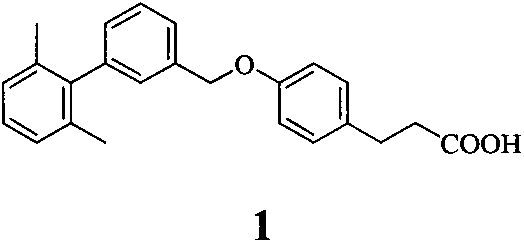
Figure 1 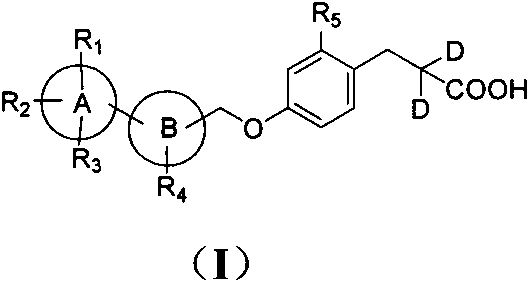
Figure 2 
Figure 3
Abstract
Description
technical field
[0001] The present invention relates to the field of pharmacology related to diabetes, in particular to a novel deuterated phenylpropionic acid derivative, its preparation method and the application of a pharmaceutical composition containing the derivative in the preparation of medicines for treating diabetes and metabolic syndrome. The structure of the deuterated phenylpropionic acid derivatives involved in the present invention is unique and novel in the structural transformation of this type of compound, and the deuterated technology is skillfully used to block the metabolic sites of existing drugs, thereby improving pharmacokinetics academic nature. Background technique
[0002] Diabetes mellitus is a metabolic disease characterized by persistent high blood sugar, and is divided into type 1 diabetes (insulin-dependent diabetes) and type 2 diabetes (non-insulin-dependent diabetes). At present, about 415 million people in the world suffer from diabetes, an...
Examples
Embodiment 1
[0104] 3-(4-Hydroxyphenyl)-2,2-dideuteriopropionic acid
[0105]
[0106] Step 1: Dissolve p-hydroxybenzaldehyde (1g, 8.26mmol) in 30ml of water, add cyclo(ethylene)isopropyl malonate (1.2g, 8.32mmol), and heat at 75°C for two hours to obtain a yellow turbid liquid. Suction filtration obtained 2.3 g of a yellow solid, the yield of the crude product was 113%, and the crude product was dried overnight under an infrared lamp.
[0107] The second step: take the above crude product (1g, 4.04mmol) and dissolve it in 30ml (tetrahydrofuran / methanol, 1:1, v / v) mixed solvent, slowly add NaBH under ice bath 4 (0.45g, 6.06mmol), react at room temperature for 1 hour, after TLC detects that the reaction is complete, add 50ml of water to dilute, extract with ethyl acetate (40ml×4), combine the organic phases and wash with saturated NaCl solution (20ml×2), the obtained organic The phase was dried over anhydrous sodium sulfate, filtered with suction, and the filtrate was evaporated to remo...
Embodiment 2
[0110] 2′-Methyl-[1,1′-biphenyl]-4-carbaldehyde
[0111]
[0112] The raw material 2-bromotoluene (0.5g, 2.6mmol) was dissolved in 42ml mixed solvent (toluene / ethanol / water, 3:1:3, v / v / v), and the raw material 3-formylphenylboronic acid (0.3g, 2.6mmol), triphenylphosphopalladium (0.15g, 0.13mmol), anhydrous sodium carbonate (0.69g, 6.5mmol), and heated at 60°C for 24h under nitrogen protection. After the reaction, cool to room temperature, dilute with 20ml of water, use diatomaceous earth as a pad for suction filtration, wash the filter cake with ethyl acetate (15ml×3), extract the filtrate with ethyl acetate (30ml×4), combine the organic phases with saturated NaCl solution (20ml×2), the obtained organic phase was dried over anhydrous sodium sulfate, suction filtered, the filtrate was evaporated to remove the solvent under reduced pressure, and the residue was subjected to column chromatography (petroleum ether / ethyl acetate, 70:30, v / v) Purification afforded 0.35 g of off...
Embodiment 3
[0114] 3-(4-((2′-methyl-[1,1′-biphenyl]-3-yl)methoxy)phenyl)-2,2-dideuteriopropanoic acid (I-1)
[0115]
[0116] The first step: raw material II-1 (0.2g, 1.18mmol) was dissolved in 20ml of mixed solvent (tetrahydrofuran / methanol, 1:1, v / v) solution, slowly added sodium borohydride (0.1g, 2.4mmol), after the reaction under ice bath, add 20ml water to quench the reaction, extract with ethyl acetate (30ml×3) and combine the organic phases with saturated NaCl solution (20ml×2) for washing, and the organic phases are dried with anhydrous sodium sulfate , suction filtration, and the filtrate was evaporated to remove the solvent under reduced pressure, and was directly used in the next reaction without purification.
[0117] Step 2: Dissolve the compound obtained in the previous step in 20ml of dichloromethane, slowly drop into 0.5ml of thionyl chloride, add 1 drop of DMF, and heat the reaction at 25°C. After the reaction, evaporate the solvent under reduced pressure to obtain a ...