
Preparation method of high-performance spherical lithium nickel cobalt aluminate anode material
A technology of lithium nickel cobalt aluminate and positive electrode materials, applied in chemical instruments and methods, battery electrodes, nickel compounds, etc., can solve problems such as uneven distribution of elements, quality differences, and deterioration of particle spherical shape, and achieve impurity The effect of low element content, good product consistency and excellent performance
Patent Information
- Authority / Receiving Office
- CN · China
- Current Assignee / Owner
- Publication Date
- 2017-12-22
- Estimated Expiration
- Not applicable · inactive patent
Smart Images
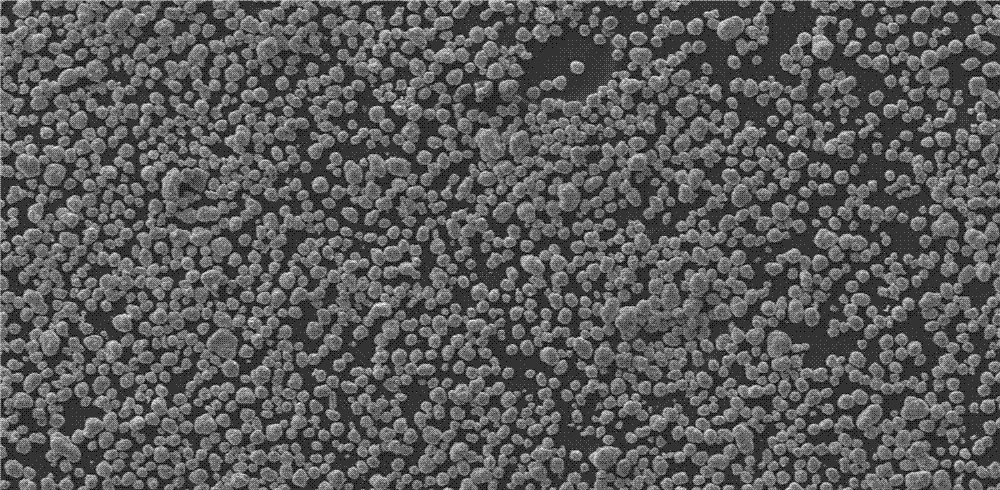
Figure 1 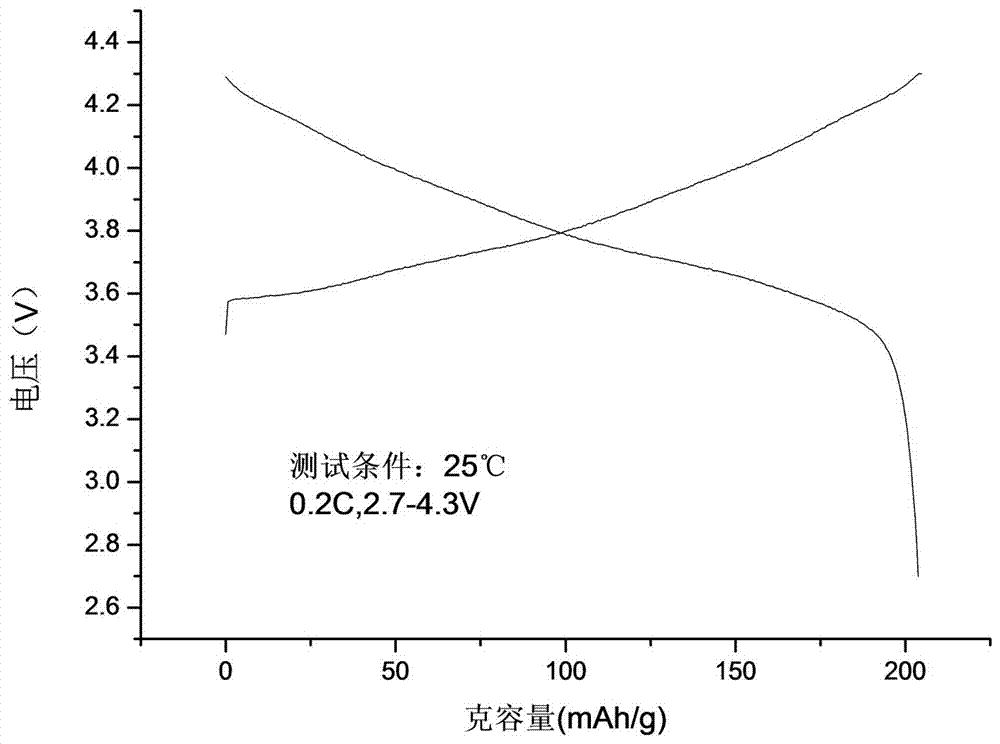
Figure 2 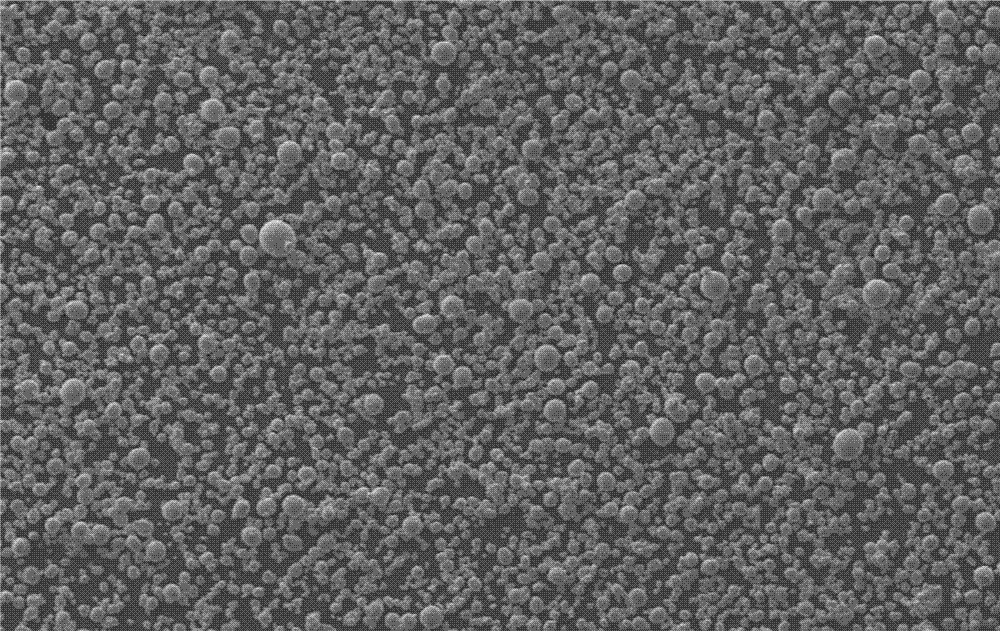
Figure 3
Abstract
Description
technical field
[0001] The invention relates to a method for preparing a high-performance spherical nickel-cobalt lithium aluminate cathode material, belonging to the field of lithium battery manufacturing. Background technique
[0002] As a new type of battery, lithium-ion batteries have the advantages of high voltage, large specific energy, long cycle life, stable discharge performance, good safety, no pollution, and wide operating temperature range. Great attention. However, the specific capacity of the positive electrode material of the lithium ion battery is much lower than that of the negative electrode material. Therefore, the way to increase the specific capacity of the lithium ion battery is the positive electrode material.
[0003] At present, the commercialized cathode materials mainly include lithium cobaltate, lithium iron phosphate, lithium manganate and ternary materials. Lithium cobalt oxide cathode material is the earliest commercial lithium-ion battery. A...
Examples
Embodiment 1
[0028] Weigh 500g aluminum nitrate nonahydrate, stir and dissolve in 13kg sodium hydroxide solution; weigh 5.6kg nickel sulfate and dissolve it in 10kg distilled water; weigh 1.15kg cobalt sulfate and dissolve it in 5kg distilled water; configure 0.2mol / L acetylacetone solution; L ammonia solution; 4mol / L sodium hydroxide solution for subsequent use.
[0029] Add the above-mentioned solutions to the CSTR reactor simultaneously and concurrently, control the molar ratio of nickel-cobalt-aluminum to 0.8:0.15:0.05, and simultaneously control the molar ratio of aluminum salt solution to acetylacetone to 1:0.3, and the molar ratio of nickel-cobalt salt to ammonia water The ratio is 1:1. Under the condition of 40° C., the feeding was continued for 40 h, and the aging reaction was carried out for 10 h after the feeding was completed. After centrifuging the reaction solution, obtain a primary filter cake, add the primary filter cake to a sodium carbonate solution with a mass fraction ...
Embodiment 2
[0031] Weigh 110g aluminum hydroxide solid, stir and dissolve in 12kg sodium hydroxide solution; weigh 5.35kg nickel sulfate and dissolve it in 9.8kg distilled water; weigh 1.26kg cobalt sulfate and dissolve it in 5.3kg distilled water; configure 0.2mol / L acetylacetone solution; 5mol / L ammonia solution; 4mol / L sodium hydroxide solution for later use.
[0032] Add the above-mentioned solutions to the CSTR reactor simultaneously and concurrently, control the molar ratio of nickel-cobalt-aluminum to 0.75:0.15:0.1, and control the molar ratio of the aluminum salt solution to acetylacetone to be 1:0.4 at the same time. The molar ratio is 1:1. Under the condition of 50° C., the feeding was continued for 30 h, and the aging reaction was carried out for 10 h after the feeding was completed. After centrifuging the reaction solution, obtain a primary filter cake, add the primary filter cake to a sodium carbonate solution with a mass fraction of 3% for stirring and washing, then perform...
Embodiment 3
[0034] Weigh 1.0kg aluminum nitrate nonahydrate, stir and dissolve in 18kg sodium hydroxide solution; weigh 12.3kg nickel sulfate and dissolve it in 21kg distilled water; weigh 2.4kg cobalt sulfate and dissolve it in 10kg distilled water; configure 0.3mol / L acetylacetone solution; 10mol / L ammonia solution; 4mol / L sodium hydroxide solution for later use.
[0035] Add the above-mentioned solutions to the CSTR reactor simultaneously and concurrently, control the molar ratio of nickel-cobalt-aluminum to 0.8:0.15:0.05, and simultaneously control the molar ratio of aluminum salt solution to acetylacetone to 1:0.4, and the molar ratio of nickel-cobalt salt to ammonia water The ratio is 1:0.5. Under the condition of 40° C., the feeding was continued for 80 h, and the aging reaction was carried out for 12 h after the feeding was completed. After centrifuging the reaction solution, obtain a primary filter cake, add the primary filter cake to a sodium carbonate solution with a mass frac...