
Process for removing heavy metal from sludge of sewage treatment plants
A technology for heavy metals and sewage plants, applied in the direction of sewage/sludge fertilizer, sludge treatment, biological sludge treatment, etc. It can solve the problems of difficulty in ensuring the stability of heavy metal removal, long extraction period of a single microorganism, and single type of heavy metal leached , to achieve the effect of saving sludge dewatering costs, saving secondary construction costs, and improving sludge dewatering performance
Patent Information
- Authority / Receiving Office
- CN · China
- Patent Type
- Patents(China)
- Current Assignee / Owner
- Publication Date
- 2011-12-28
- Estimated Expiration
- Not applicable · inactive patent
Smart Images
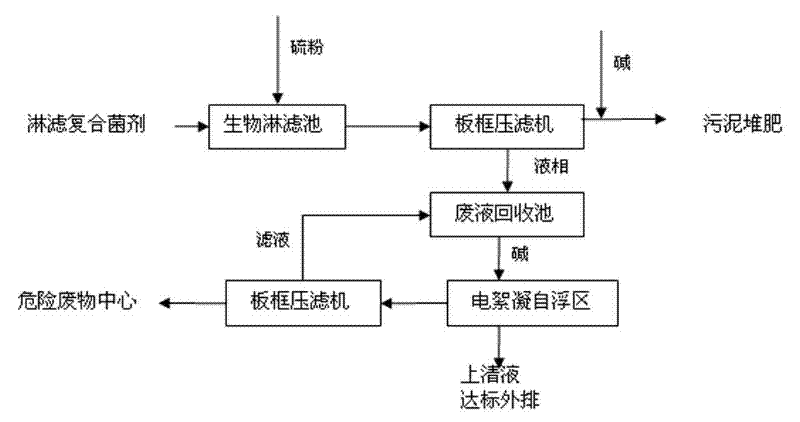
Figure 1 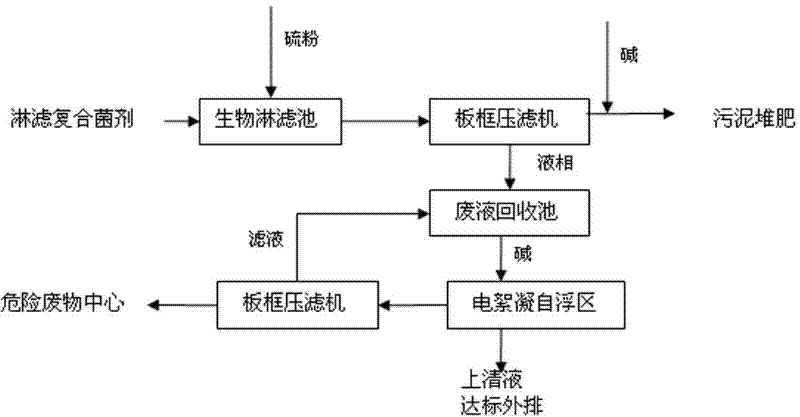
Figure 2
Abstract
Description
technical field
[0001] The invention relates to the field of environmental protection, in particular to a process for removing heavy metals from sewage sludge. Background technique
[0002] CN200410014801.X discloses a biological removal process and equipment for heavy metals in sludge. The device includes a sludge regulating tank, a bioleaching tank connected to the outlet of the sludge regulating tank, a substrate dosing device installed above the bioleaching tank, a blower installed below the bioleaching tank, and an acidified sludge sedimentation tank. , collection pool, sludge dewatering equipment. The removal process is to add ferrous iron and reduced sulfur in the biological leaching tank and aerobic conditions, and use the biological oxidation of Thiobacillus and the low pH environment produced to dissolve the heavy metals in insoluble forms into the water phase. , and then removed by solid-liquid separation, and the sulfide is converted into sulfate by oxidation. ...
Examples
Embodiment 1
[0015] (1) Biological leaching treatment: transform the sludge aerobic digestion tank of the sewage treatment plant into a biological leaching tank through anticorrosion, add elemental sulfur 0.5-30g / L sludge into the tank, and inoculate the mass ratio of 1% respectively -5% Thiobacillus and 1%-3% acidophilic mold, carry out aeration and leaching for 2-6 days; until the pH value is less than 2. At this time, the heavy metal dissolution rate reaches the standard;
[0016] (2) Plate-and-frame filter press separation: use a pump to pump the sludge and water phase after biological leaching into the first plate-and-frame filter press for filter press separation, and obtain sludge from which heavy metals have been removed and sewage containing heavy metals ; Sewage containing heavy metals enters the waste liquid recovery tank;
[0017] (3) After the heavy metal-removed sludge is neutralized with alkaline substances, it is transported to the sludge composting plant for composting; ...
Embodiment 2
[0020] The difference from Example 1 is that the bioleaching tank of this example is a facility transformed from an aerobic digester.
Embodiment 3
[0022] The difference from Example 1 is that the bioleaching tank of this example is transformed from an anaerobic digester through anti-corrosion and adding an aeration device.