
Preparation method of fungal extract for inhibiting human immunodeficiency virus
A technology of extracts and fungi, applied in the field of preparation of endophytic fungi extracts, can solve problems such as environmental pollution and destruction, depletion of plant resources, etc.
- Summary
- Abstract
- Description
- Claims
- Application Information
AI Technical Summary
Problems solved by technology
Method used
Image

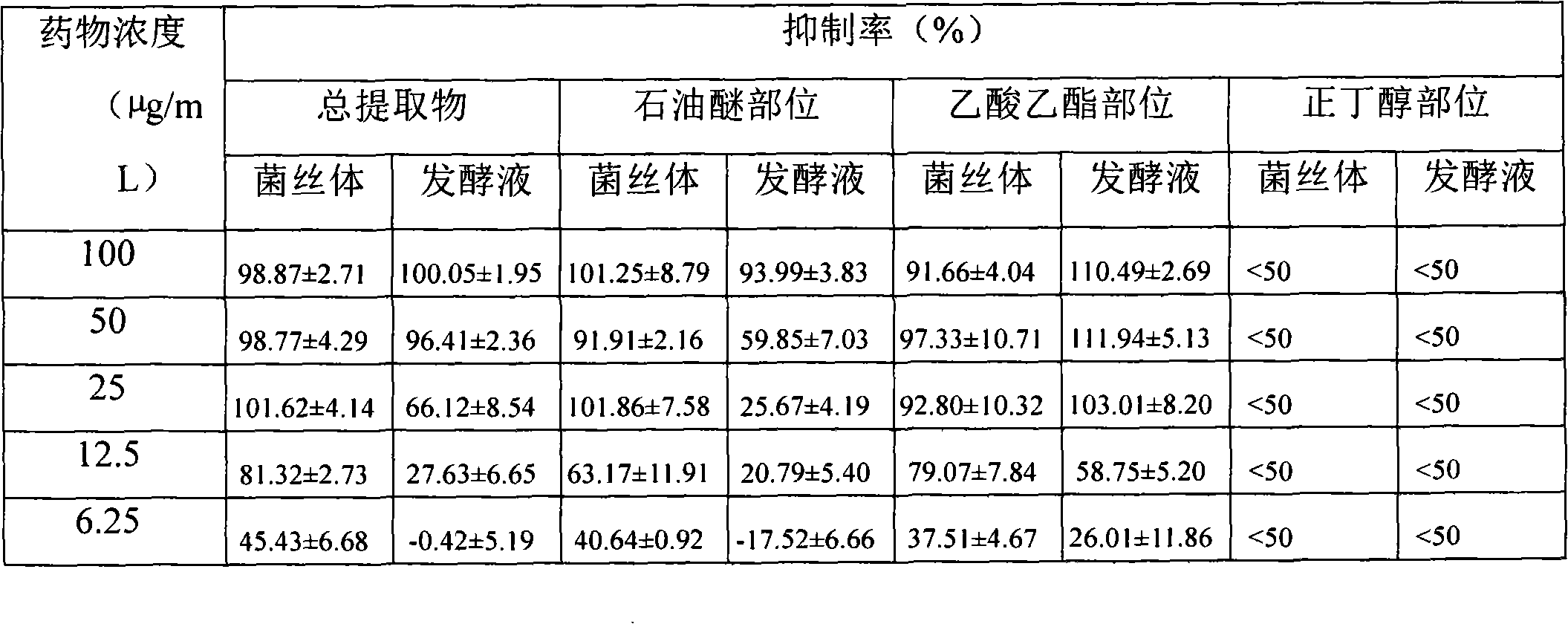
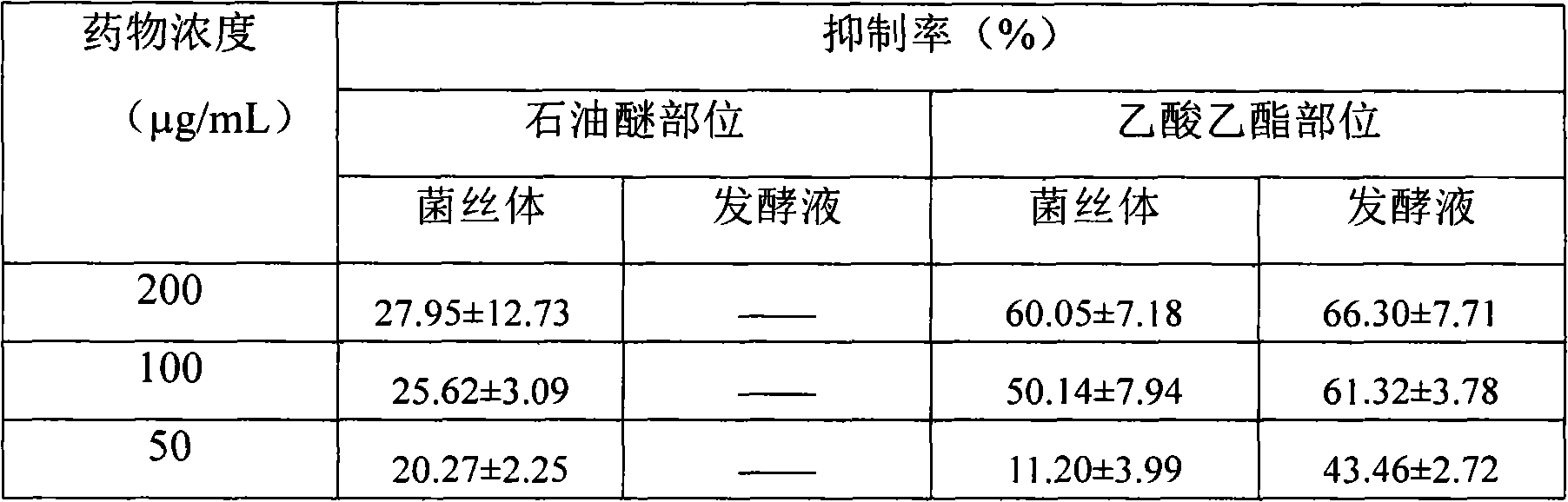
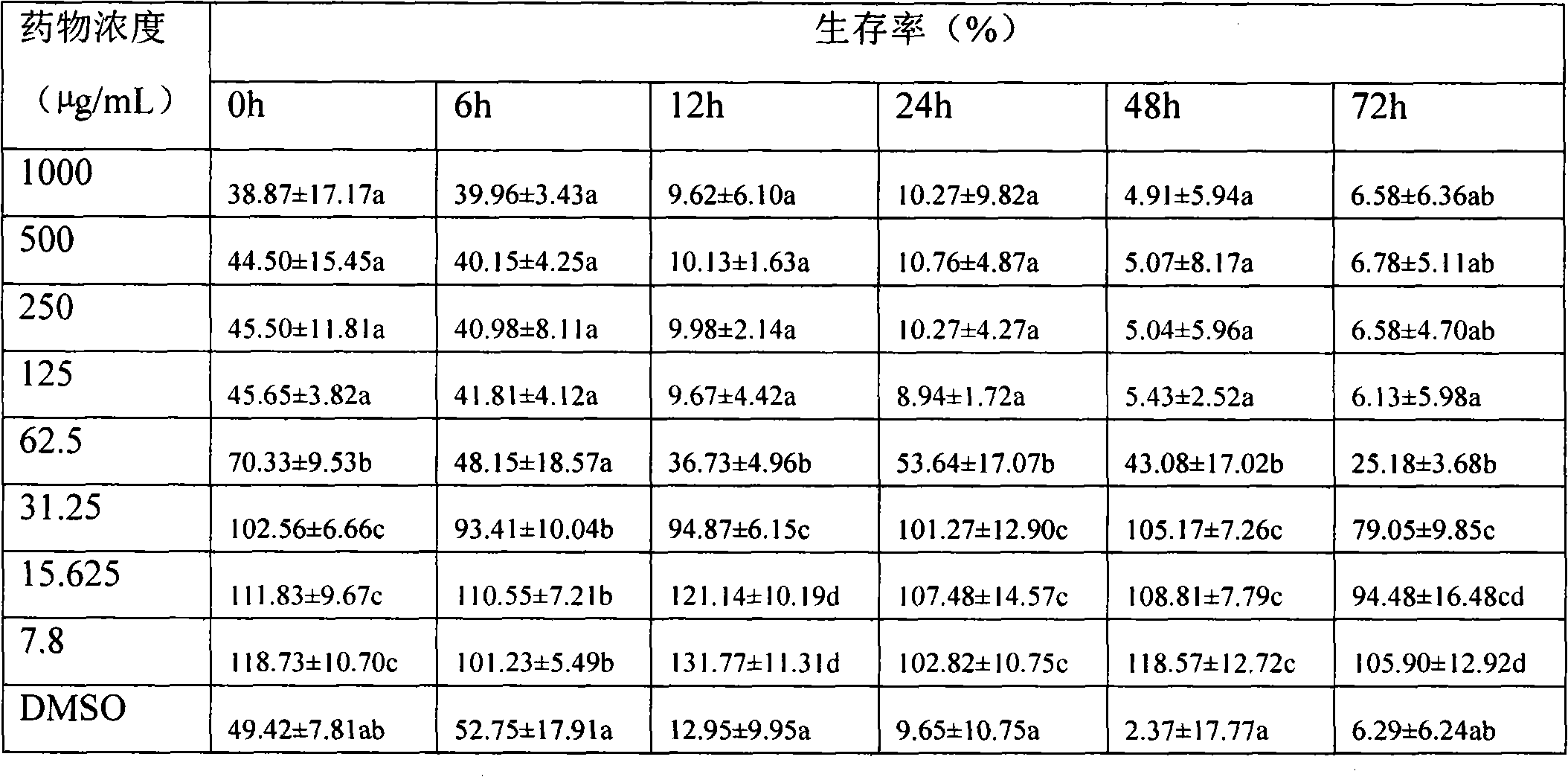
Examples
Embodiment
[0019] 1. Fermentation of fungi
[0020] After activation of the slant test tube strains preserved at low temperature, Charcoa bacterium Q-s-4 (Hypoxylon sp.) was transferred to a plate containing PDA medium, and cultured at a constant temperature of 25°C for 5 days. Uniform bacterial flakes, and access to wheat bran liquid culture medium in small pieces.
[0021] The composition of the wheat bran liquid medium is: 20 g / L of wheat bran (cook for 30 minutes, extract the juice), 30 g / L of glucose, KH 2 PO 4 2 g / L, MgSO 4 1 g / l. 100mL medium in 250mL Erlenmeyer bottle, sterilized at 122°C for 22 minutes, inoculated with Charcobacterium Q-s-4 (Hypoxylon sp.) according to the above method, and cultured in dark at 25°C for 14 days with shaking at 120 rpm.
[0022] 2. Obtaining of fungal fermentation products
[0023] After the fungus Q-s-4 was fermented and cultivated, it was filtered with a 100-mesh nylon net and divided into two parts: mycelium and fermentation liquid; the my...
PUM
 Login to View More
 Abstract
Description
Claims
Application Information
 Login to View More