
3-aryl quinoline compound as well as preparation method and medical application thereof
A compound and pharmaceutical technology, applied in the fields of organic chemistry, drug combination, anti-tumor drugs, etc., can solve the clinical treatment effect is not as good as Tamoxifen, venous thrombosis, vasodilation, endometrial cancer and drug resistance and other problems
- Summary
- Abstract
- Description
- Claims
- Application Information
AI Technical Summary
Problems solved by technology
Method used
Image

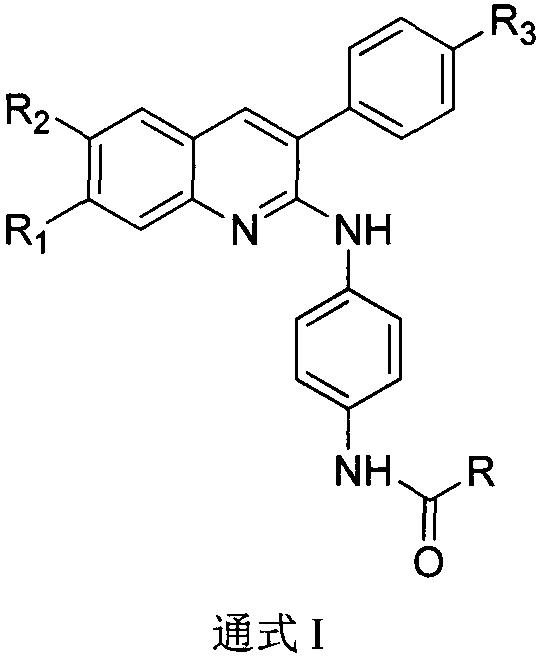
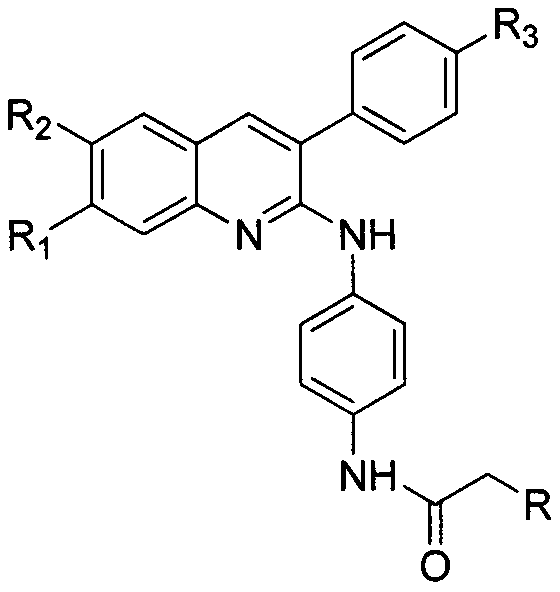
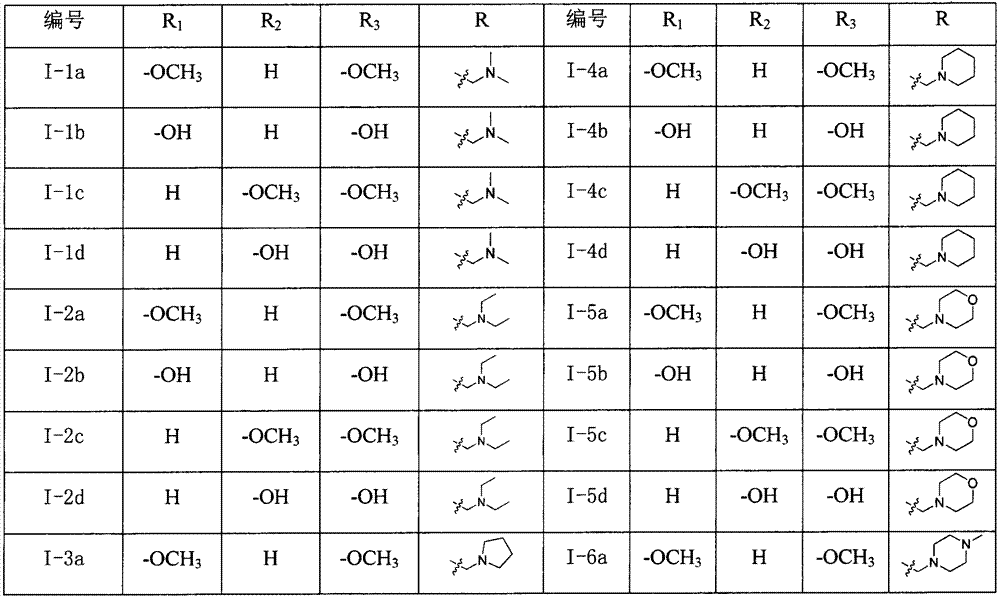
Examples
specific Embodiment approach
[0047] The specific embodiment (described embodiment is only used to illustrate the present invention, is not used to limit the present invention)
[0048] The preparation of some compounds is carried out as follows:
[0049] 1 H-NMR nuclear magnetic resonance was determined by Bruker AV300 (300MHz) nuclear magnetic resonance instrument (TMS was the internal standard), and mass spectrometry was determined by Shimadzu GC / MS-QP2010 mass spectrometer (EI-MS), Agilent1100LC-MSD-Trap / SL type mass spectrometer (ESI-MS) measurement.
[0050] The silica gel used for column chromatography is 100-200 mesh, 200-300 mesh or 300-400 mesh silica gel (Qingdao Ocean Chemical Factory), and the eluent is petroleum ether-ethyl acetate system or chloroform-methanol system. Thin-layer chromatography (TLC) uses a GF254 thin-layer chromatography plate (Yantai Jiangyou Silica Gel Development Co., Ltd.); the TLC development system is a petroleum ether-ethyl acetate system or a chloroform-methanol sy...
Embodiment 1
[0052] Preparation of N-(3-methoxyphenyl)-2-(4-methoxyphenyl)acetamide (3)
[0053] Dissolve p-methoxyphenylacetic acid 2 (5 g, 30.1 mmol), EDCI (5.78 g, 30.1 mmol), HOBt (4.06 g, 30.1 mmol) in 100 mL CH 2 Cl 2 , stirred at 0°C for 1 hour. Then 3-methoxyaniline (1) (3.7 g, 30.1 mmol) was added to the mixture and stirred at room temperature for 10 hours. The reaction solution was washed with saturated sodium chloride solution. The organic layer was evaporated under reduced pressure to give 3 (7.8 g, 96%) as a white solid. MS (ESI, m / z): 272.1 [M+H] +
Embodiment 2
[0055] Preparation of 2-chloro-7-methoxy-3-(4-methoxyphenyl)quinoline (4)
[0056] DMF (3 mL, 38.7 mmol) was added dropwise to POCl under ice bath 3 (12 mL, 129 mmol) and stirred for 30 minutes. Compound 3 (7 g, 25.8 mmol) was added into the mixture and stirred until dissolved, then heated to 100° C. for 4 hours. The mixture was then poured into ice water and extracted with ethyl acetate. The organic layer was evaporated under reduced pressure. Purified by column chromatography to obtain yellow solid 4 (5 g, 65%). MS (ESI, m / z): 301 [M+H] +
PUM
 Login to View More
 Abstract
Description
Claims
Application Information
 Login to View More