
Light-control nano-particle assembly and preparation method and application thereof
A nanoparticle assembly and nanoparticle technology, which is applied in wave energy or particle radiation treatment materials, drug combinations, pharmaceutical formulations, etc., can solve the problem of uncontrollable molecules and achieve the effect of easy control and simple operation
- Summary
- Abstract
- Description
- Claims
- Application Information
AI Technical Summary
Problems solved by technology
Method used
Image

Examples
Embodiment 1
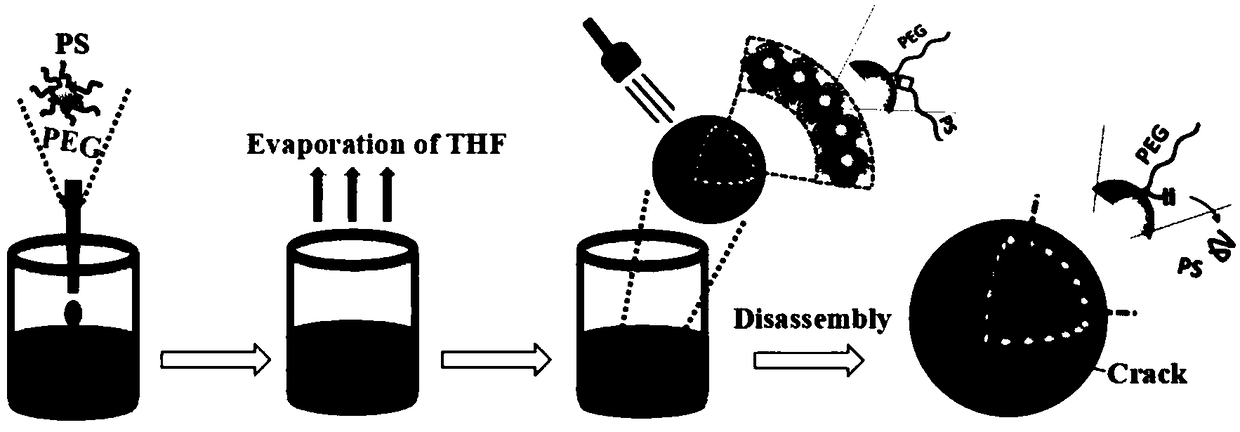
[0035] Example 1 Preparation method of gold nanoparticle vesicles for controlled drug release by ultraviolet light
[0036] This preparation method mainly comprises the following steps:
[0037] 1. Synthesis of photoresponsive polymer: It is worth noting that the photoresponsive group in the photoresponsive polymer is exemplified by coca isodioic acid, which can The four-membered ring will be broken, so that the hydrophilic and hydrophobic segments will be separated, and the chain structure of the polymer will be changed, so as to achieve the purpose of light-controlled drug release.
[0038] 1.1. Synthesis of the photoresponsive group: cinnamic acid was ring-closed under 365nm ultraviolet light irradiation to form the ultraviolet photoresponsive group coca-metadioic acid.
[0039] 1.2. Synthesis of polymers containing (S-S) bonds and coca ishalic acid:
[0040] 1.2.1. Synthesis of polystyrene (PS-coca-isodiacid) capped with coca-isodiacid:
[0041] (a) Monohydroxyl-termina...
Embodiment 6
[0068] Example 6 Disassembly test of gold nanoparticle vesicles releasing drugs in response to ultraviolet light
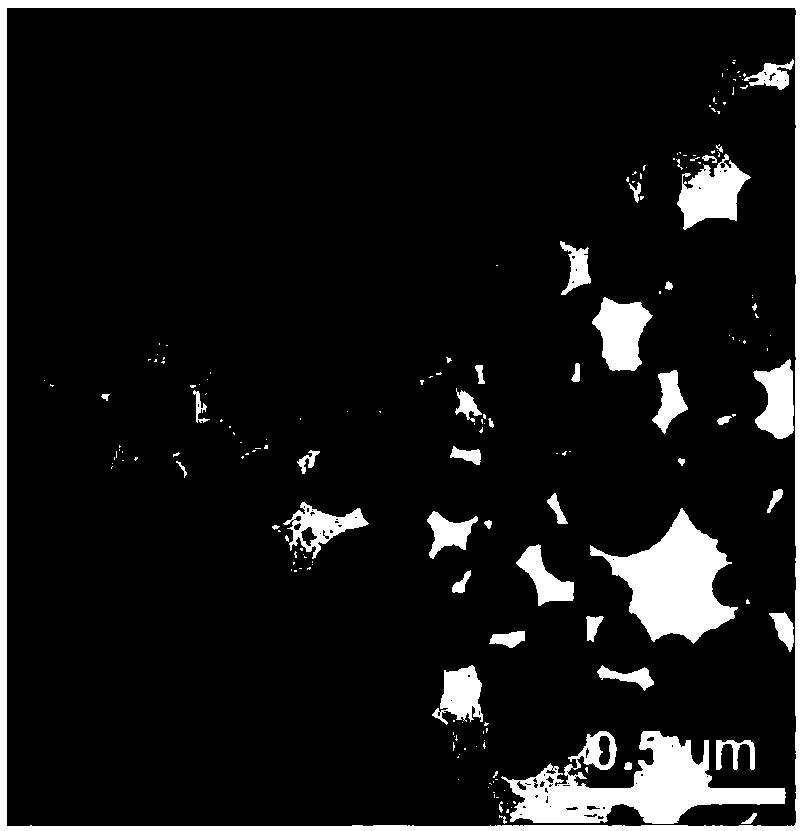
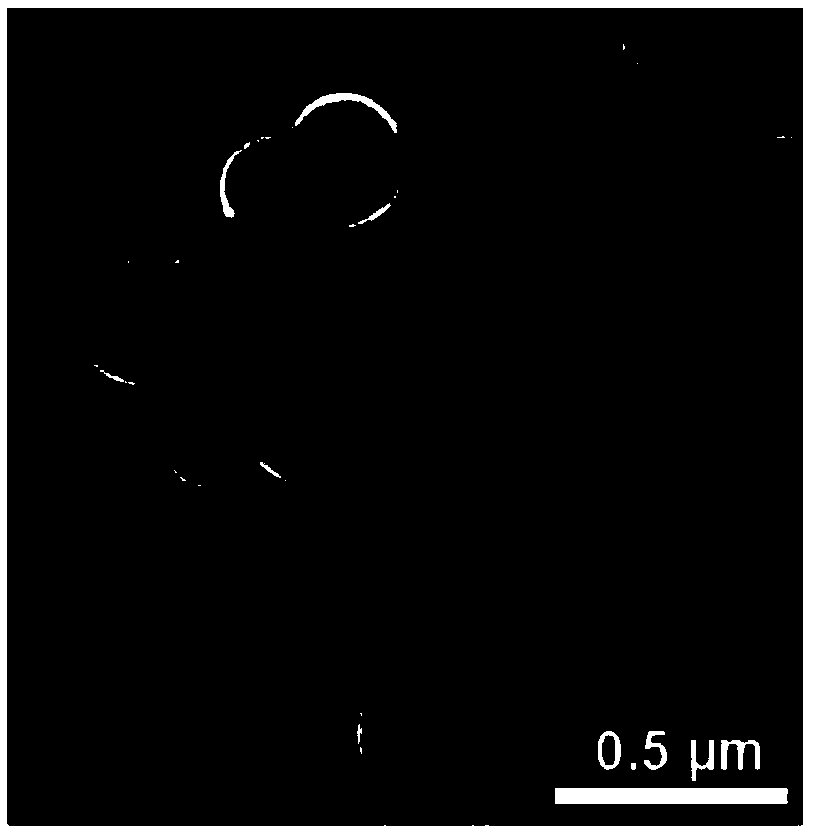
[0069] The gold nanoparticle vesicles that release drugs in response to ultraviolet light described in Example 1 were dispersed in water, and dynamic light scattering (DLS) was used to detect the disassembly process of the gold nanoparticle vesicles in real time. The particle size changes of the gold nanoparticle vesicles were monitored after 0min, 10min, 20min, and 30min of ultraviolet radiation, namely image 3 . The results showed that the vesicle size decreased successively after each UV irradiation, so the vesicle disassembly process could be further controlled by adjusting the UV irradiation time.
Embodiment 7
[0070] Example 7 Photothermal effect test of nanoparticle vesicles releasing drugs in response to ultraviolet light
[0071] The gold nanoparticle vesicles that release drugs in response to ultraviolet light described in Example 1 were dispersed in water, and their photothermal effects were measured at 0 μg / mL, 25 μg / mL, 50 μg / mL, 75 μg / mL, and 100 μg / mL ,Right now Figure 4 . The results showed that the photothermal effect of the gold nanoparticle vesicles was getting better and better with the increase of the concentration, which indicated that the gold nanoparticle vesicles had a better photothermal effect.
PUM
| Property | Measurement | Unit |
|---|---|---|
| Molar mass | aaaaa | aaaaa |
Abstract
Description
Claims
Application Information
 Login to View More