Unlock instant, AI-driven research and patent intelligence for your innovation.
Multi-specific antibody constructs
What is Al technical title?
Al technical title is built by PatSnap Al team. It summarizes the technical point description of the patent document.
A specificity, antibody technology, applied in the direction of antibodies, antibody medical components, specific peptides, etc., can solve the problem of reduced antibody activity
Pending Publication Date: 2021-03-16
BIOATLA LLC
View PDF43 Cites 0 Cited by
Summary
Abstract
Description
Claims
Application Information
AI Technical Summary
This helps you quickly interpret patents by identifying the three key elements:
Problems solved by technology
Method used
Benefits of technology
Problems solved by technology
Destabilizing mutations are expected to reduce the activity of the antibody by more than the amount predicted by standard rules (such as the Q10 rule)
Method used
the structure of the environmentally friendly knitted fabric provided by the present invention; figure 2 Flow chart of the yarn wrapping machine for environmentally friendly knitted fabrics and storage devices; image 3 Is the parameter map of the yarn covering machine
View more
Image
Smart Image Click on the blue labels to locate them in the text.
Viewing Examples
Smart Image
Click on the blue label to locate the original text in one second.
Reading with bidirectional positioning of images and text.
Smart Image
Examples
Experimental program
Comparison scheme
Effect test
example
[0276] Examples 1-15 for making conditionally active antibodies are described in WO 2017 / 078839.
example 16
[0277] Example 16: Multispecific Antibodies Binding to CD3 and Axl
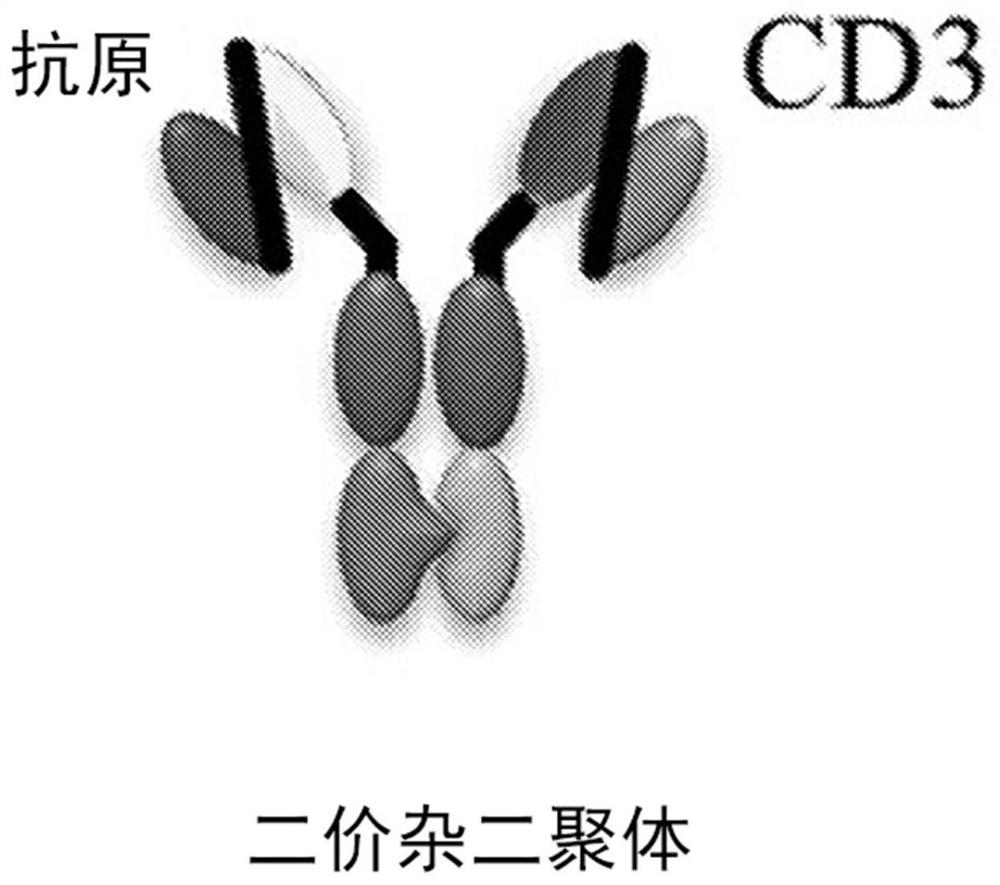
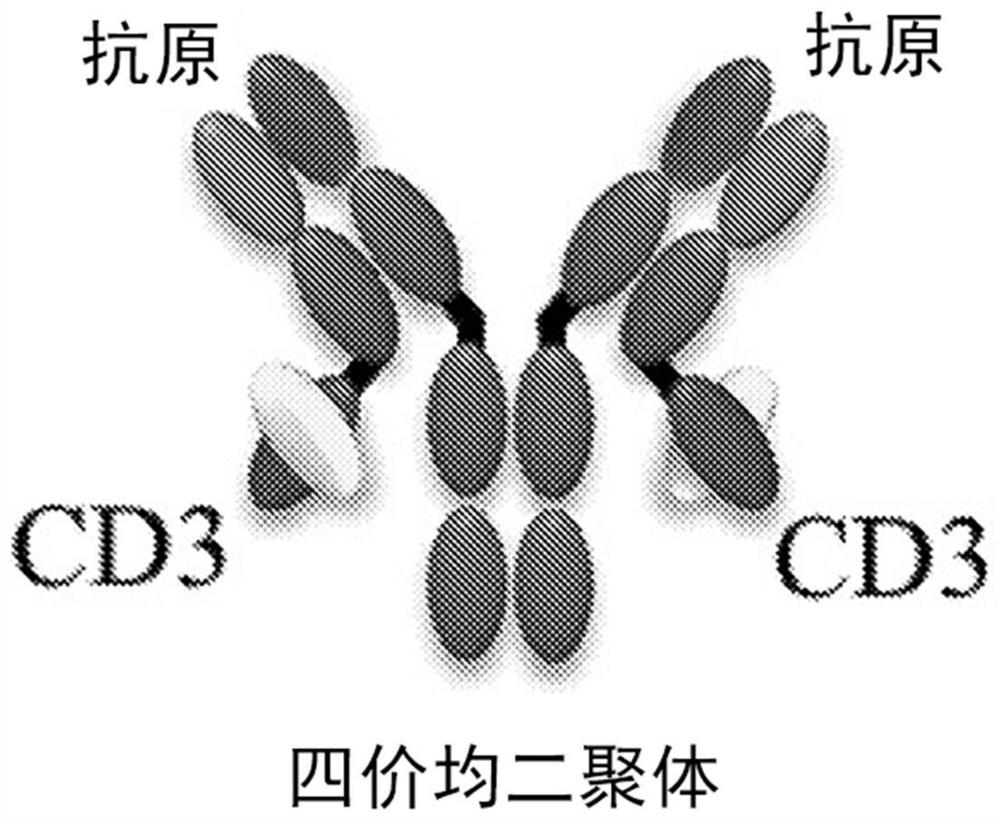
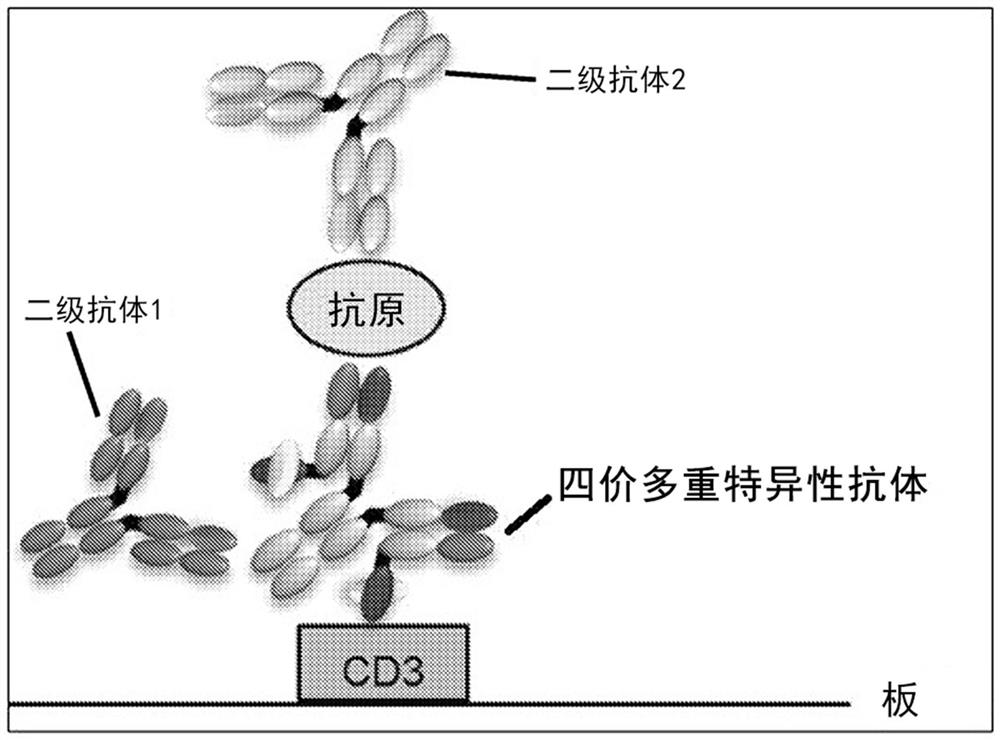
[0278] Two multispecific antibodies were constructed. A multispecific antibody uses a non-conditionally active binding site (scFv antibody) to CD3 (WT-CD3), which is paired with a non-conditionally active binding site (IgG antibody) to Axl (WT-Axl), to Available in butterfly configuration WT-CD3-WT-Axl ( figure 2 with 3A -3C). Similarly, a secondary multispecific antibody uses a non-conditionally active binding site (scFv antibody) to CD3 (WT-CD3), which is paired with a conditionally active binding site (IgG antibody) to Axl (CAB-Axl) , to provide a butterfly configuration WT-CD3-CAB-Axl ( figure 2 with 3A -3C).
[0279] Using ELISA assay, the affinities of the two multispecific antibodies to CD3 and Axl were determined at pH 6.0 and pH 7.4 respectively ( Figures 3B-3C ). The ELISA assay of this application uses the following protocol:
[0280] 1. The day before the ELISA assay, coat a 96-well pl...
example 17
[0301] Example 17: Multispecific Antibodies Binding to CD3 and Axl
[0302] In this example, additional multispecific antibodies that bind to CD3 and Axl were constructed. Multispecific antibodies were prepared as described in Example 16 and named in the same manner as Example 16:
[0303] Axl-WT×CD3-CAB1: pairing of non-conditionally active binding site for Axl with conditionally active binding site for CD3;
[0304] Axl-WT×CD3-CAB3: pairing of non-conditionally active binding site for Axl with conditionally active binding site for CD3;
[0305] Axl-WT×CD3-CAB4: pairing of non-conditionally active binding site for Axl with conditionally active binding site for CD3;
[0306] Axl-WT × CD3-WT: pairing of the non-conditionally active binding site for Axl with the non-conditionally active binding site of CD3;
[0307] Axl-CAB×CD3-CAB1: pairing of the conditionally active binding site for Axl with the conditionally active binding site for CD3;
[0308] Axl-CAB x CD3-CAB3: pairi...
the structure of the environmentally friendly knitted fabric provided by the present invention; figure 2 Flow chart of the yarn wrapping machine for environmentally friendly knitted fabrics and storage devices; image 3 Is the parameter map of the yarn covering machine
Login to View More
PUM
Login to View More
Abstract
A multi-specific antibody contains at least one binding site for a cell specific antigen and at least one binding site for a tumor-reactive lymphocyte antigen and a multi-specific antibody including an IgG antibody or fragment thereof that binds to a first antigen; and at least one scFv antibody that binds to a second antigen that is different from the first antigen and is linked to a C terminus of at least one light chain or heavy chain of said IgG antibody or fragment. The multi-specific antibody reversibly binds to at least one of the cell specific antigen and tumor-reactive lymphocyte antigen or the first antigen and the second antigen with a greater affinity at an aberrant condition than at a normal physiological condition. Conjugates of the multi-specific antibodies and methods for generating the multi-specific antibody are also provided.
Description
technical field [0001] The present disclosure relates to the field of multispecific antibodies. Specifically, the present disclosure relates to a multispecific antibody having at least one conditional activity and methods for producing said multispecific antibody. Background technique [0002] Proteins can be engineered to have various characteristics, such as higher activity or improved stability for manipulation under different conditions. For example, enzymes have evolved to be stable at higher temperatures with varying levels of activity. Where there is an improvement in activity at higher temperatures, a major part of the improvement can be attributed to what is usually described by the Q10 rule (where it is estimated that, in the case of enzymes, the conversion rate doubles for every 10°C increase in temperature) Higher kinetic activity. Mutations introduced in improved proteins generally reduce the activity of the protein under normal operating conditions. Mutant ...
Claims
the structure of the environmentally friendly knitted fabric provided by the present invention; figure 2 Flow chart of the yarn wrapping machine for environmentally friendly knitted fabrics and storage devices; image 3 Is the parameter map of the yarn covering machine
Login to View More
Application Information
Patent Timeline
Application Date:The date an application was filed.
Publication Date:The date a patent or application was officially published.
First Publication Date:The earliest publication date of a patent with the same application number.
Issue Date:Publication date of the patent grant document.
PCT Entry Date:The Entry date of PCT National Phase.
Estimated Expiry Date:The statutory expiry date of a patent right according to the Patent Law, and it is the longest term of protection that the patent right can achieve without the termination of the patent right due to other reasons(Term extension factor has been taken into account ).
Invalid Date:Actual expiry date is based on effective date or publication date of legal transaction data of invalid patent.

 Login to View More
  Login to View More