Thymus-dependent lymphocyte antigen epitope peptides of hepatitis B virus antigens and application thereof
A hepatitis B virus and antigen epitope technology, applied in the fields of medical immunology and infectious diseases, can solve the problems of restricting personalized detection and restricting the research of HBV-specific T cell action
- Summary
- Abstract
- Description
- Claims
- Application Information
AI Technical Summary
Problems solved by technology
Method used
Image

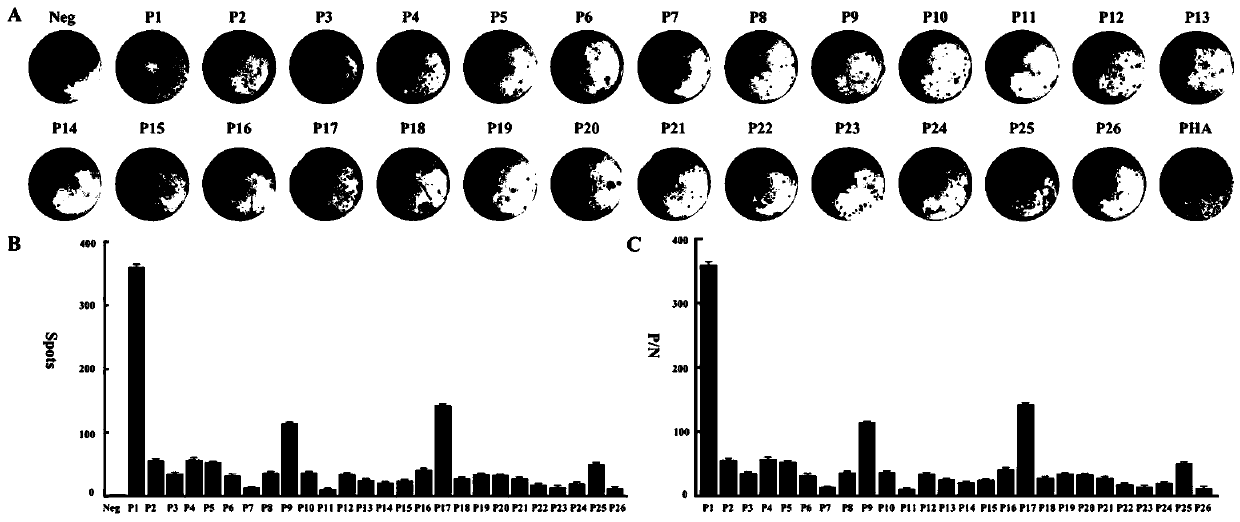
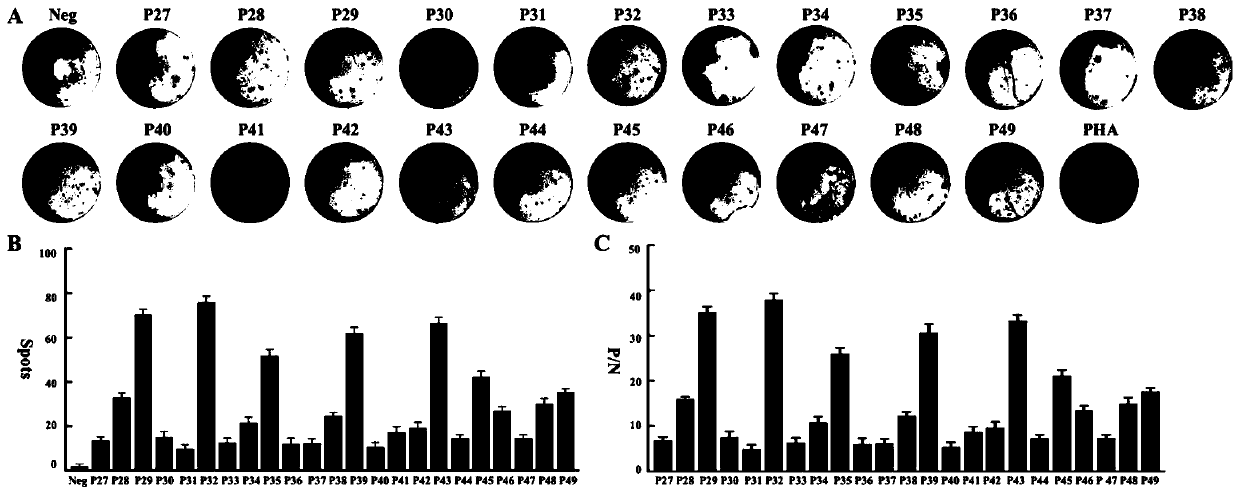
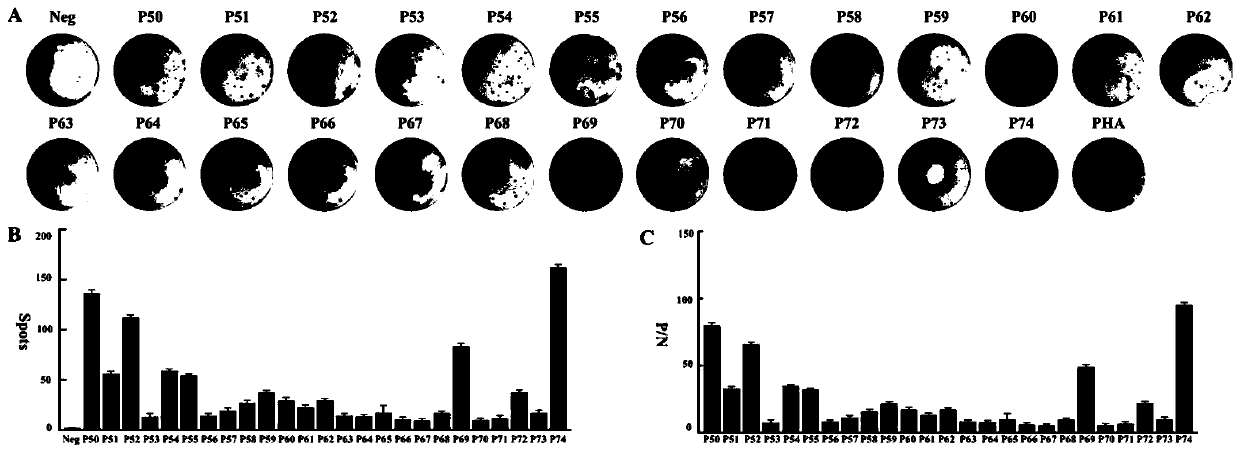
Examples
Embodiment 1
[0045] HLA-A0201, A1101, A2402, A3101, A0206, A0207, A3303, A3001, A0203, A1102, A0301, A0101, A2601 molecule-restricted HBV-specific antigen peptides of the present invention, the sequence is screened and identified through the following steps:
[0046] 1. Online virtual prediction of dominant T cell epitope peptides of 4 HBV antigens restricted by two HLA-A molecules
[0047] Four HBV proteins were selected: surface antigen (HBsAg), e antigen (HBeAg, including the sequence of HBcAg), DNA polymerase (HBpol) and X protein (HBx), and their amino acid sequences were obtained by searching the UniProt global protein resource database. HBV protein sequence of the most infected HBV type C; then through six commonly used epitope peptide prediction databases including SYFPEITHI, BIMAS, SVMHC, IEDB, NETMHC, EPIJEN, etc. A3001, A0203, A1102, A0301, A0101, A2601 molecularly restricted T cell epitope peptides for each of the above HBV proteins for virtual prediction, in which the SVMHC da...
PUM
 Login to View More
 Abstract
Description
Claims
Application Information
 Login to View More