
Ochrobactrum anthropic with hexavalent chromium reduction and active black 5 degradation functions and application of ochrobactrum anthropic
A technology of Bacillus pallidum and Bacillus pallidum, applied in bacteria, chemical instruments and methods, microorganism-based methods, etc., can solve problems such as reduced efficiency, and achieve the effect of huge practical application prospects.
- Summary
- Abstract
- Description
- Claims
- Application Information
AI Technical Summary
Problems solved by technology
Method used
Image

Examples
Embodiment 1
[0021] Embodiment 1: Morphological characteristics of degrading active black 5 and reducing hexavalent chromium strain Ochrobactrum anthropic S1 of the present invention
[0022] Streak inoculate a single colony into LB solid medium, place the plate upside down in a constant temperature incubator, and incubate at 30°C for 12h. Gram-negative, obligate aerobic, the colonies are smooth and round, with a raised center and bright translucent.
Embodiment 2
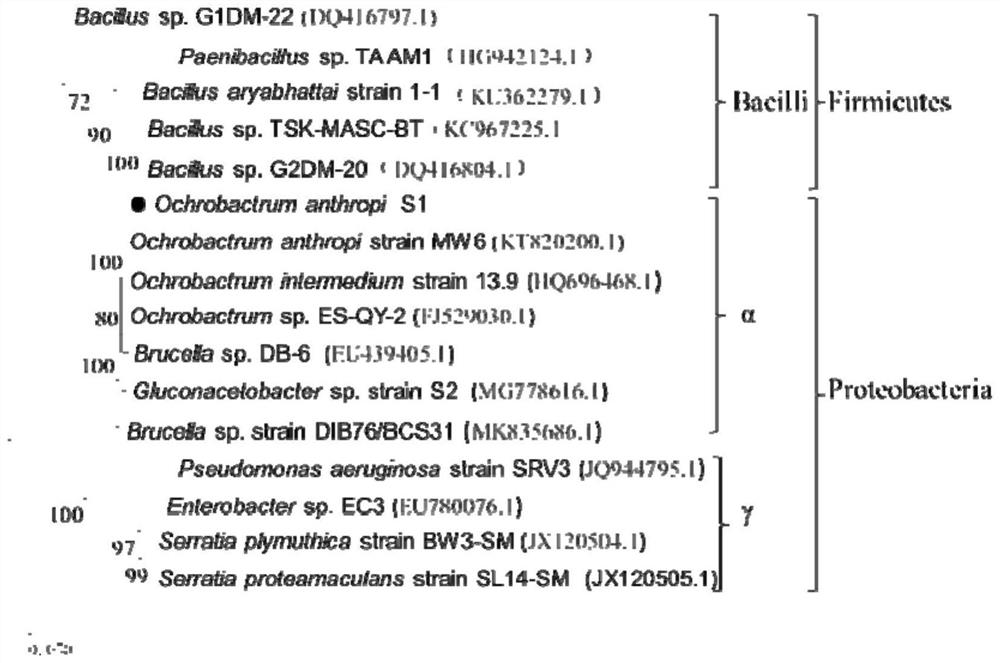
[0023] Example 2: Screening and Phylogenetic Identification of Degradative Active Black 5 and Hexavalent Chromium-reducing Strain Ochrobactrum anthropic S1 of the Present Invention
[0024] (1) Activated sludge samples collected by Guangzhou Dongguan Textile Printing and Dyeing Factory were sent to the laboratory at low temperature for further screening and analysis of the target strains.
[0025] (2) In the laboratory environment: utilize the anaerobic reactor to carry out further domestication to the activated sludge, the stoste after domestication carries out gradient dilution, with 10 -6 In order to dilute the final concentration, spread evenly on LB solid plate, and incubate in a 30°C constant temperature incubator for 12 hours. After repeated separation and purification, a single strain S1 capable of degrading active black 5 and reducing hexavalent chromium was finally obtained.
[0026] (3) The genomic DNA of S1 was extracted and its 16S rDNA fragment was amplified, an...
Embodiment 3
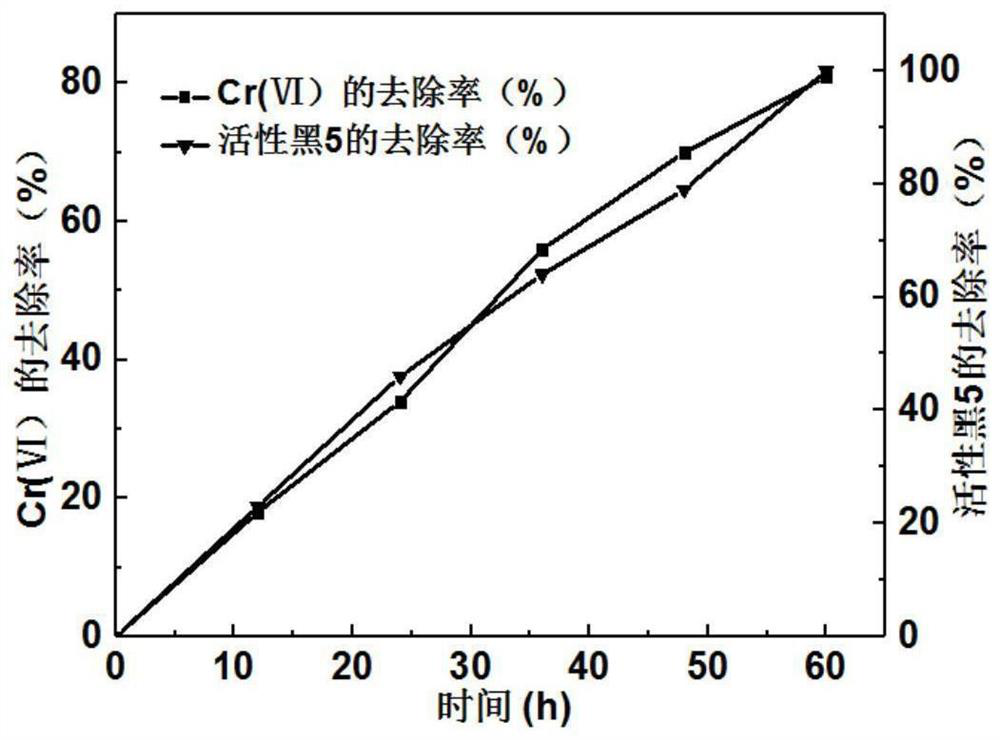
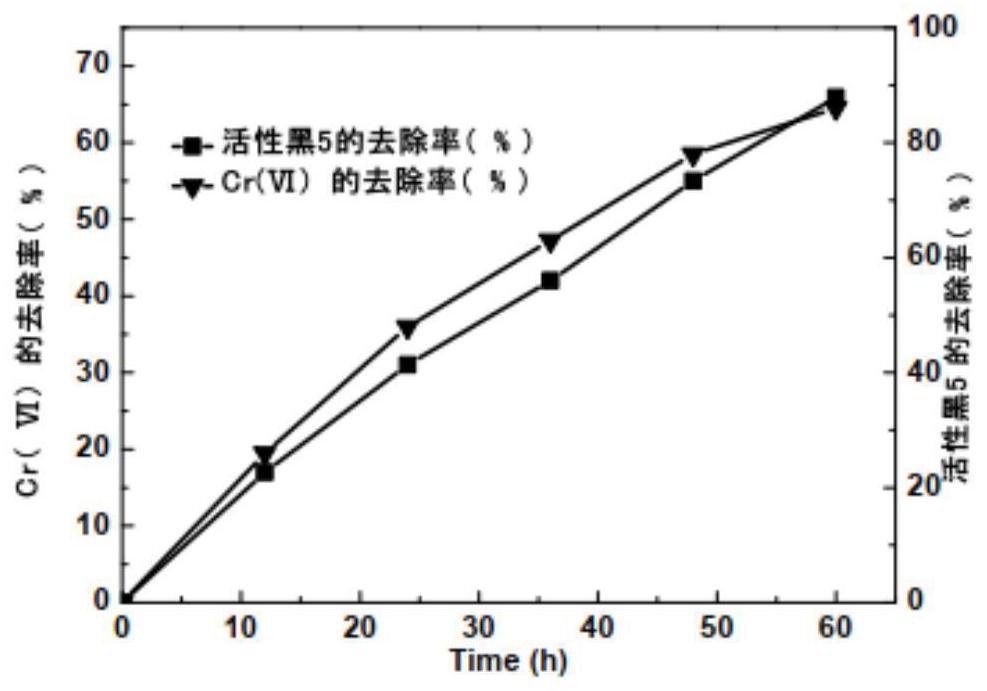
[0027] Embodiment 3: Degradation active black 5 of the present invention and reduction hexavalent chromium bacterial strain Ochrobactrum anthropic S1 are to the removal effect of active black 5 and hexavalent chromium
[0028] (1) Prepare LB liquid medium, and pick a single colony of Ochrobactrum anthropic S1 on the LB solid plate to inoculate in the LB liquid medium, and cultivate overnight, which is the S1 seed solution.
[0029] (2) Mix 10mL seed liquid with 90mL sterilized medium, then add potassium dichromate powder dried to constant weight in this medium, so that the Cr(Ⅵ) concentration in the system is 20mg / L, and Cultivate at 30°C, 180rpm. Samples were taken every 12 hours to analyze the remaining Cr(Ⅵ) content. The results showed that Ochrobactrum anthropic S1 had a removal rate of 80.6% for Cr(Ⅵ).
[0030](3) Mix 10mL seed liquid with 90mL sterilized medium, then add reactive black 5 powder to this medium to make the concentration 50mg / L, and cultivate it under sta...
PUM
 Login to View More
 Abstract
Description
Claims
Application Information
 Login to View More