Check patentability & draft patents in minutes with Patsnap Eureka AI!

Vehicle signaling system

a technology of vehicle signaling and signaling system, which is applied in the direction of vehicle components, signalling/lighting devices, optical signalling, etc., can solve the problems of limited visibility of operators, inability to accelerate and decelerate, and inherently relatively large siz

Inactive Publication Date: 2004-03-04
SCHOOLEY RONALD L
View PDF0 Cites 3 Cited by
  • Summary
  • Abstract
  • Description
  • Claims
  • Application Information

AI Technical Summary

Benefits of technology

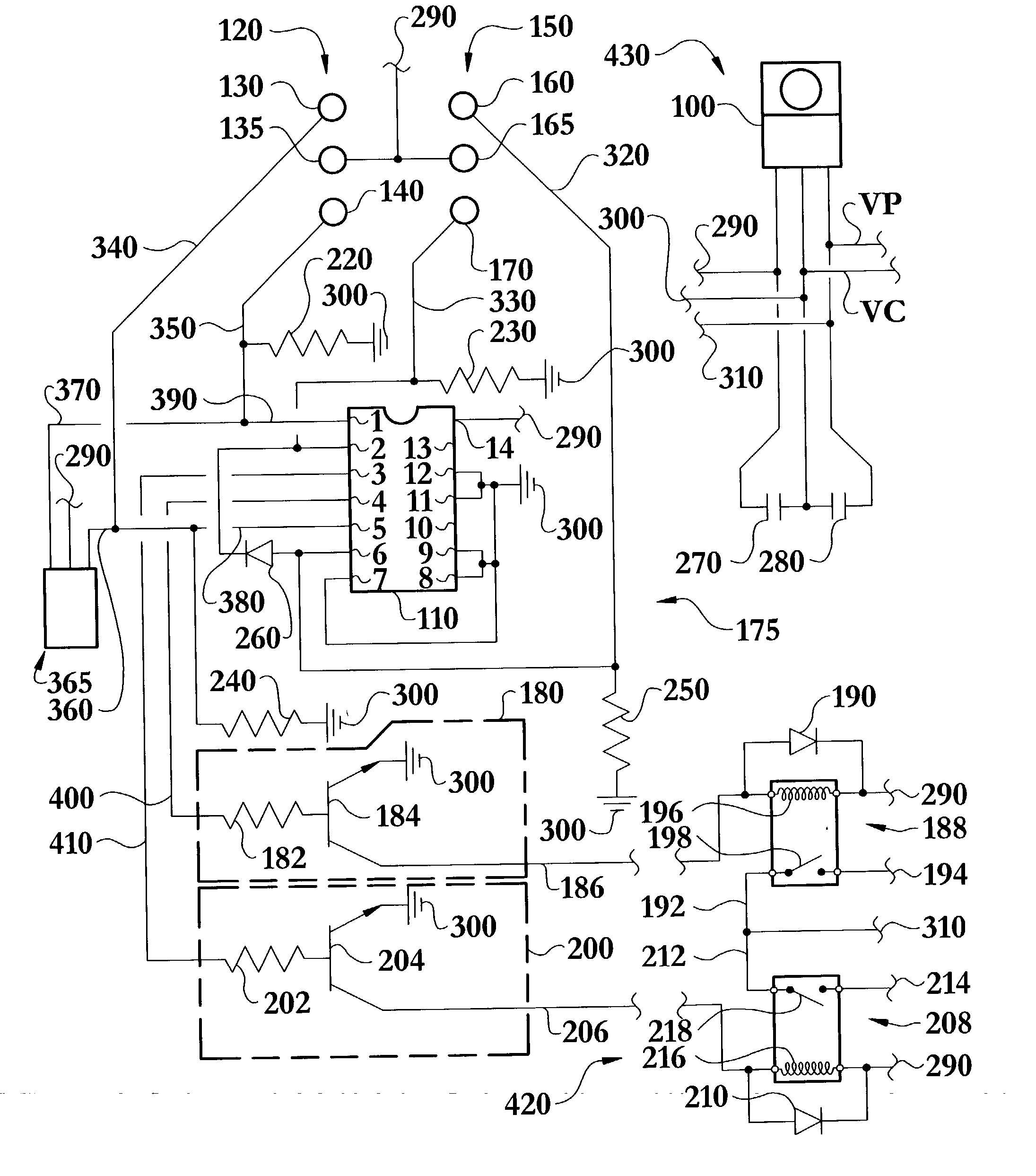
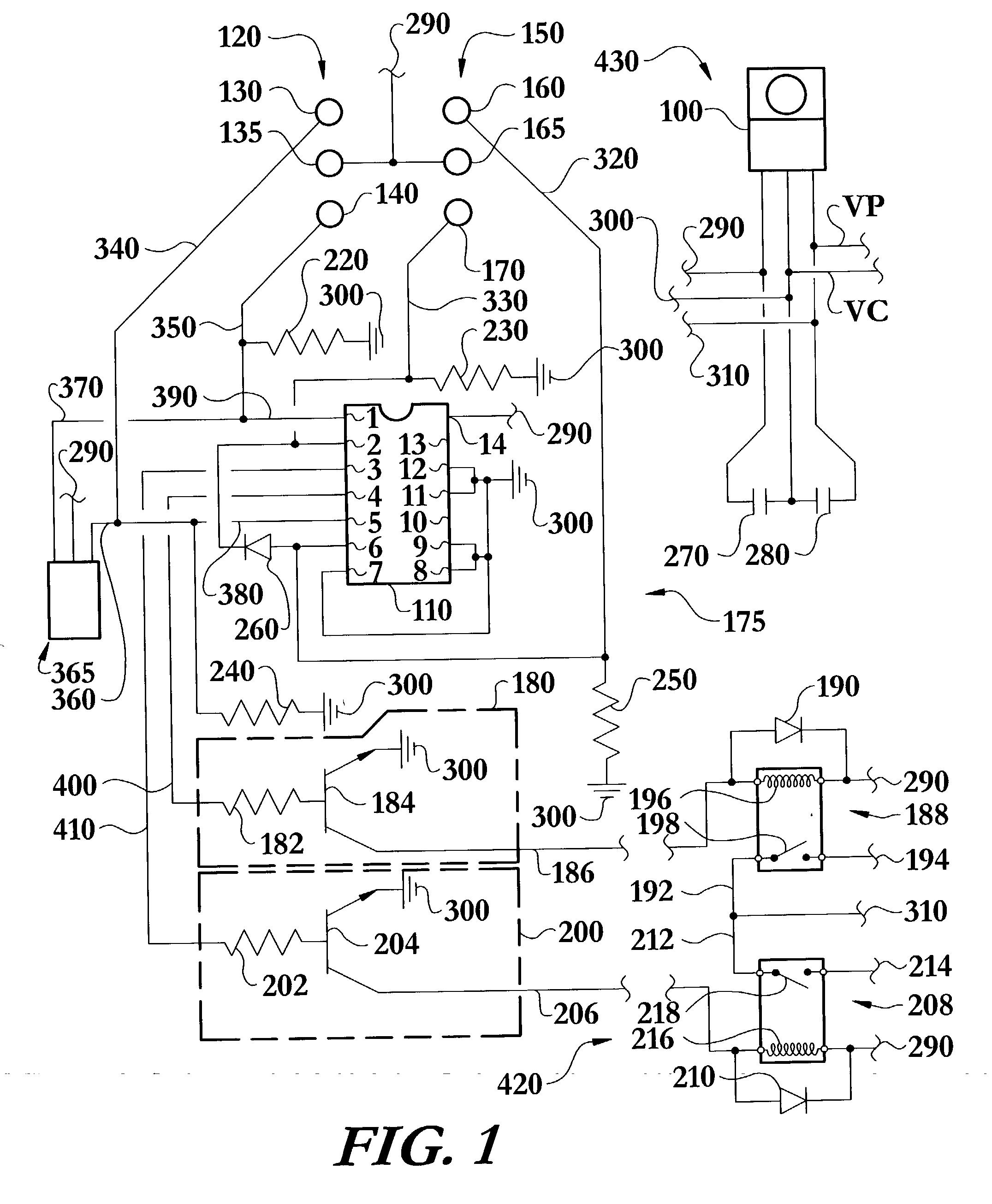
"The present invention is a vehicle signaling system that allows for selective and independent illumination of a vehicle's headlights and taillights, regardless of the vehicle's power system. This system can be retrofitted into existing vehicles or incorporated into the design and manufacture of new vehicles. It allows for safe and convenient signaling between vehicles, improving safety on the road. The vehicle signaling system includes an intermittent activation and deactivation system and a continuous activation and deactivation system, as well as a power obtaining system. The system can be easily incorporated into existing vehicles and offers a variety of options for power connection. Overall, the invention provides greater flexibility, safety, and convenience for vehicle signaling."

Problems solved by technology

Due to the nature of their design, certain vehicles, particularly trucks, are inherently relatively large, long, heavy, slow to accelerate and decelerate, and give their operator limited fields of visibility, especially to the rear.
As a result, a persistent problem exists in the operation of trucks upon the roadways, particularly on highways.
When a truck overtakes and passes another vehicle, particularly another truck, it is difficult for the passing truck operator, who generally must rely only on his or her rear view mirrors, to accurately gauge when the operator's truck has fully passed the vehicle that it has overtaken.
Errors made in this determination are literally life threatening.
This informal system, while widely used, is not free from drawbacks that are both inconvenient and potentially dangerous.
This extra step is another demand on the driver's attention, which may cause accidents.
If a driver leaves the lighting system energized in the daytime after a signal, extra operating time is placed on the light bulbs, additional energy is consumed thereby reducing fuel economy, and the vehicle batteries may be drained if the vehicle is shut down without turning off the lighting system.
At night, another complication is present.
This can cause the overtaken vehicle to appear to temporarily disappear, on a dark roadway, to other vehicles behind it, as for a period of time the vehicle is traveling with no lights on.
Other drivers may be startled by the sudden apparent disappearance of a large truck in front of them.
The sudden loss of forward illumination can cause the driver of the overtaking truck to momentarily lose sight of the roadway, and any objects upon it, which can be extremely dangerous.
The sudden flashing of headlights can also alarm drivers in an opposing flow of traffic.
Alternatives for signaling are used but possess serious drawbacks.
Horn signals may be difficult to hear, may startle other drivers in close proximity, and create adverse unnecessary noise.
Citizens band radios, which are not universally carried in all vehicles, may be used, but reception and transmission can be problematic depending on various factors, including weather conditions and others' use of the potentially crowded airwaves.
While some of the prior art devices attempted to improve various aspects of the state of the art of vehicle lighting systems, none has achieved the cost optimized capability of the present invention, which is easy to fabricate and convenient to use.

Method used

the structure of the environmentally friendly knitted fabric provided by the present invention; figure 2 Flow chart of the yarn wrapping machine for environmentally friendly knitted fabrics and storage devices; image 3 Is the parameter map of the yarn covering machine
View more

Image

Smart Image Click on the blue labels to locate them in the text.
Viewing Examples
Smart Image
  • Vehicle signaling system
  • Vehicle signaling system

Examples

Experimental program
Comparison scheme
Effect test

Embodiment Construction

[0025] The vehicle signaling system of the instant invention enables a significant advance in the state of the art. The preferred embodiments of the apparatus accomplish this by new and novel arrangements of elements that are configured in unique and novel ways and which demonstrate previously unavailable but preferred and desirable capabilities.

[0026] The detailed description set forth below in connection with the drawing is intended merely as a description of the presently preferred embodiments of the invention, and is not intended to represent the only form in which the present invention may be constructed or utilized. The description sets forth the designs, functions, means, and methods of implementing the invention in connection with the illustrated embodiments. It is to be understood, however, that the same or equivalent functions and features may be accomplished by different embodiments that are also intended to be encompassed within the spirit and scope of the invention.

[002...

the structure of the environmentally friendly knitted fabric provided by the present invention; figure 2 Flow chart of the yarn wrapping machine for environmentally friendly knitted fabrics and storage devices; image 3 Is the parameter map of the yarn covering machine
Login to View More

PUM

No PUM Login to View More

Abstract

A vehicle signaling system allowing selective and independent illumination of a vehicle's headlight and taillight systems. The vehicle signaling system may be made part of new vehicle manufacture, or a retrofit installation. The selective and independent illumination allows an overtaking vehicle and an overtaken vehicle to safely signal each other by means of independently activating and deactivating the headlight and taillight systems. The vehicle signaling system is connected into the vehicle's power source and ground, and incorporates a means for intermittently and independently activating and deactivating the headlight system and the taillight system, and may include a remote auxiliary means for activating the systems. An electrical circuit controlling means accepts a plurality of inputs and produces a plurality of outputs used to either interrupt, or supply, power to the headlight and taillight systems. The electrical circuit controlling means may include an integrated circuit.

Description

[0001] The present invention relates to the field of vehicle signaling systems; particularly, to a device for conveniently and independently activating and deactivating vehicle headlights and taillights to signal other vehicles, regardless of whether the headlights or taillights are presently illuminated.[0002] Due to the nature of their design, certain vehicles, particularly trucks, are inherently relatively large, long, heavy, slow to accelerate and decelerate, and give their operator limited fields of visibility, especially to the rear. As a result, a persistent problem exists in the operation of trucks upon the roadways, particularly on highways. When a truck overtakes and passes another vehicle, particularly another truck, it is difficult for the passing truck operator, who generally must rely only on his or her rear view mirrors, to accurately gauge when the operator's truck has fully passed the vehicle that it has overtaken. Such a determination is critical to deciding when i...

Claims

the structure of the environmentally friendly knitted fabric provided by the present invention; figure 2 Flow chart of the yarn wrapping machine for environmentally friendly knitted fabrics and storage devices; image 3 Is the parameter map of the yarn covering machine
Login to View More

Application Information

Patent Timeline
no application Login to View More
Patent Type & Authority Applications(United States)
IPC IPC(8): B60Q1/46B60Q1/50
CPCB60Q1/50B60Q1/46
Inventor SCHOOLEY, RONALD L.
Owner SCHOOLEY RONALD L
Features
  • R&D
  • Intellectual Property
  • Life Sciences
  • Materials
  • Tech Scout
Why Patsnap Eureka
  • Unparalleled Data Quality
  • Higher Quality Content
  • 60% Fewer Hallucinations
Social media
Patsnap Eureka Blog
Learn More