Modeling method for a metal

a technology of metal modeling and metal, applied in the field of metal modeling, can solve the problem that the name has not gained universal acceptance, and achieve the effect of better modeling results

US20050016712A1Active Publication Date: 2005-01-27PRIMETALS TECH GERMANY
1 Cites 15 Cited by

Patent Information

Authority / Receiving Office
US · United States
Patent Type
Applications(United States)
Current Assignee / Owner
Publication Date
2005-01-27

Smart Images

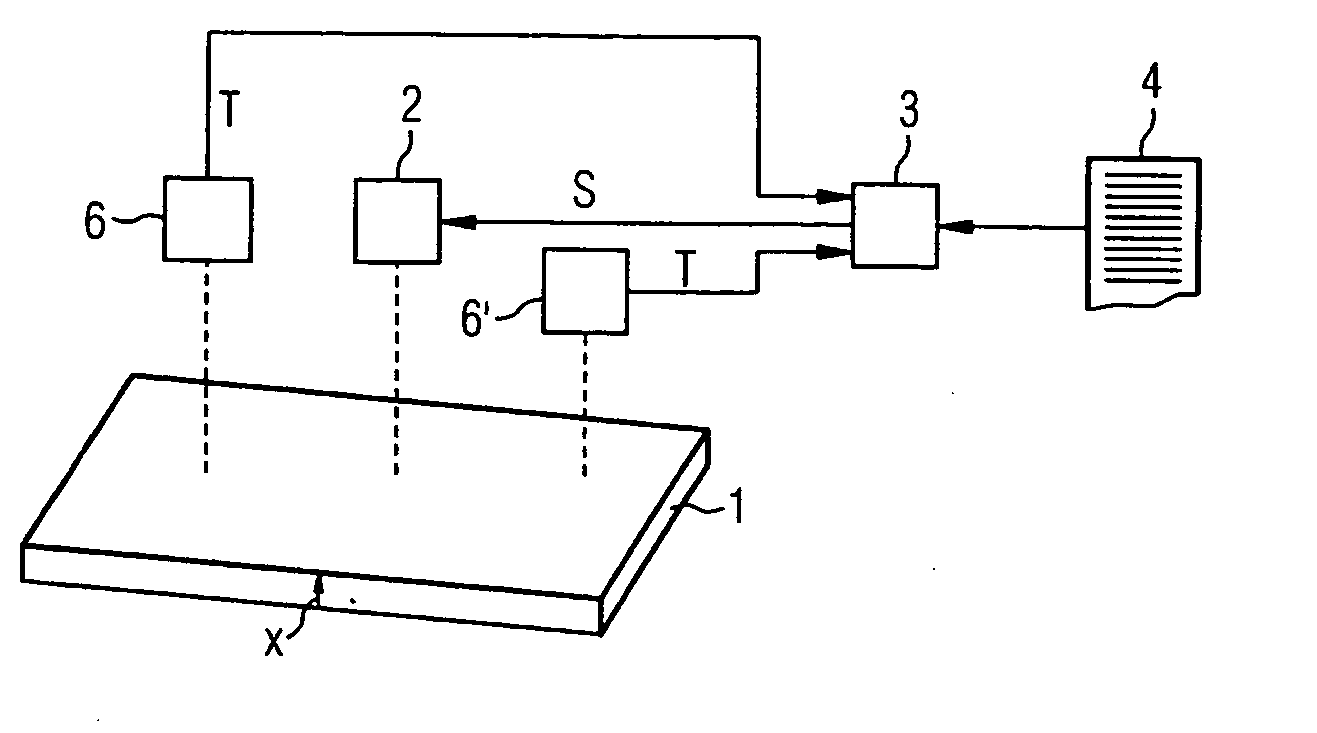
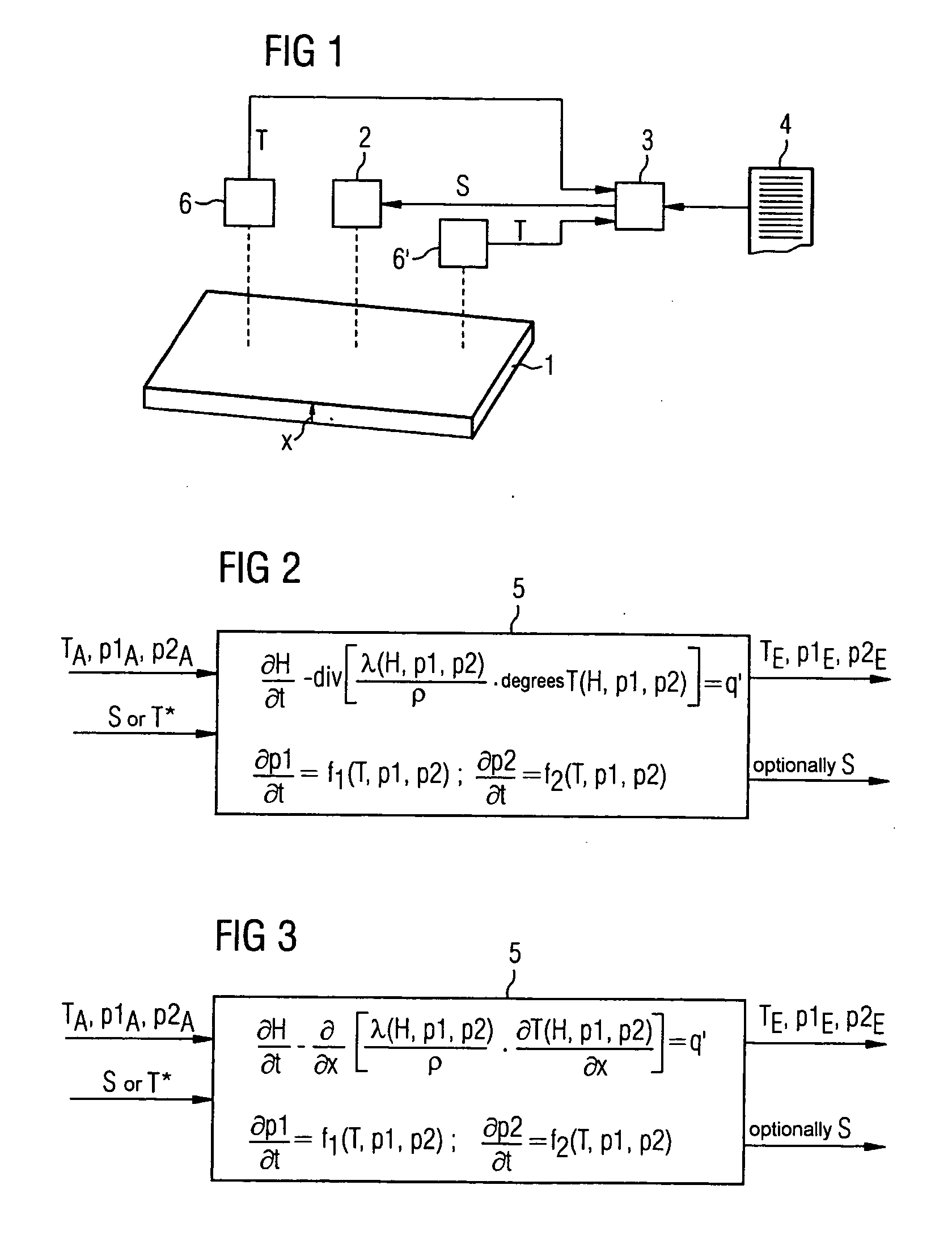
  • Figure 1
    Figure 1
  • Figure 2
    Figure 2
  • Figure 3
    Figure 3
Patent Text Reader

Abstract

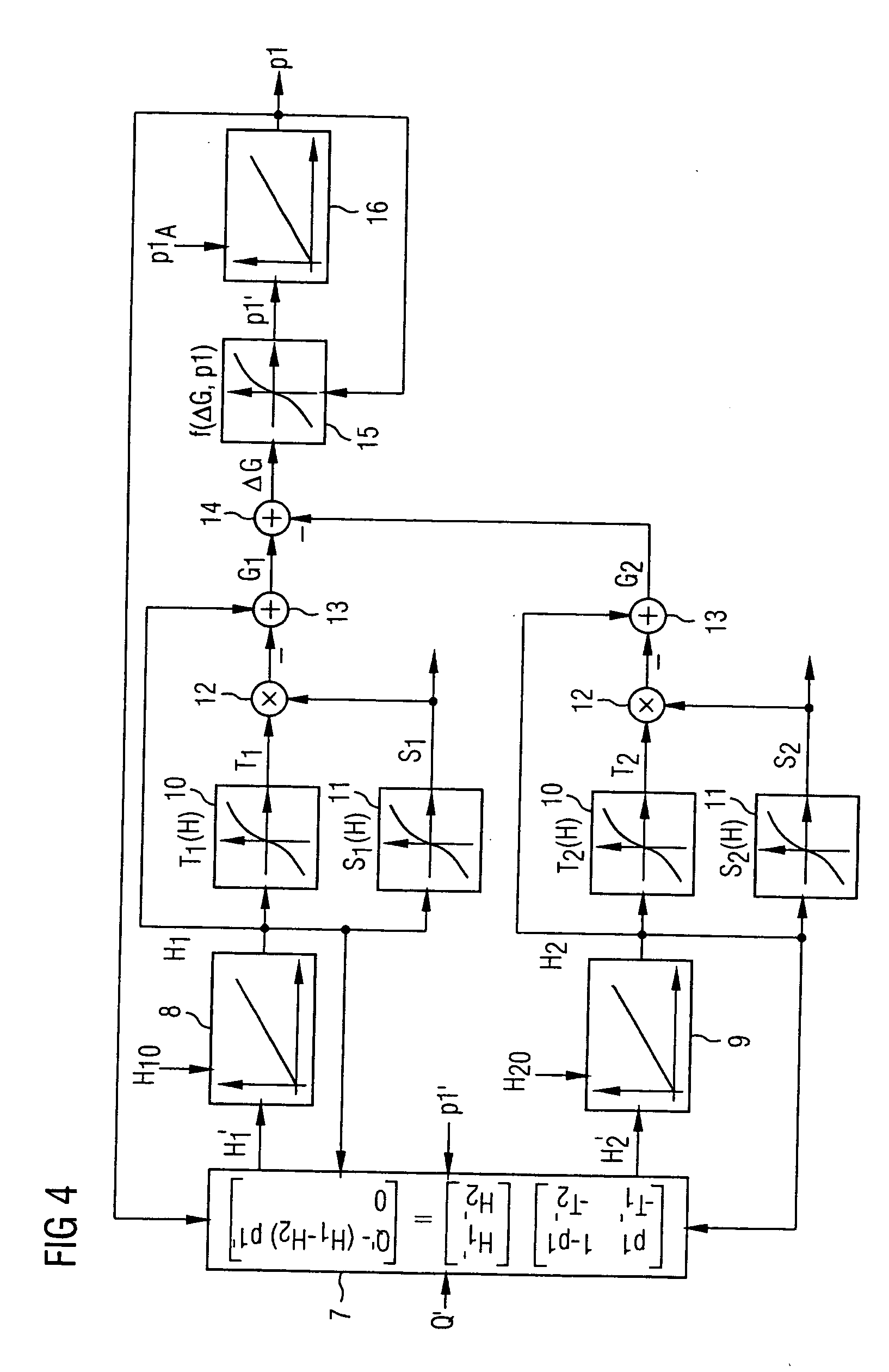
The temperature (T) of a metal (1) can be influenced directly or indirectly by at least one actuator (2) which is actuated in accordance with a control variable (S). The control variable (S) and starting values (TA, p1A, p2A) for a temperature of the metal (1) and phase proportions in which the metal (1) is at least in a first phase or a second phase, respectively, are predetermined for a material model (5). A heat conduction equation and a transformation equation are solved in real time within the material model (5), taking account of these variables (TA, p1A, p2A) , and in this way expected values (TE, p1E, p2E) are determined for these variables. As part of the transformation equation, the Gibbs' free energies (G1, G2) of the phases of the metal (1) are determined, a transformation rate of the metal (1) from the first phase to the second phase is determined therefrom, and the expected proportions (p1E, p2E) are determined from the latter.
Need to check novelty before this filing date? Find Prior Art

Description

FIELD OF INVENTION The present invention relates to a modeling method for a metal, the temperature of which can be influenced directly or indirectly by at least one actuator, a starting temperature of the metal and starting proportions, in which the metal is at least in a first phase or a second phase, respectively, being predetermined for a material model, a heat conduction equation and a transformation equation being solved in real time within the material model, taking account of the starting temperature, the starting proportions and a control variable for the actuator, so as to determine an expected temperature for the metal and expected proportions in which the metal is at least in the first phase or the second phase, respectively, the actuator being actuated in accordance with the control variable. BACKGROUND OF INVENTION Methods of this type are known, for example, from the article “Numerische Simulation der Warmeleitung in Stahlblechen—Mathematik hilft bei der Steuerung...

Examples

Embodiment Construction

In accordance with FIG. 1, an installation for influencing the temperature of a metal 1 has an actuator 2. The temperature T of the metal 1 can be influenced directly or indirectly by means of the actuator 2, generally by cooling, but in some cases also by heating. By way of example, a defined quantity of a cooling medium (typically water) can be applied to the metal 1.

In the present case, the metal 1 is steel in solid state. However, it could also be in a liquid state. The metal 1 could also be a metal other than steel, e.g. aluminum or a nonferrous metal. According to FIG. 1, the metal 1 is furthermore designed as a metal strip with a strip thickness direction. However, other forms of the metal 1, e.g. profiled sections in rod form (e.g. wires), tubes or U-sections are also conceivable.

The installation is controlled by a control computer 3. In particular, the actuator 2 is also actuated by the control computer 3 in accordance with a control variable S. The control computer 3 ...