
Digital rights management system
a digital rights management and rights management technology, applied in the field of digital rights management, can solve the problems of heavy workload of centralized license servers, unintended and unauthorized use of content, complex and expensive to run and maintain, and achieve the effect of improving the reliability and intrusion tolerance of the described drm system
- Summary
- Abstract
- Description
- Claims
- Application Information
AI Technical Summary
Benefits of technology
Problems solved by technology
Method used
Image

Examples
Embodiment Construction
Overview
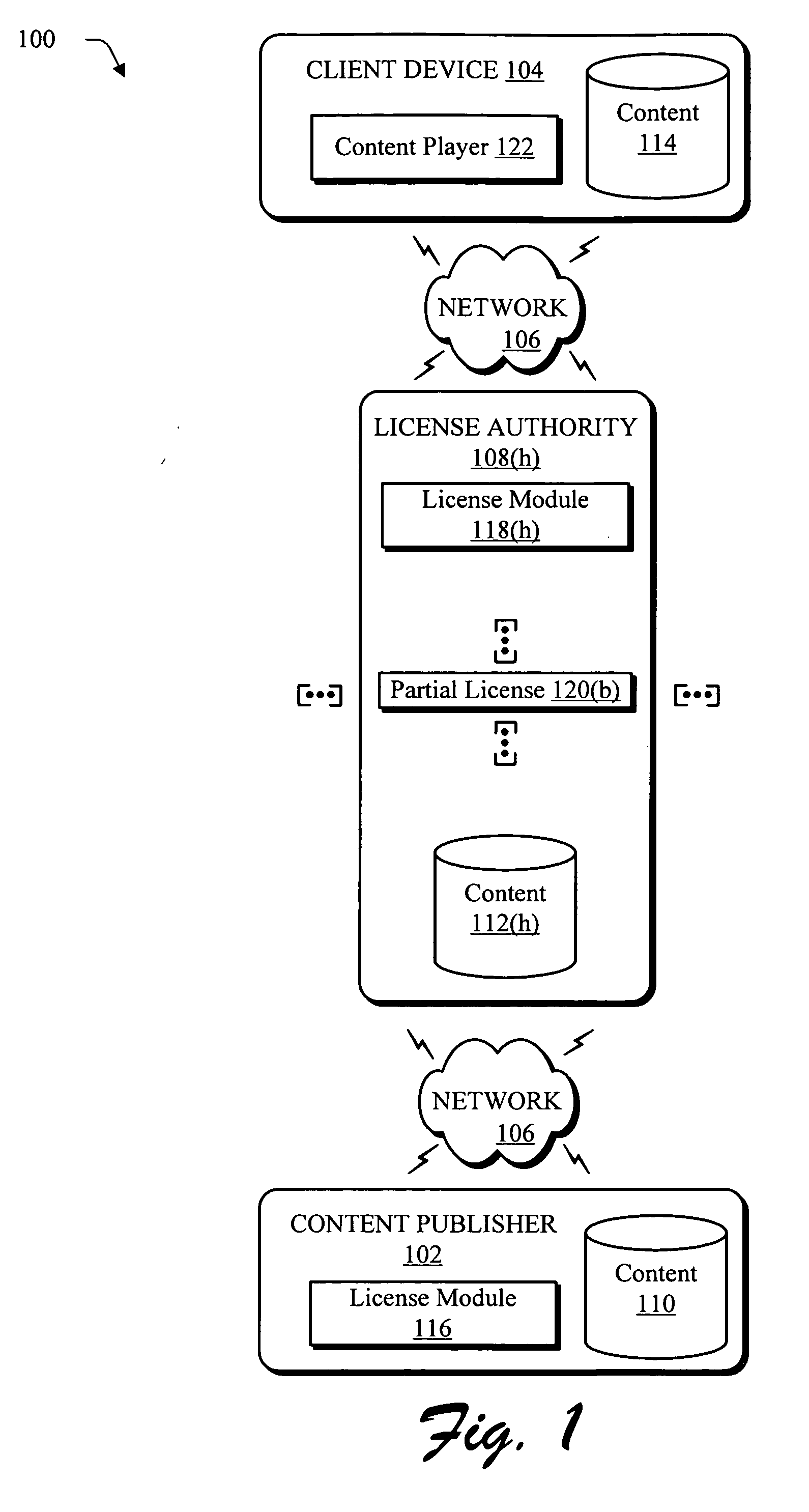
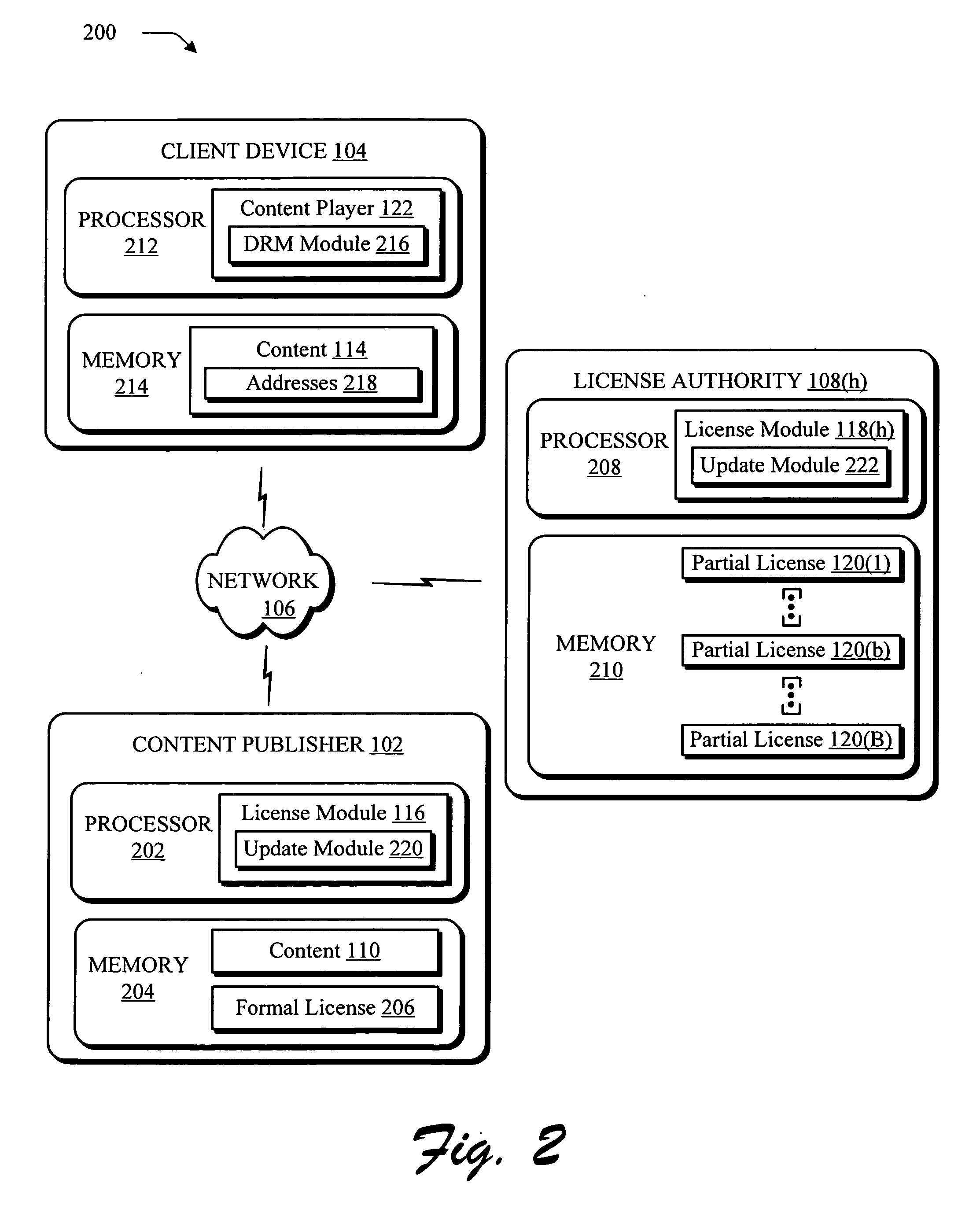
A Public Licensing Infrastructure (PLI) is described for digital rights management (DRM) systems. The PLI described herein may be implemented in a decentralized system to provide public license services for consumers in a DRM system. The PLI may serve as an inexpensive license service provider to protect content, and therefore may be. utilized by a wide variety of content publishers. For example, authors may provide copies of books, musical groups may provide songs, and so on to consumers in a manner in which the content is protected from unlicensed use. Thus, the DRM system may be useful for small content providers, such as peers in a peer-to-peer network, that cannot afford the conventional server / client based DRM system and traditional distribution channels.
The PLI may include a plurality of license authorities which collectively provide distributed DRM license services for consumers. Each of the license authorities, for example, may provide one or more of a pluralit...
PUM
 Login to View More
 Abstract
Description
Claims
Application Information
 Login to View More