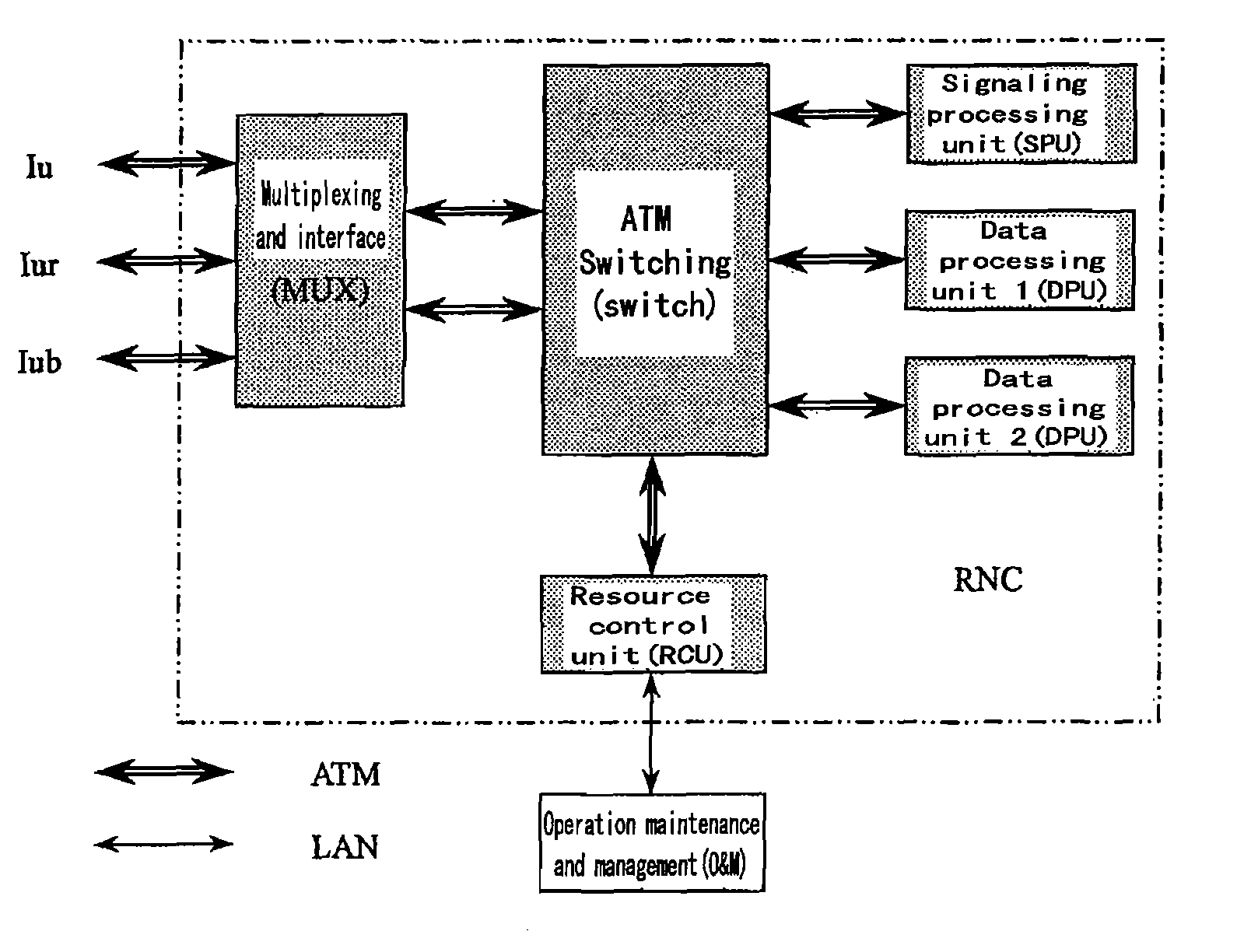
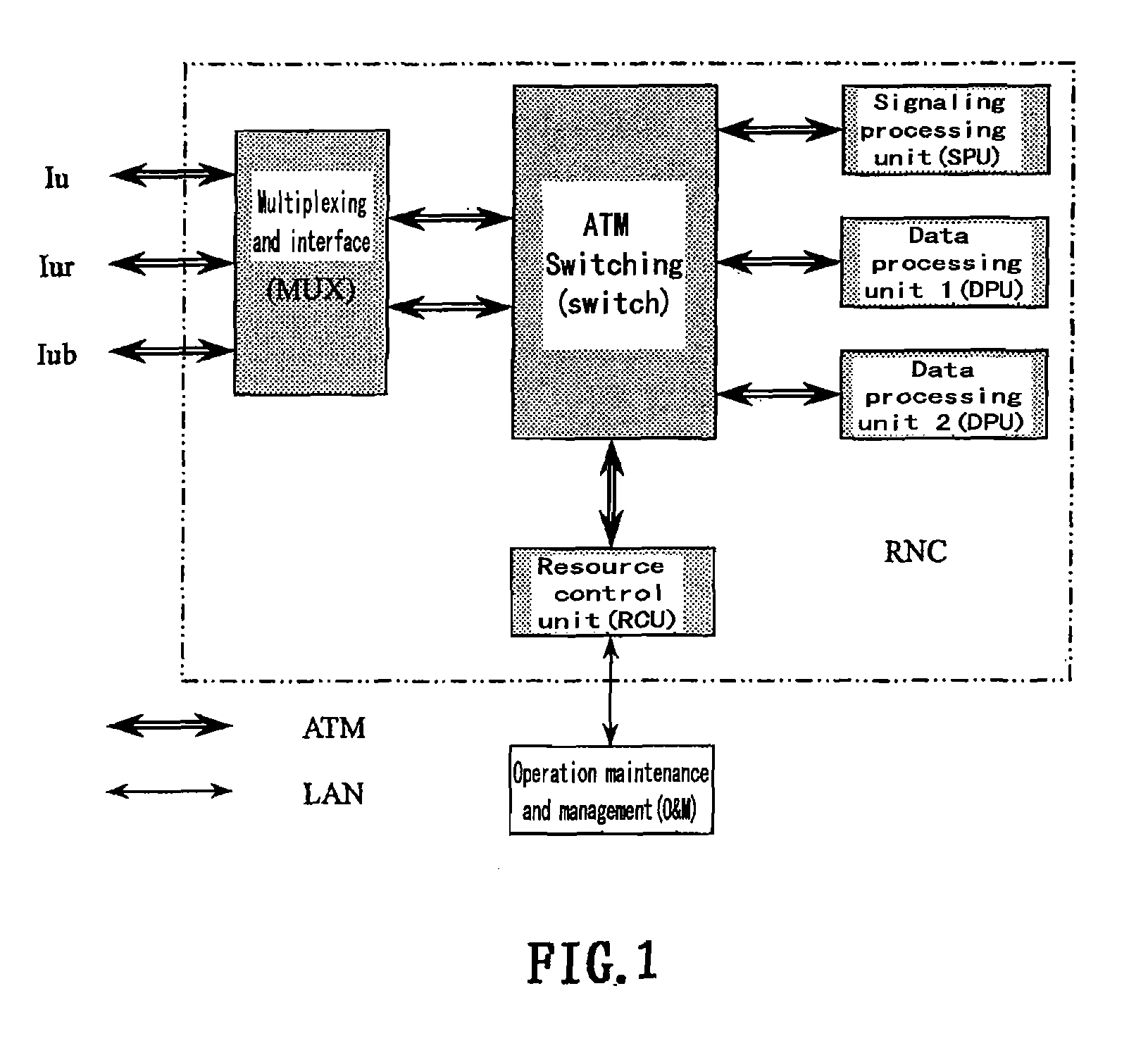
However, the ATM switch has many defects such as high cost, complex configuration and management, and hard to extend.
It can be seen from the features of the
ATM switching itself and the operating principle of ATM
information exchange, the traditional radio network controller using
ATM switching technology has the following defects: since an end-to-end connection needs to be established between
ATM switching based
processing units, the process of configuring, establishing and removing routes is complex and its switching network needs a lot of routing information to manage and maintain.
In addition, it is very difficult to pack and unpack ATM information elements, such that each step of the switching flow has a certain complexity.
As to the extendibility, the ATM switching based radio network controller generally uses a single
chassis, thus its
extensibility is poor.
Since the ATM switching mechanism is difficult to be achieved, even if a back-plate
bus type is used, existing ATM switching products are generally used between multiple
chassis.
Since switching ports supported by these products are generally fewer, if they are cascaded by multiple
layers, the switching routing configuration will be more complex and the operation and maintenance will be more difficult.
Since connecting end points have different features, the
multiplexing and interface (an
external interface of the RNC that is mainly user-
network interface UNI) module cannot be identical with the extended switching interface (the internal extended interface of the RNC that is mainly network-
network interface NNI), which further adds the complexity and
processing difficulty of the switching routing in the ATM switching module within the
chassis.
When the number of the extended chassis increases, the complexity of the switching module in the chassis increases, thus routing configuration and management becomes a
bottleneck of the
extensibility and
maintainability of the overall product.
In addition, the use of external ATM switch or cascaded ATM switch having a
large capacity also has the problem of complex configuration, which is also a factor to limit its
extensibility.
Since the various processing modules (for example, SPU, MUX, SXB, and so on) cannot be implemented in a unified platform, the cost for implementing the processing modules is comparatively higher.
Heretofore, the cost for implementing the ATM switching module or ATM switch is also comparatively higher and there is little choice in the market, thus the overall cost of the ATM switching based radio network controller is comparatively higher.
In summary, the radio network controller using the ATM switch is high in cost, complex in configuration and management and difficult to extend, all of which will affect the build of the future 3
G network.


 Login to View More
  Login to View More