
System for multi-leg trading
a multi-leg trading and trading system technology, applied in the field of multi-leg trading, can solve the problems of increasing the difficulty of monitoring the frequency of trading, the direction of price movement and the depth of market for each of the underlying legs, and the inability to guarantee the system will achieve the execution of all the underlying legs, so as to achieve a good level of confiden
Patent Information
- Authority / Receiving Office
- US · United States
- Patent Type
- Applications(United States)
- Current Assignee / Owner
- Publication Date
- 2008-03-27
Smart Images
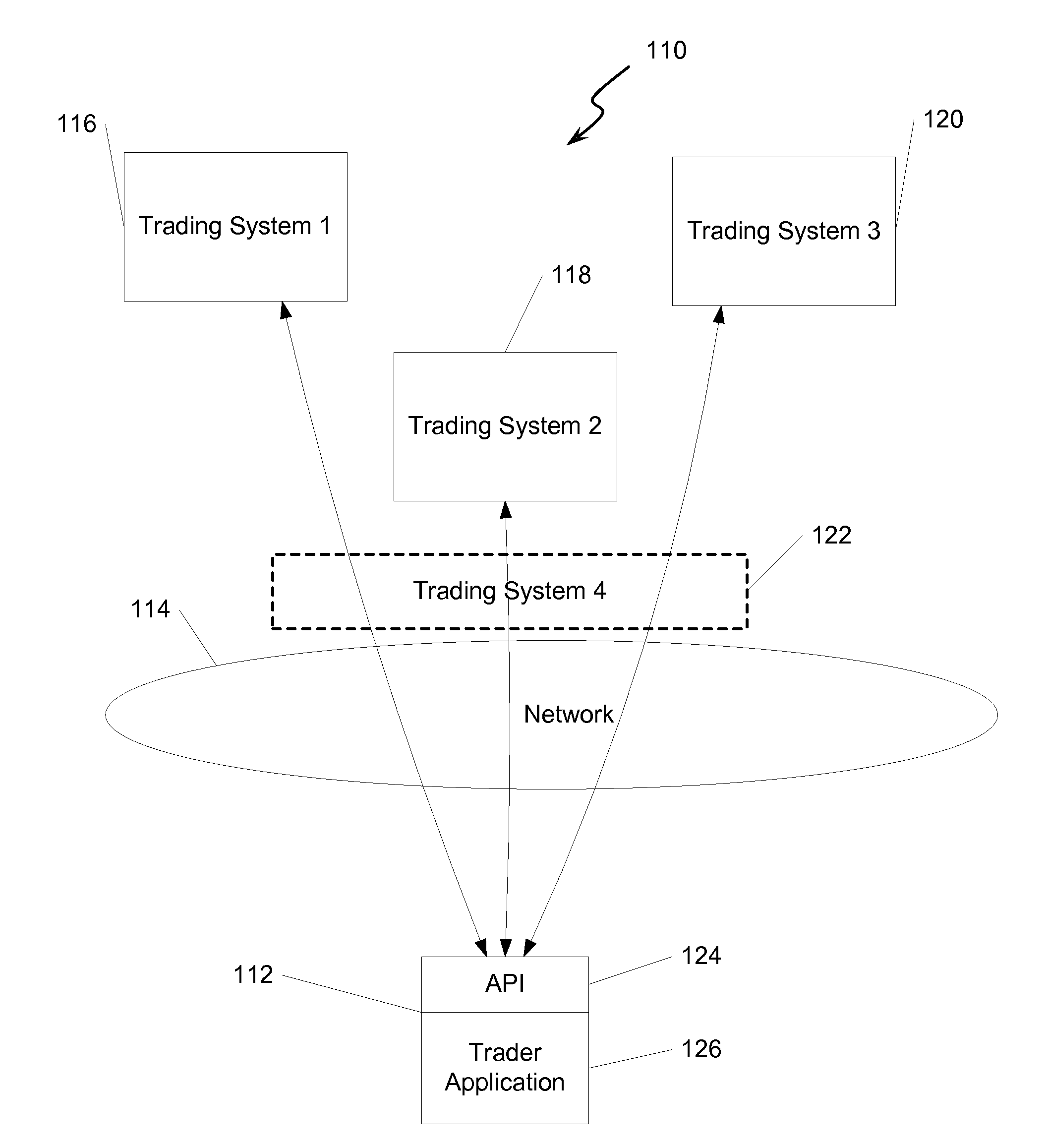
Figure 1 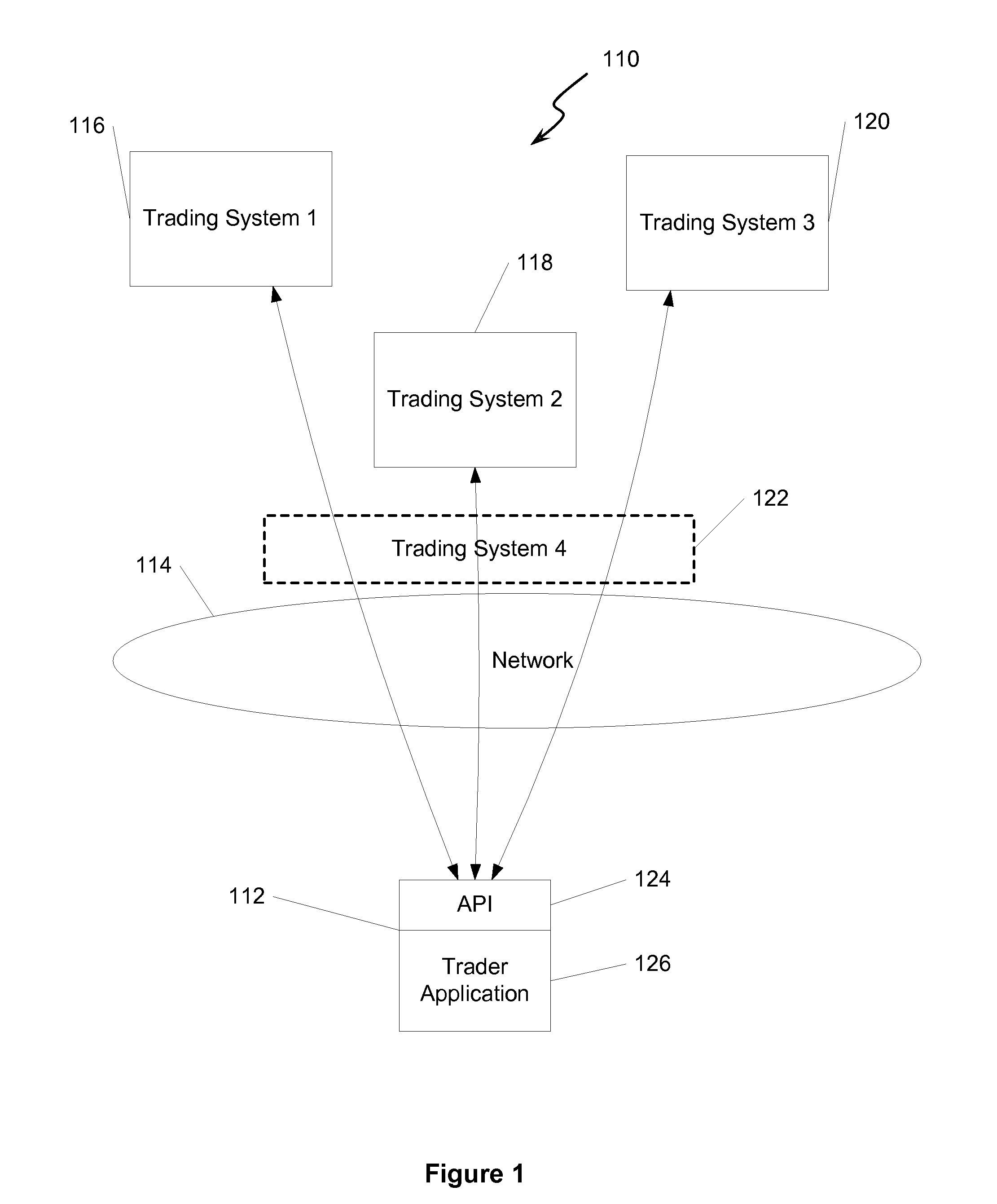
Figure 2 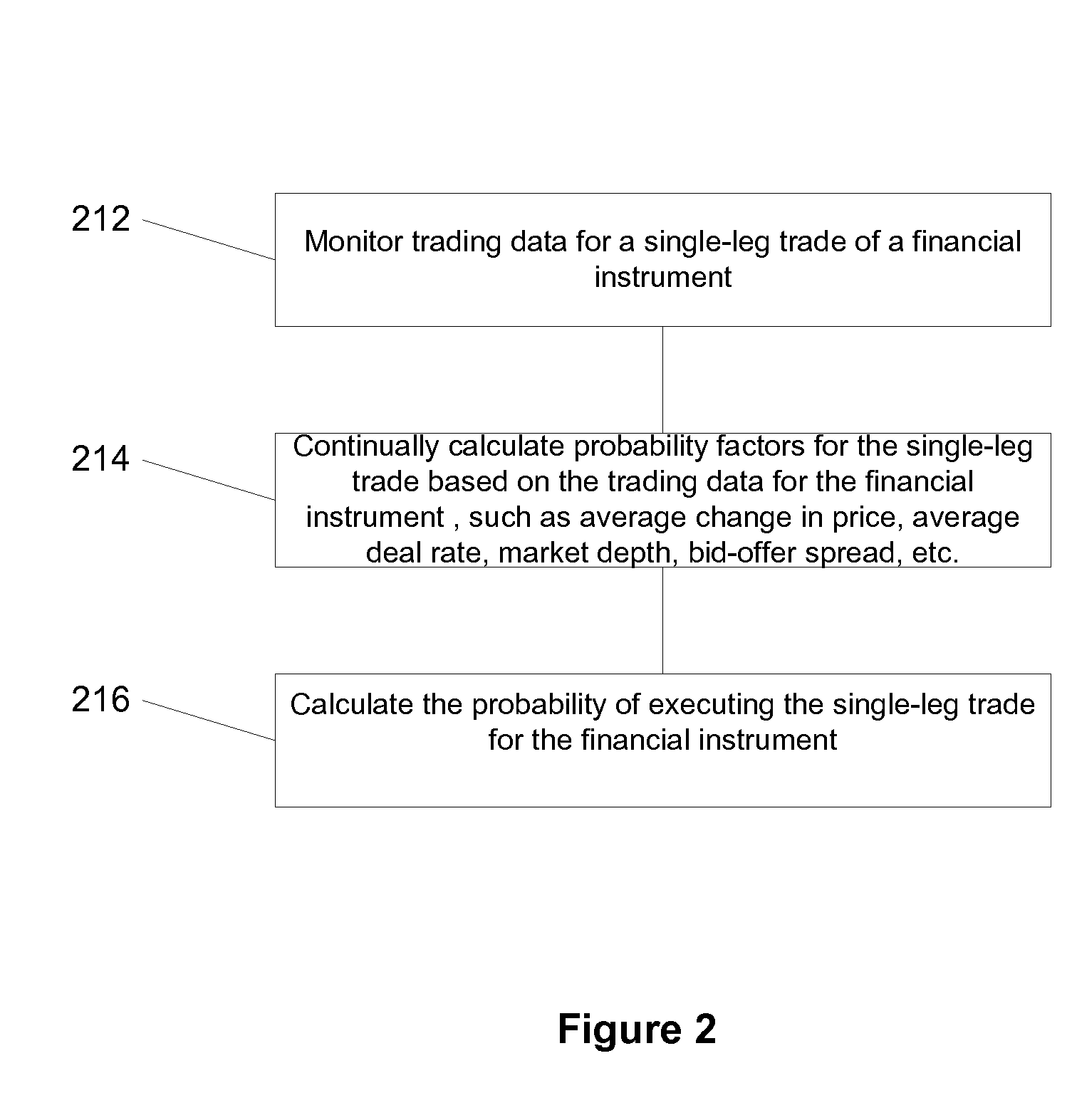
Figure 3
Abstract
Description
BACKGROUND
[0001] Aspects of the present invention relate to computerized devices, systems and / or methods for monitoring, performing and / or determining risk for multi-leg transactions.
[0002] Most financial instruments are traded on an exchange by brokers / traders via electronic trading terminals of an electronic trading system. The terminals typically receive large amounts of data for one or more markets and financial instruments of particular interest to a trader on a substantially real-time basis. When trading a single instrument (a single-leg trade) the trader typically monitors the frequency with which this instrument is trading, the direction of price movement and potentially the depth-of-market if available. As a result the trader will have a good level of confidence in achieving a desired trade at a particular price and volume.
[0003] In a multi-leg trading scenario, the trader may create a synthetic instrument to improve trading efficiency. In this scenario the synthetic instrumen...
Examples
example 1
[0076]The following example is of a synthetic trade (x) consisting of 2 legs (y and z) where the relative volumes of each leg are fixed in a ratio x=y+2z. The factors that influence the probability of each leg being executed include (but are not limited to) the following: The volume available in the order book(s) of accessible markets; the price levels for each of the above volumes; the volatility of the price; the volatility of volume at the price; and the price trend (within the desired trading window).
[0077]If we start by disregarding volatilities, trends and the possibility of someone else hitting the offers for y and z, then at any one point in time if available volumes of y and z exceeds required volumes there is a theoretical price of x that can be 100% achieved for buying a required volume of x (e.g. 100 units), determined by the available offers of the underlying legs (y and z), as illustrated below in Tables 1 and 2.
TABLE 1Synthetic XBUYVolumePriceSMMTTime1007.2100%Leg yBU...
example 2
[0085]SMMT Model
[0086]Conducting multi-leg trades to implement a hedging strategy, spread, or arbitrage opportunity where the trader wants to achieve a specific price and / or volume can be complex. The trader must monitor price, volume and trends for each of the underlying legs to take a view on whether the trade will be achieved. This complexity is increased significantly where the legs of the multi-leg trade vary by currency, or in the case of commodities, by units.
[0087]The trader may create a synthetic instrument that calculates a single price and volume for the desired multi-leg trade. In more sophisticated situations the trader may also be able to calculate a synthetic depth of market. This simplifies his view on the market but at the same time masks the activity in the underlying legs of the trade. For example it may not be clear that liquidity or volume is insufficient in one or more of the underlying legs. The trader also has no ‘what if’ capability to determine the likeliho...