
Renal Synergistic Phyto-Nutraceutical Composition
- Summary
- Abstract
- Description
- Claims
- Application Information
AI Technical Summary
Benefits of technology
Problems solved by technology
Method used
Image

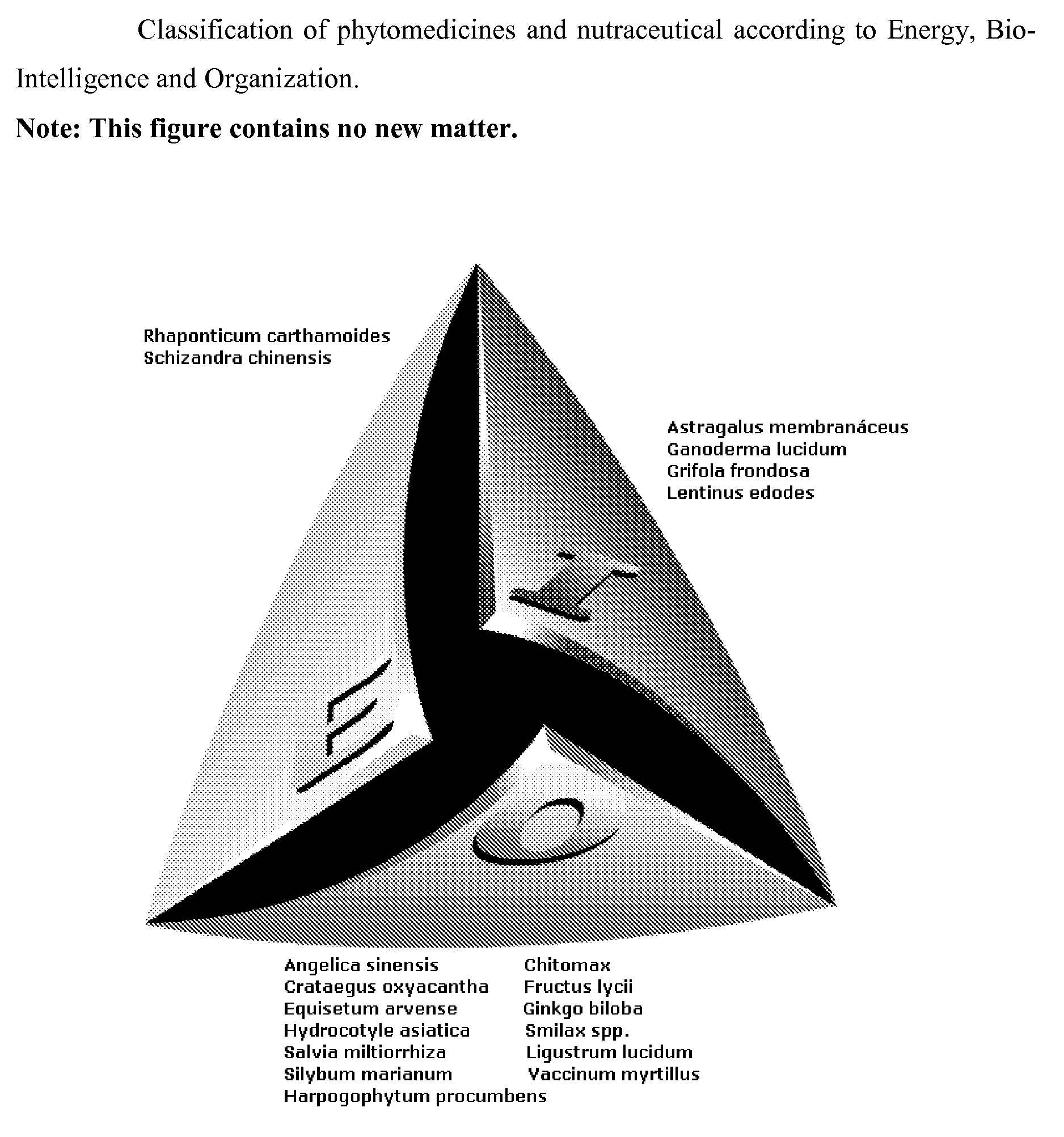
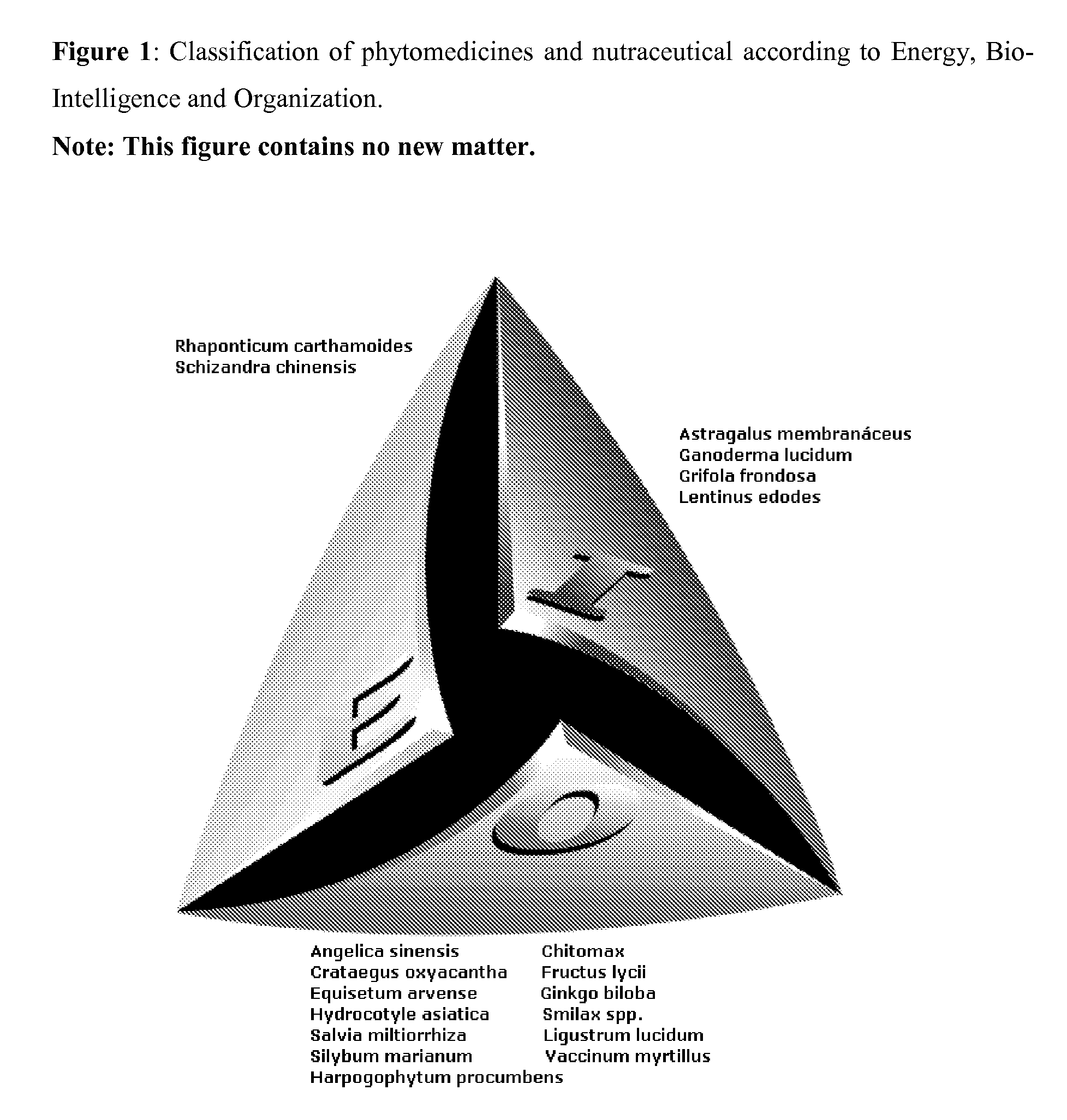
Examples
example 1
Plant Characteristics—Renal Disorders
Energy Supplying Phytoceuticals
[0013]Rhaponticum carthamoides (Leuzea, or Maral Root) contains a mixture of compounds called ‘levseins’. Levseins represents a complex of more than 10 ecdysterones including 20-beta-ecdysterone, makisterone C, 24-dehydromakisterone A, carthamosterone, polypodyne B and ajugasterone C. Researchers extracted and purified various ecdysteroids from Rhaponticum and found that the ecdysteroids increased the muscle mass in a dose-dependent manner, with the rate of increase proportional to the ecdysteroids content. In women with Chronic Renal Failure (CRF), low levels of estrogens are observed whereas in men a low level of testosterone is present. Ecdysterone behaves as an anabolic steroid mimicking the effects of these hormones. On the other hand, the severe and terminals cases of CRF are associated with anemia due to the decrease in renal production of erythropoietin.
The active principles of Leuzea offer erythropoiesis st...
example 2
Composition—Renal Disorders
[0032]A particularly preferred composition is shown in Table 1. Ratios reflect the concentration of active ingredient over the natural state, and the amounts provided are mg of extract. Obviously, the amount should be increased where the strength is reduced, and vice versa.
[0033]A particularly preferred composition is shown in Table 1.
TABLE 1Preferred Renal disorder ProtocolActive AgentRatioAmount (mg)Energy enhancersRhapontium carthamoides root extract6:16.00Schizandra chinensis fruit extract5:110.0Bio-Intelligence modulatorsAstragalus membrenaceus root extract5:150.00Ganoderma lucidum5:124.00Grifola frondosa5:124.00Lentinus edodes5:124.00Organizational ImproversAngelica sinensis root extract5:157.00Chitosan powder1:1398.00Crataegus oxycantha berry extract5:140.00Equisetum arvense herb extract5:130.00Fructus lycii5:124.00Gingko bilova leaf extract50:1 17.00Harpagophytum procumbens tuber extract5:127.00Hydrocotile asiatica herb extract5:130.00Ligustrum luc...
example 3
Tolerance Studies
[0034]A multicenter, retrospective study was made on 100 healthy volunteers with the intention of evaluating patient tolerance and side effects of the herbaria combination. A capsule containing 900 mg of the herbaria of Table 1 was administered to each participant three times per day for five days. During that period they were evaluated by a physician, who registered any finding or symptom reported by each subject. The average age of the participants was 37.4 years with a SD of 8.2 years. Gender was 55% female, 45% male. The average weight of the subjects was 70 kilos with a SD of 12.3 kilos. No undesirable effects were observed in 96% of the subjects. Four (4%) subjects reported minor undesirable effects.
[0035]The study showed that herbaria were well tolerated-only minor symptoms were reported by 4 of the 100 subjects. Results showed the non-toxicity of the herbaria, demonstrating that the formulation is safe. Similar results have been obtained for the PCOS and Pso...
PUM
 Login to View More
 Abstract
Description
Claims
Application Information
 Login to View More