
Golf ball material, golf ball and method for preparing golf ball material
a golf ball and material technology, applied in the field of golf ball material, can solve the problems of poor durability, low durability, and high cost of ionomer compositions which use a base polymer having a high acid content, and achieve the effects of reducing the spin rate of the golf ball, increasing the distance, and increasing the hardness of the material
Patent Information
- Authority / Receiving Office
- US · United States
- Patent Type
- Applications(United States)
- Current Assignee / Owner
- Publication Date
- 2010-05-20
Smart Images
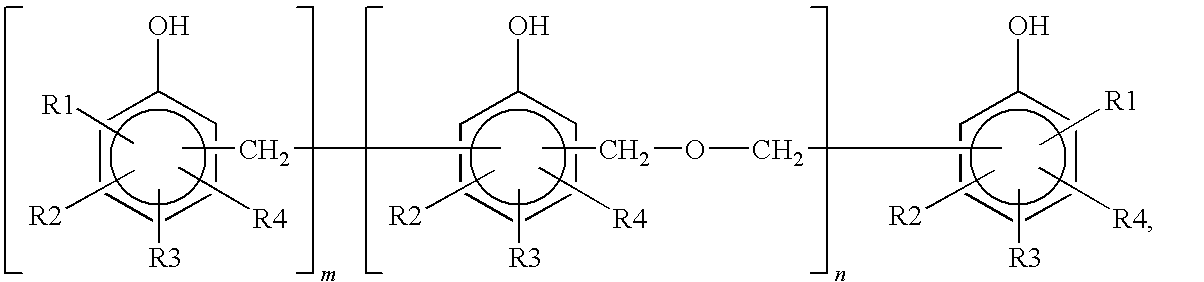
Figure 1 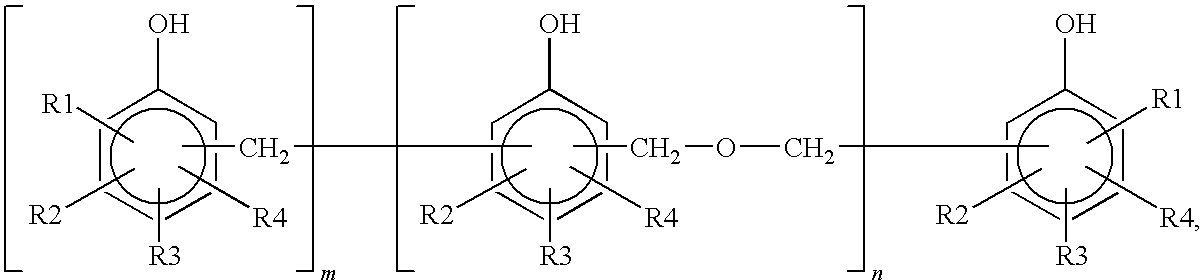
Figure 2 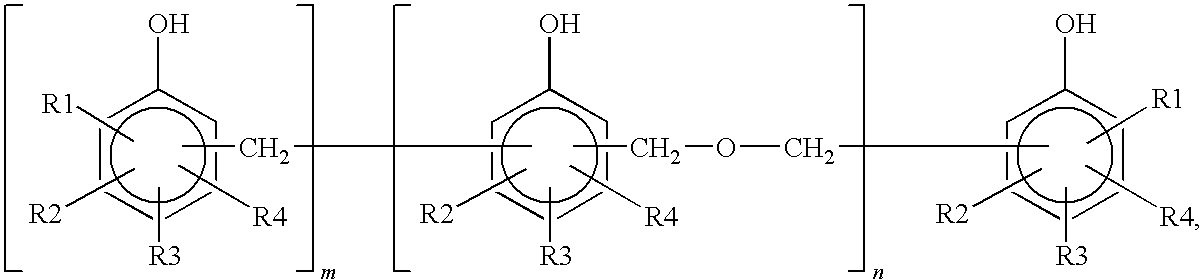
Figure 3
Abstract
Description
BACKGROUND OF THE INVENTION
[0001] The present invention relates to a golf ball material for use in at least one of the layers making up a golf ball, such as the core or cover. More specifically, the invention relates to a golf ball material composed of an ionomer composition, the hardness of which has been increased with a phenolic resin component. The present invention relates further to a golf ball having, as an essential part thereof, a molding made of such a golf ball material, and relates still further to a method for preparing such a golf ball material.
[0002] Various ionomers (typical products include those commercially sold under the trade names “Surlyn,” produced by E.I. DuPont de Nemours & Company; “Iotek,” produced by Exxon Chemical; and “Primacor,” produced by Dow Chemical) are used as constituents in many golf balls. Tradition balata rubber is flexible and has an excellent resilience, but lacks durability. Compared with balata rubber, ionomers have a poor resilience but an...
Examples
examples
[0067]The following experiments and controls are provided by way of illustration and not by way of limitation.
experiment 1
[0068]A combined amount of about 80 g of a zinc-neutralized ionomer and “Resol-1” (softening point, approx. 88° C.) was melt-mixed in the proportions shown in Table 1 for a mixing time of 5 minutes (consisting of an ionomer melting time of 2.5 minutes and a resol blending and mixing time of 2.5 minutes) using a Labo Plastomill (R-100, manufactured by Toyo Seiki Seisaku-Sho, Ltd.) set to a temperature of 180° C. and a rotor speed of 60 rpm, and the change in torque was observed. The change in torque is defined as the difference T1−T0 between the torque when melting the zinc-neutralized ionomer alone (To) and the torque when melting the composition after resol addition (T1). For the sake of reference, the temperature change at this time (t0→t1) is also indicated.
[0069]In Experiment 1, a large change in torque was observed relative to the ionomer base resin which did not contain metal cations in Control 1, confirming that the zinc cations in the ionomer interacted with the resol. The t...
experiment 4
[0072]The same procedure as in Experiment 1 with the Labo Plastomill was repeated using, in the blending proportions shown in Table 2, the zinc-neutralized ionomer (used in Experiment 1) which, based on the results obtained in Experiments 1 to 3, interacts strongly with resol and using “Resol-2” having a high softening point of 123° C., thereby obtaining a zinc-neutralized ionomer containing “Resol-2.” In addition, this material was formed into a sheet using a hot press, and the sheet properties were evaluated one week layer. Those results are shown in Table 2.
[0073]In Experiment 4, including a small amount of the high-softening point “Resol-2” resulted in an increase in hardness relative to the zinc-neutralized ionomer prior to “Resol-2” addition (Control 2). Moreover, the strength at break increased and both the elongation at break and the MFR decreased, demonstrating the effects of interactions with “Resol-2.”