
Long-Acting Y2 and/or Y4 Receptor Agonists
a y2 and/or y4 receptor, long-acting technology, applied in the direction of peptide/protein ingredients, drug compositions, metabolic disorders, etc., can solve the problems of increasing energy expenditure, reducing food intake and potentially, and unwanted activation of the y5 receptor, so as to reduce food intake and increase energy expenditure.
- Summary
- Abstract
- Description
- Claims
- Application Information
AI Technical Summary
Benefits of technology
Problems solved by technology
Method used
Image

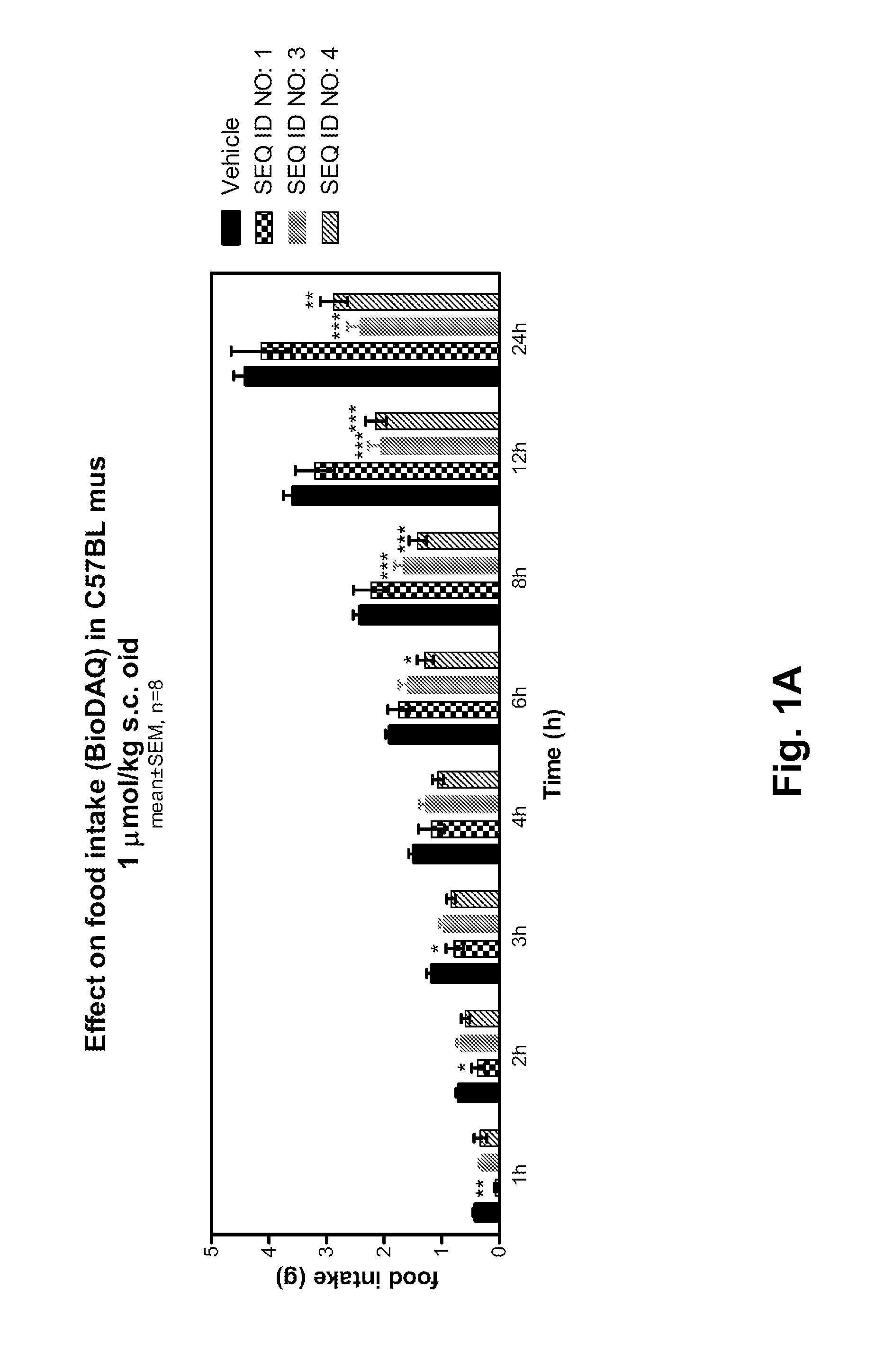
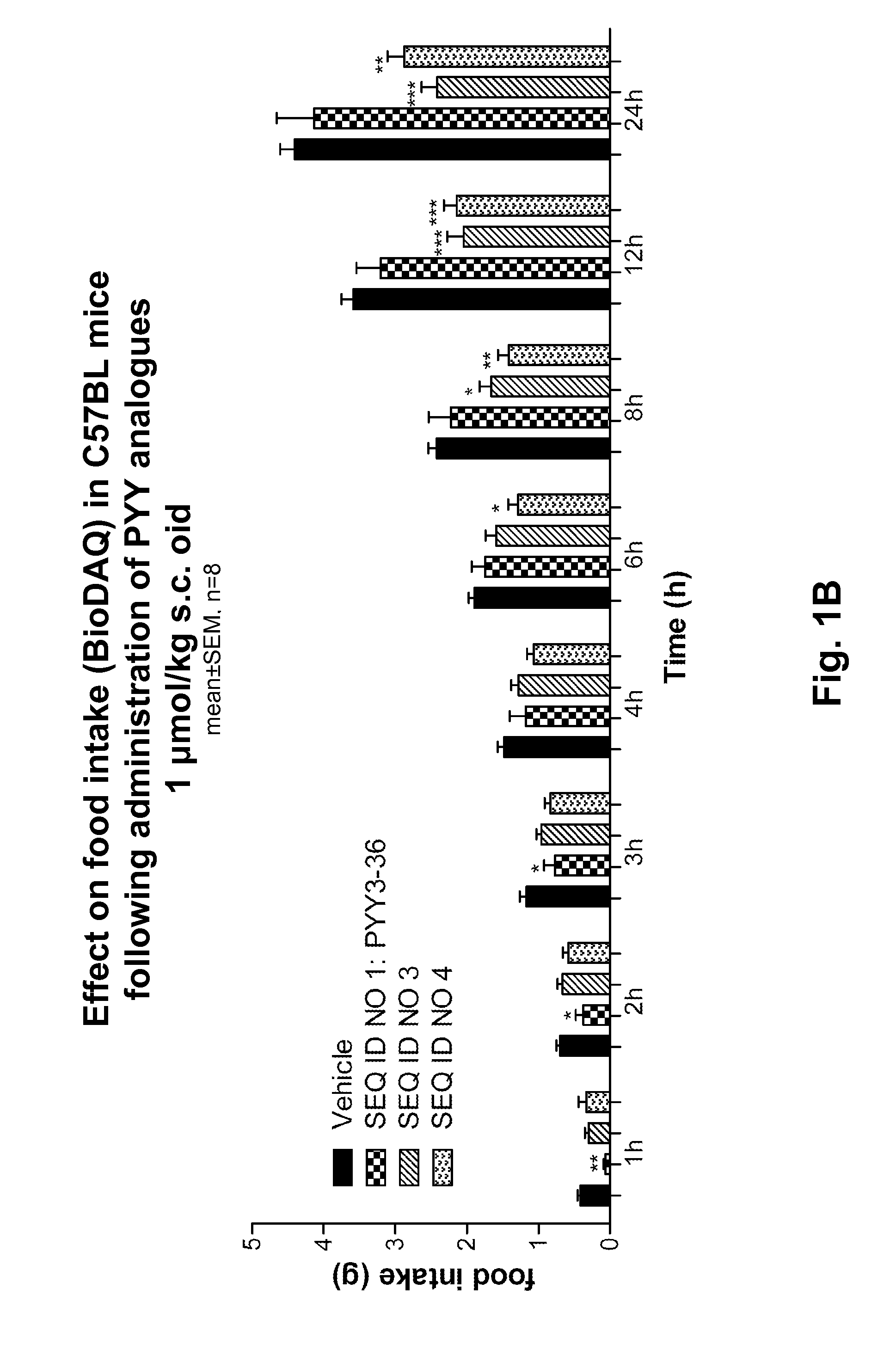
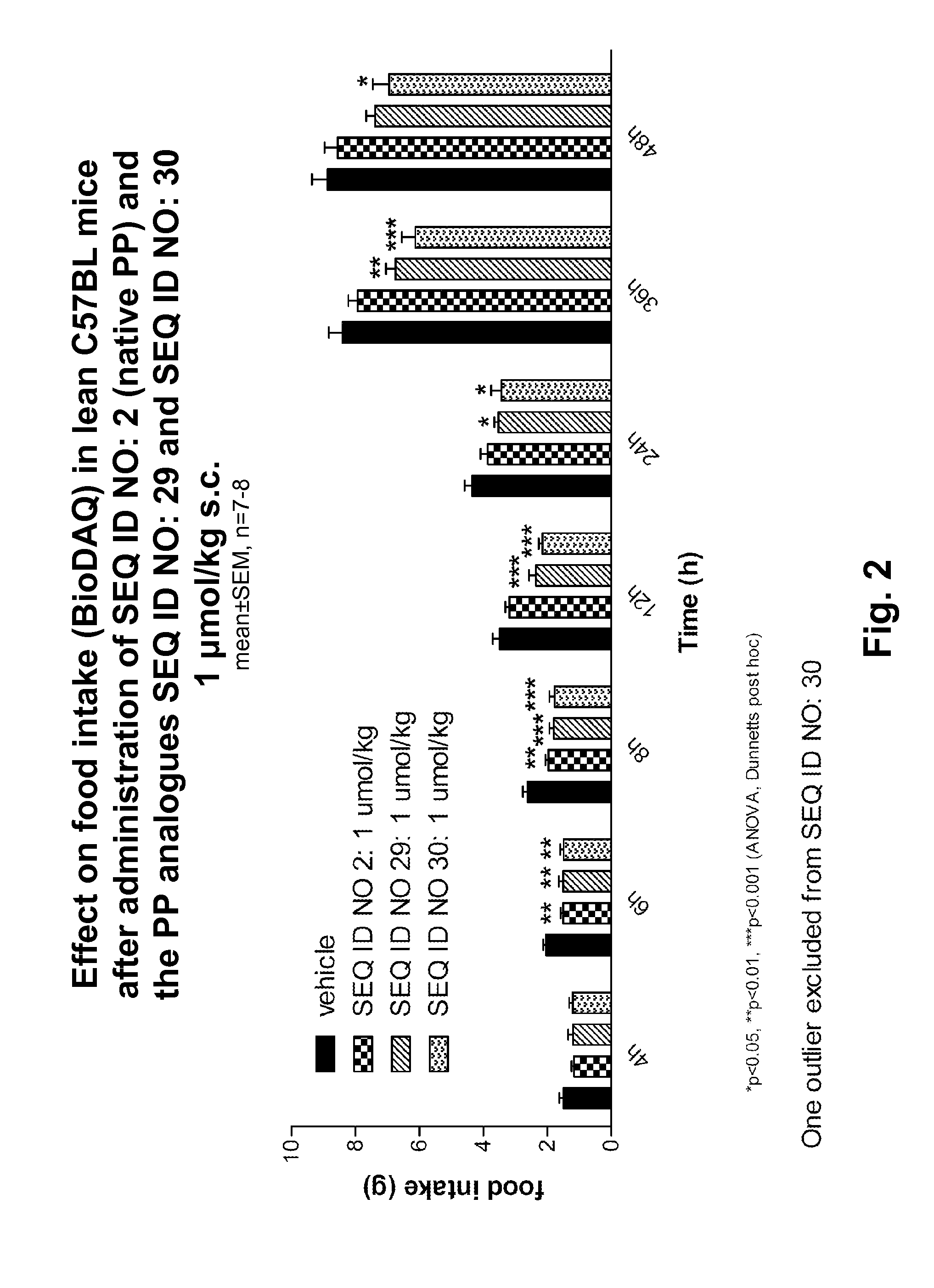
Examples
embodiment 6
7. A PYY or PP peptide derivate or analogue thereof , wherein the consecutive sequence of one or more amino acids is selected from the group consisting of position 1 to 25 in PYY or position 1 to 2 in PP.
8. A PYY or PP peptide derivate or analogue thereof according to embodiment 6, wherein the consecutive sequence of one or more amino acids is selected from the group consisting of position 1, position 1 to 2, and position 1 to 17 in PYY.
9. A PYY or PP peptide derivate or analogue thereof according to embodiment 6, wherein the consecutive sequence of one or more amino acids is selected from the group consisting of position 1 in PP.10. A PYY or PP peptide derivate or analogue thereof according to any of the preceding embodiments, wherein the serum albumin binding side chain is attached to the side chain of an amino acid of the peptide backbone.
11. A PYY or PP peptide derivate or analogue thereof according to any of the preceding embodiments, wherein the serum albumin binding side chai...
embodiment 32
33. A method of treatment , wherein the condition responsive to Y receptor modulation is obesity.
34. A method of treatment according to embodiment 32 or 33, wherein the condition responsive to Y receptor modulation is obesity-related diseases, such as reduction of food intake, Syndrome X (metabolic syndrome), diabetes, type 2 diabetes mellitus or Non Insulin Dependent Diabetes Mellitus (NIDDM), hyperglycemia, insulin resistance, or impaired glucose tolerance.
35. A method of treatment according to embodiment 32 or 33, wherein the condition responsive to Y receptor modulation is an obesity-related cardiovascular disease such as hypertension, atherosclerosis, coronary artery disease, myocardial infarction, peripheral vascular disease, stroke, thromboembolic diseases, hypercholesterolemia, or hyperlipidemia.
36. A method of treatment according to embodiment 32, wherein the condition responsive to Y receptor modulation is diarrhoea such as infectious diarrhoea, inflammatory diarrhoea, che...
example 1
Manuel Synthesis of SEQ ID NO: 1, SEQ ID NO: 3, SEQ ID NO: 4, SEQ ID NO: 13
[0333]The syntheses were carried out using the above mentioned methods “Synthesis of peptidyl resin”, “Synthesis of albumin handles on peptide” and “Final deprotection and isolation”.
Analytical Data
SEQ ID NO: 1
[0334]Retention time HPLC method I: 25.9 min
Retention time HPLC method II: 5.6 min
Mw calculated: 4049.6 g / mol
MALDI MS: 4046.4 g / mol
SEQ ID NO: 3
[0335]Retention time HPLC method I: 33.1 min
Retention time HPLC method II: 11.5 min
Mw calculated: 4973.8 g / mol
MALDI MS: 4972.3 g / mol
SEQ ID NO: 13
[0336]Retention time HPLC method I: 34.0 min
Retention time HPLC method II: 10.2 min
Mw calculated: 4932.7 g / mol
MALDI MS: 4931.7 g / mol
PUM
| Property | Measurement | Unit |
|---|---|---|
| Fraction | aaaaa | aaaaa |
| Digital information | aaaaa | aaaaa |
| Digital information | aaaaa | aaaaa |
Abstract
Description
Claims
Application Information
 Login to View More