Prosthetic device and method of manufacturing the same

a technology of prosthetic devices and silk meshes, which is applied in the field of surgical silk mesh devices, can solve the problems of scar encapsulation and tissue erosion, pain, and a variety of complications, and achieve the effect of reducing tissue erosion, fistulas, or adhesions

US20120029537A1Inactive Publication Date: 2012-02-02ALLERGAN INC
58 Cites 66 Cited by

Patent Information

Authority / Receiving Office
US · United States
Current Assignee / Owner
Publication Date
2012-02-02
Estimated Expiration
Not applicable · inactive patent

Smart Images

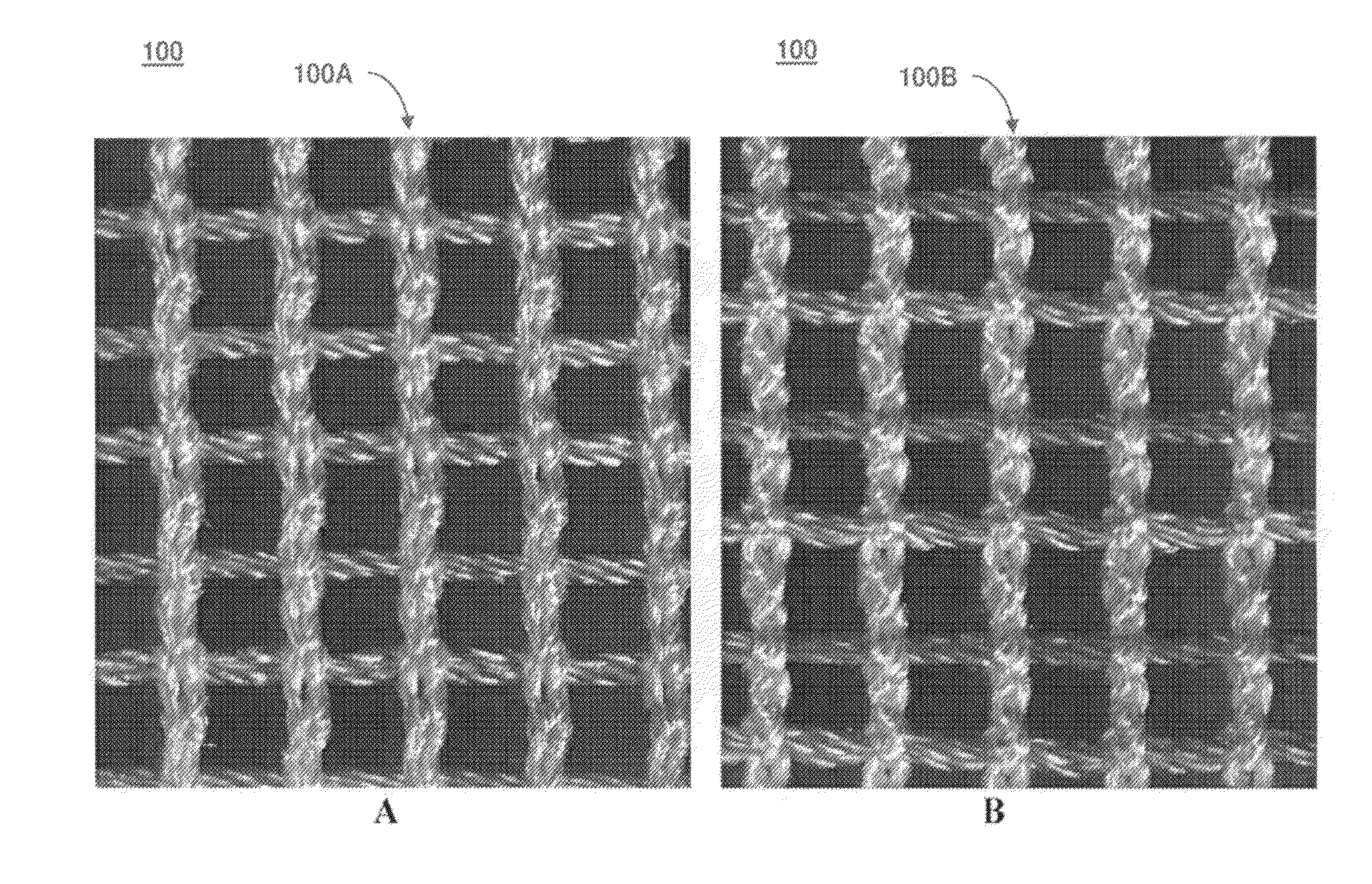
  • Figure 1
    Figure 1
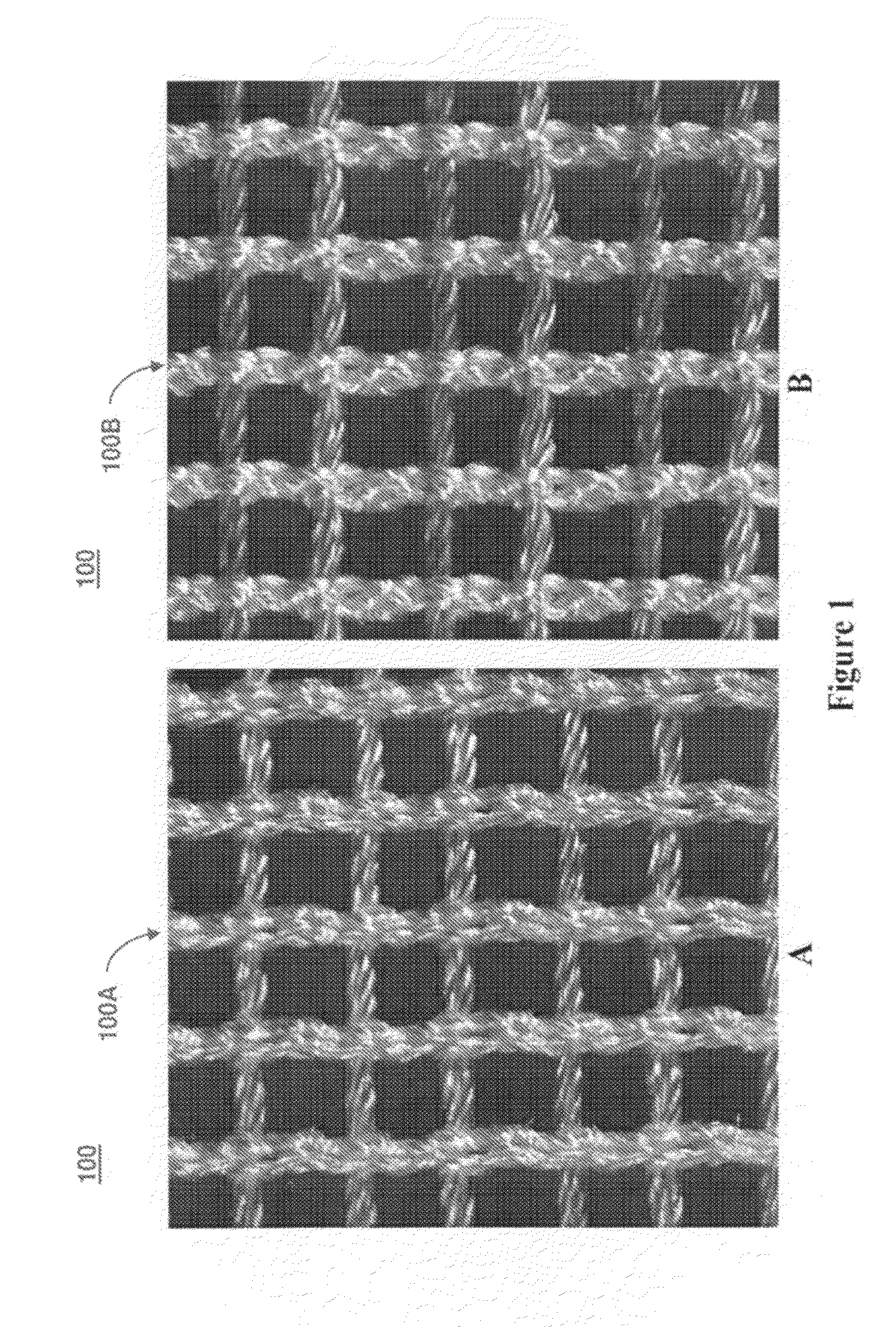
  • Figure 2
    Figure 2
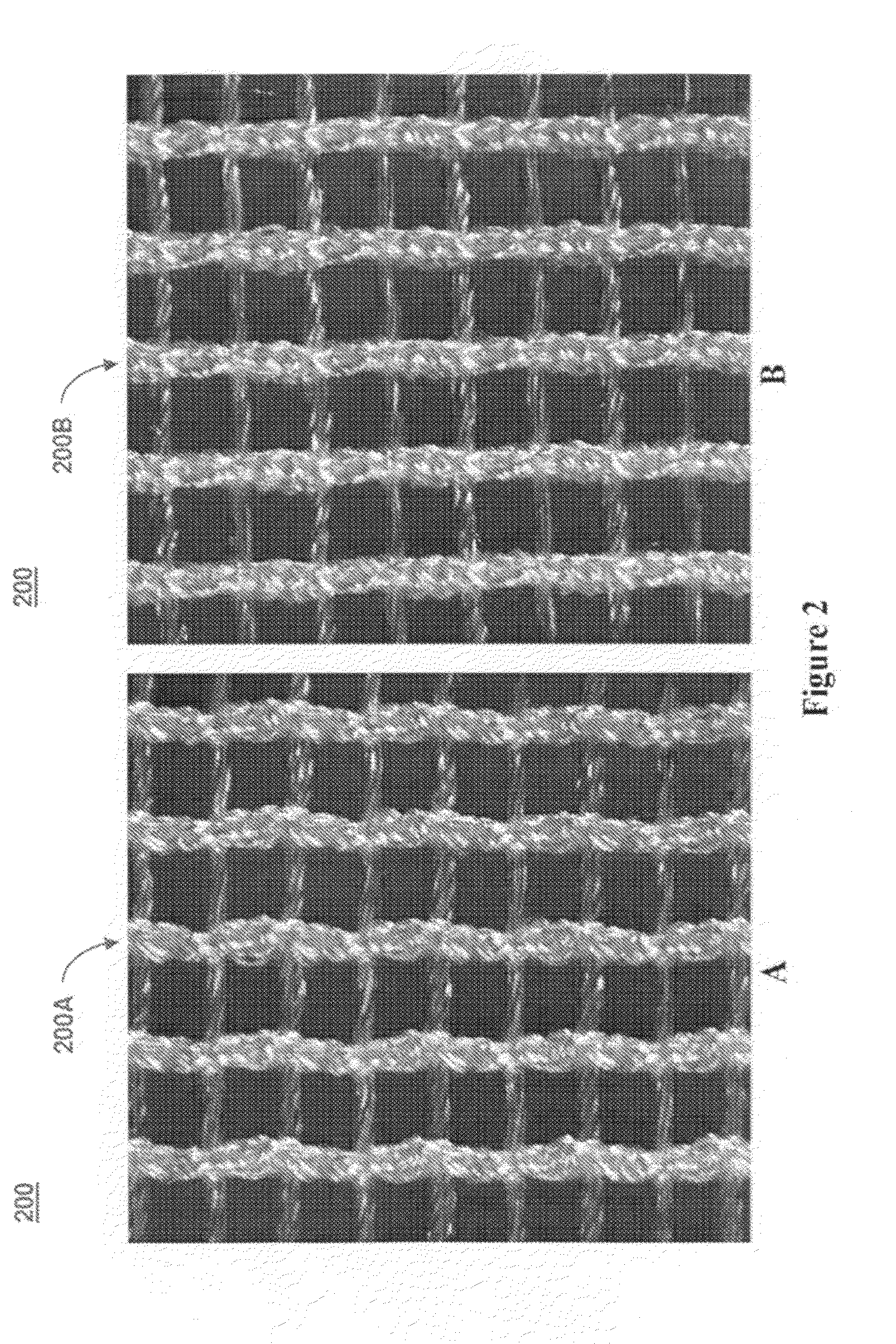
  • Figure 3
    Figure 3
Patent Text Reader

Abstract

A biocompatible surgical silk mesh prosthetic device employs a knit pattern that substantially prevents unraveling and preserves the stability of the mesh device, especially when the mesh device is cut. An example prosthetic device employs a knitted mesh including at least two yarns laid in a knit direction and engaging each other to define a plurality of nodes. The at least two yarns include a first yarn and a second yarn extending between and forming loops about two nodes. The second yarn has a higher tension at the two nodes than the first yarn. the second yarn substantially prevents the first yarn from moving at the two nodes and substantially prevents the knitted mesh from unraveling at the nodes.
Need to check novelty before this filing date? Find Prior Art

Description

CROSS-REFERENCE TO RELATED APPLICATIONS

[0001] This application claims priority to U.S. Provisional Patent Application No. 61 / 122,520, filed Dec. 15, 2008, the contents of which are incorporated entirely herein by reference.BACKGROUND OF THE INVENTION

[0002] 1. Field of the Invention

[0003] The present invention generally relates to a prosthetic device for tissue repair, and, more particularly, to a surgical silk mesh device employing a stable knit structure.

[0004] 2. Description of Related Art

[0005] Surgical mesh initially used for hernia and abdominal wall defects are now being used for other types of tissue repair, such as rotator cuff repair, pelvic floor dysfunction, and reconstructive or cosmetic surgeries. It is projected that in 2010, there will be more than 8 million hernia procedures, 800,000 rotator cuff repairs, 3 million pelvic prolapse repairs, 600,000 urinary incontinence repairs, and 1.5 million reconstructive or aesthetic plastic surgeries. Most of these procedures will lik...

Examples

Embodiment Construction

[0066]Embodiments according to aspects of the present invention provide a biocompatible surgical silk mesh device for use in soft or hard tissue repair. Examples of soft tissue repair include hernia repair, rotator cuff repair, cosmetic surgery, implementation of a bladder sling, or the like. Examples of hard tissue repair, such as bone repair, involve reconstructive plastic surgery, ortho trauma, or the like.

[0067]Advantageously, the open structure of these embodiments allows tissue in-growth while the mesh bioresorbs at a rate which allows for a smooth transfer of mechanical properties to the new tissue from the silk scaffold. Furthermore, embodiments employ a knit pattern that substantially prevents unraveling, especially when the mesh device is cut. In particular, embodiments may preserve the stability of the mesh device by employing a knit pattern that takes advantage of variations in tension between at least two yarns laid in a knit direction. For example, a first yarn and a s...