
Pre-smoke Detector and System for Use in Early Detection of Developing Fires
a detector and pre-smoke technology, applied in fire alarms, instruments, alarms, etc., can solve problems such as the generation of smoke particles, and achieve the effects of reducing false positives, enhancing sensitivity, and increasing detection reliability
- Summary
- Abstract
- Description
- Claims
- Application Information
AI Technical Summary
Benefits of technology
Problems solved by technology
Method used
Image

Examples
Embodiment Construction
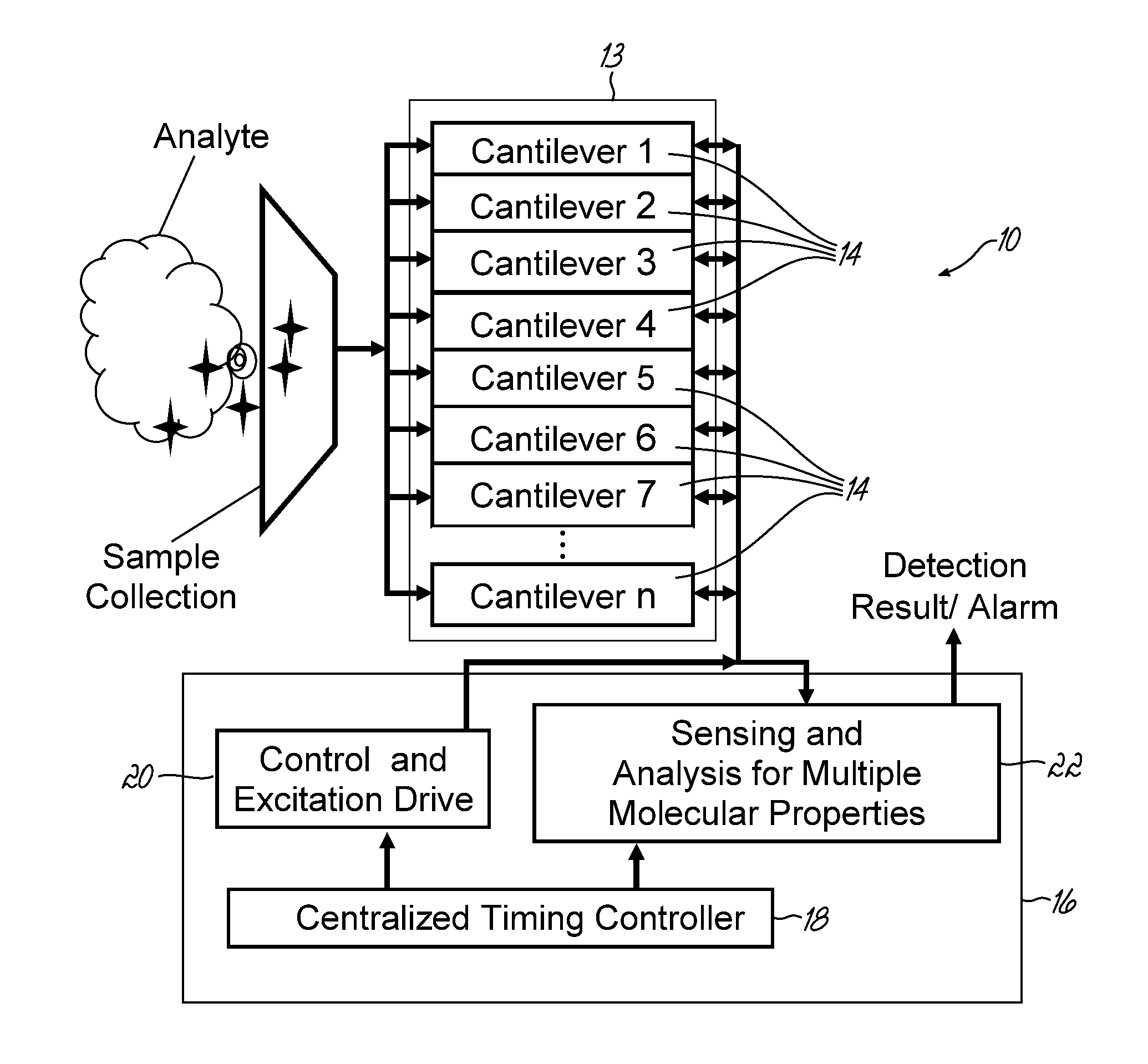
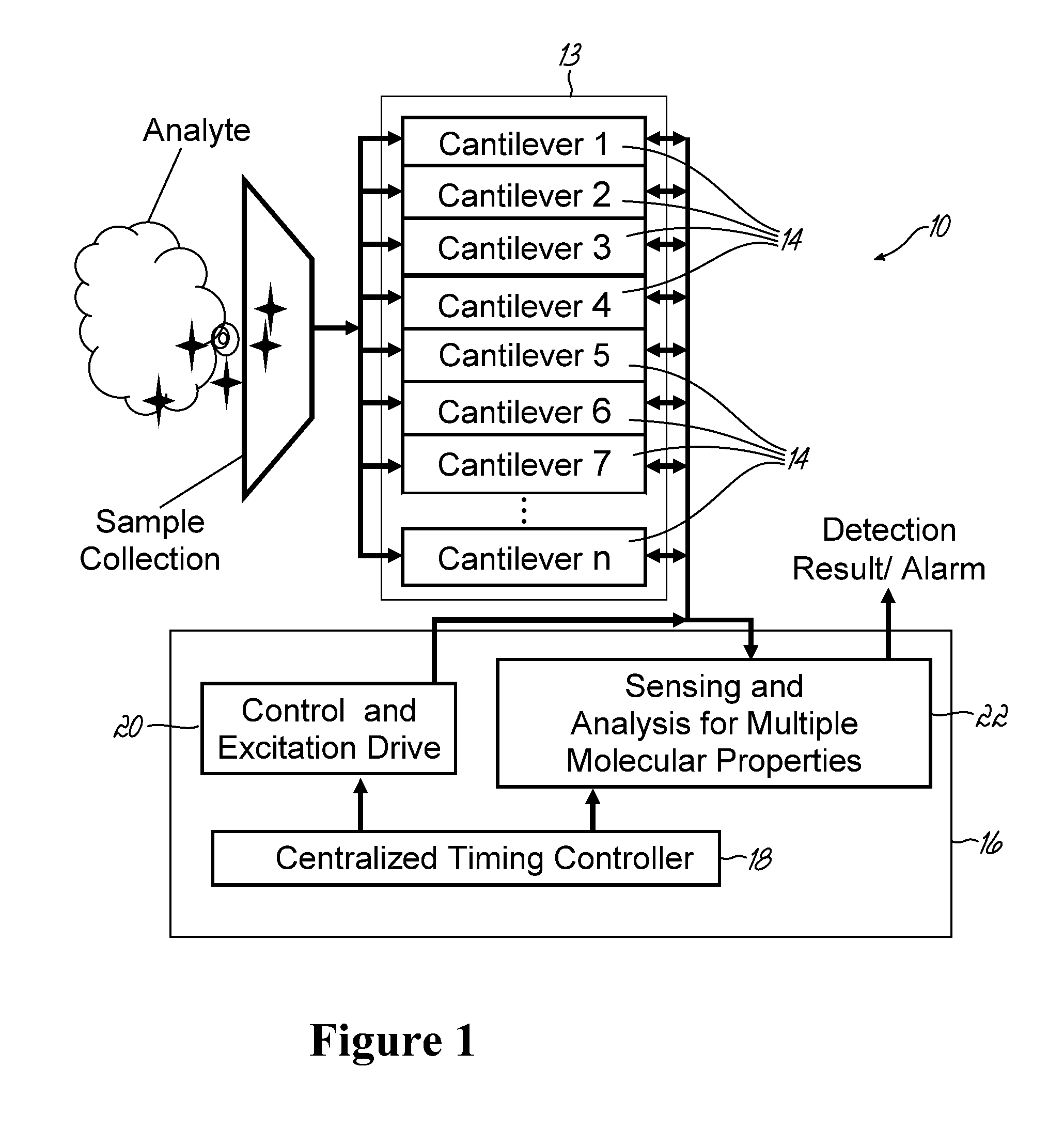
[0032]A pre-smoke detector (PSD) 10 for use in the early detection of fires or potential fires, and a system 12 using the same, is described hereinbelow and shown in FIGS. 1-5B.
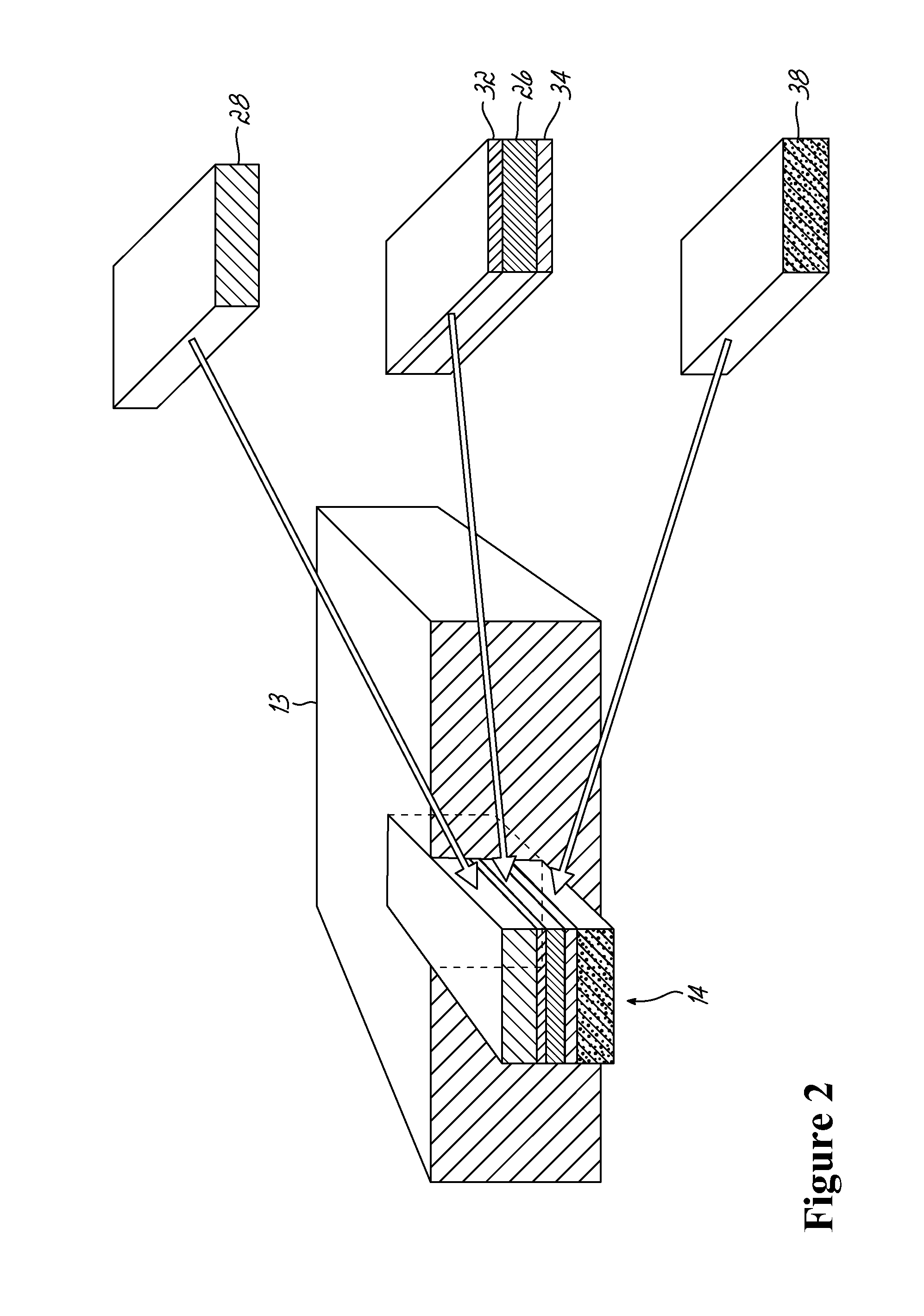
[0033]FIG. 1 shows a block diagram of an embodiment of the pre-smoke detector 10, which may also be referred to herein as a molecular property spectrometer (MPS). Here, transducers located on sensor chip 13 of pre-smoke detector 10 define an array of microcantilevers 14. Any desirable number of microcantilevers 14 can be utilized here. The array of microcantilevers 14 is coupled to an electronic circuit 16 that includes a centralized timing controller 18, which can include a processor, memory, timing circuits, and suitable hardware and software to run control applications for the microcantilevers 14 and analyze and detect specified analytes for providing early warning of fires or potential fires. As shown, the controller 18 cooperates with drive and sense circuitry 20 and 22 for both excitation and sensing of...
PUM
 Login to View More
 Abstract
Description
Claims
Application Information
 Login to View More