
Method of Inducing Chemical Reactions
- Summary
- Abstract
- Description
- Claims
- Application Information
AI Technical Summary
Benefits of technology
Problems solved by technology
Method used
Image

Examples
Embodiment Construction
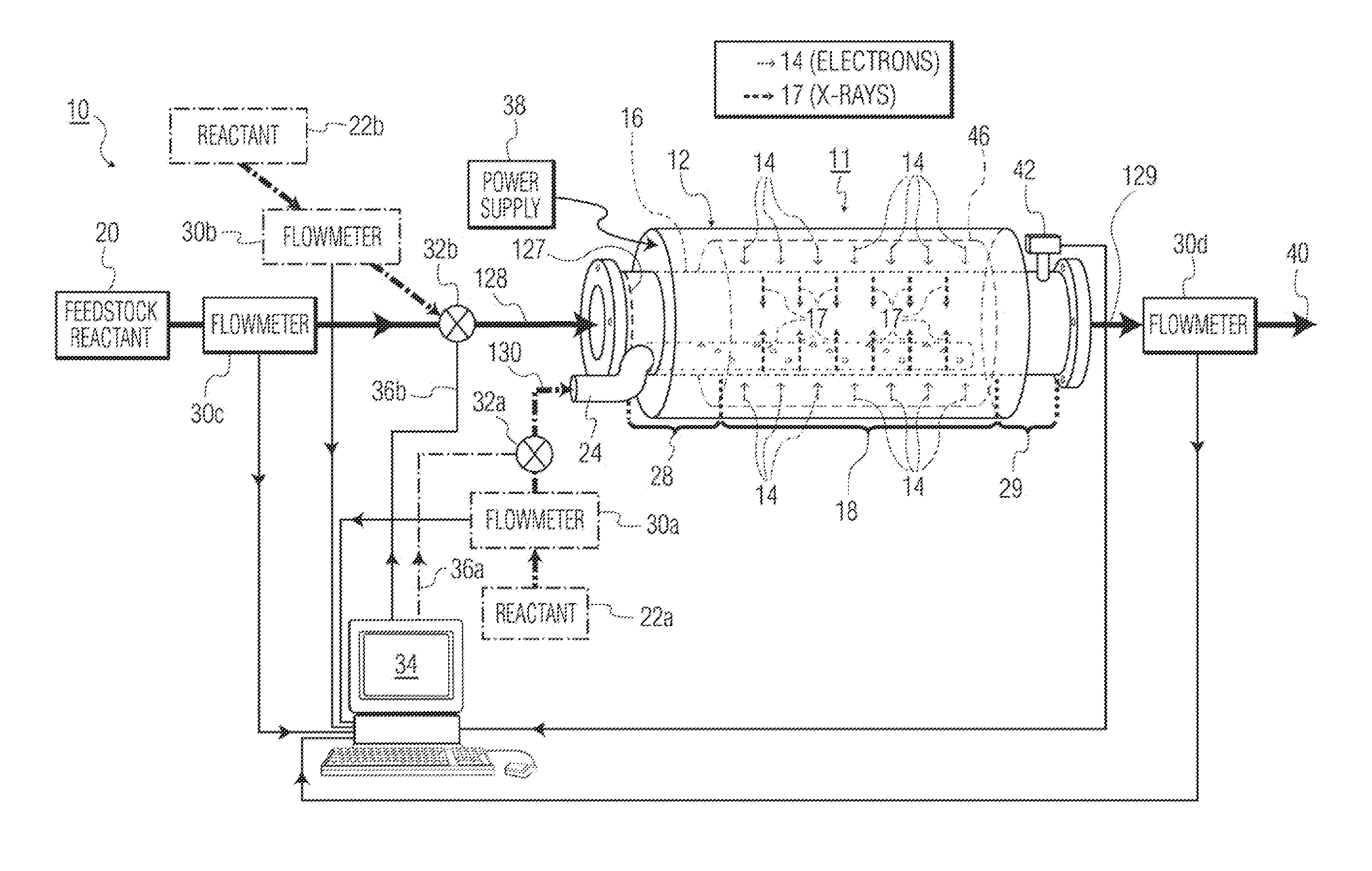
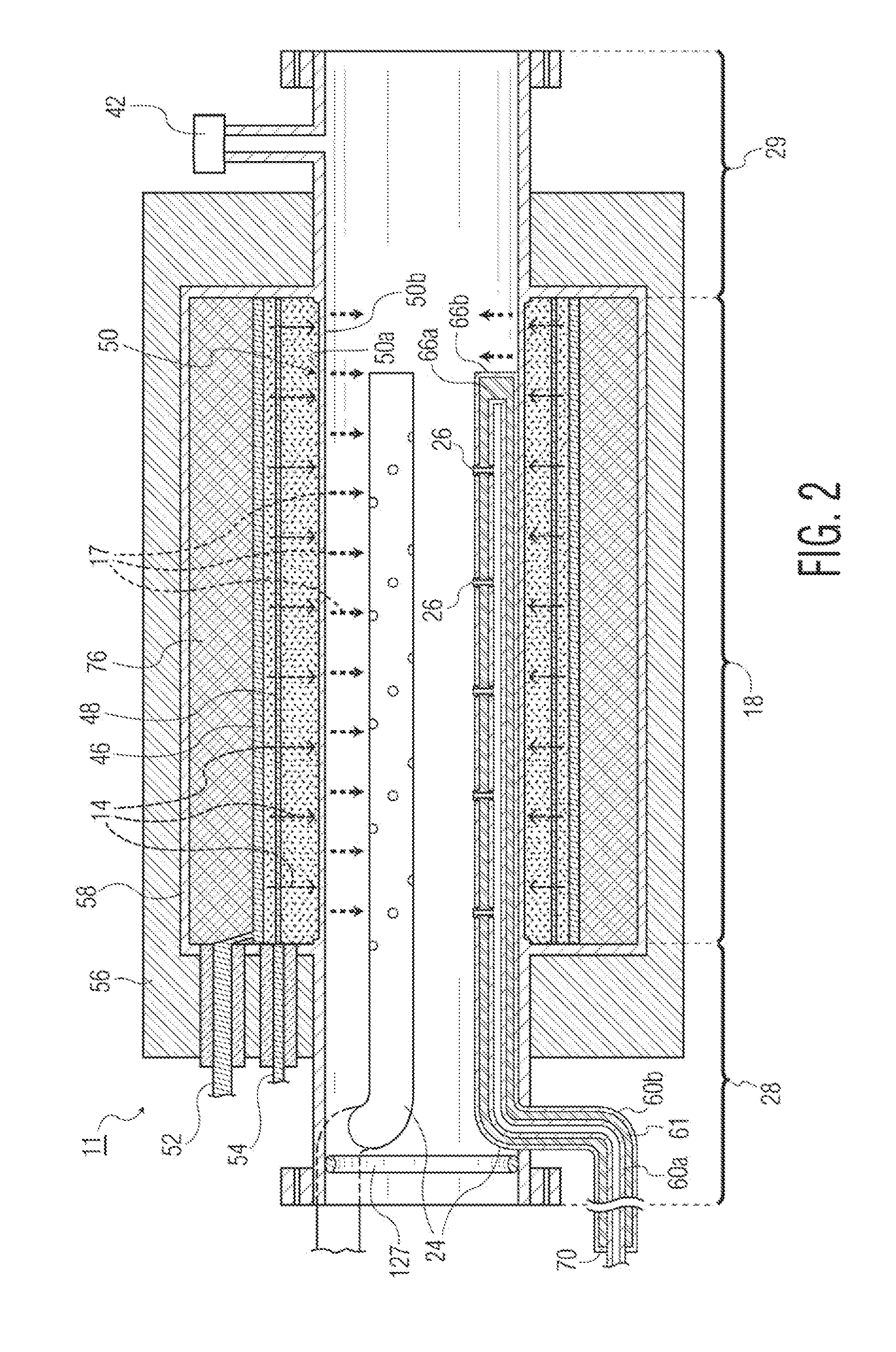
[0028]Disclosed herein is a general method of inducing chemical reactions using an intense, pulsed X-ray source such as the X-ray source used in the Flash X-ray Irradiator (hereinafter, “FXI”) disclosed in Patent Publication No. US 2009 / 0285362 A1, dated Nov. 19, 2009 and in WO 2009 / 140697 A1, dated Nov. 19, 2009 (hereinafter, “FXI patent publication”). The FXI patent publication is incorporated herein in its entirety by reference. In the context of generating X-rays, the word “pulse” connotes an event of predetermined time duration, typically less than one second. In one example, involving total ionization of reactants, the pulsed X-ray source creates a reactive environment by dissociating all molecular bonds in an influent stream of material to be reacted using high energy X-rays up to 1.2 MeV in energy. This causes the material to become highly ionized. Through the introduction of reactant chemicals into the reactive environment, desirable reactions are selectively caused with th...
PUM
 Login to View More
 Abstract
Description
Claims
Application Information
 Login to View More