
Systems and methods for radiometrically measuring temperature during tissue ablation
- Summary
- Abstract
- Description
- Claims
- Application Information
AI Technical Summary
Benefits of technology
Problems solved by technology
Method used
Image

Examples
Embodiment Construction
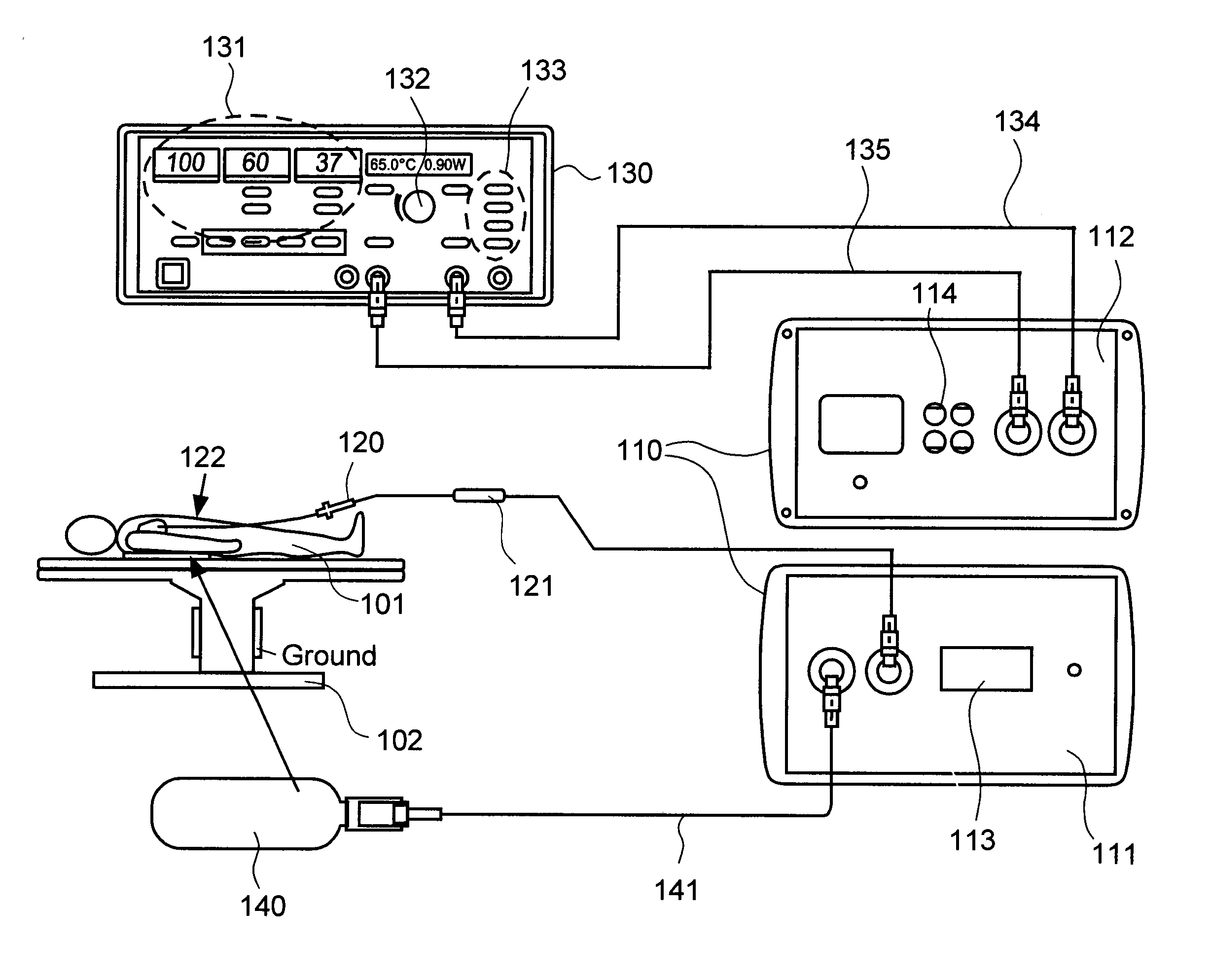
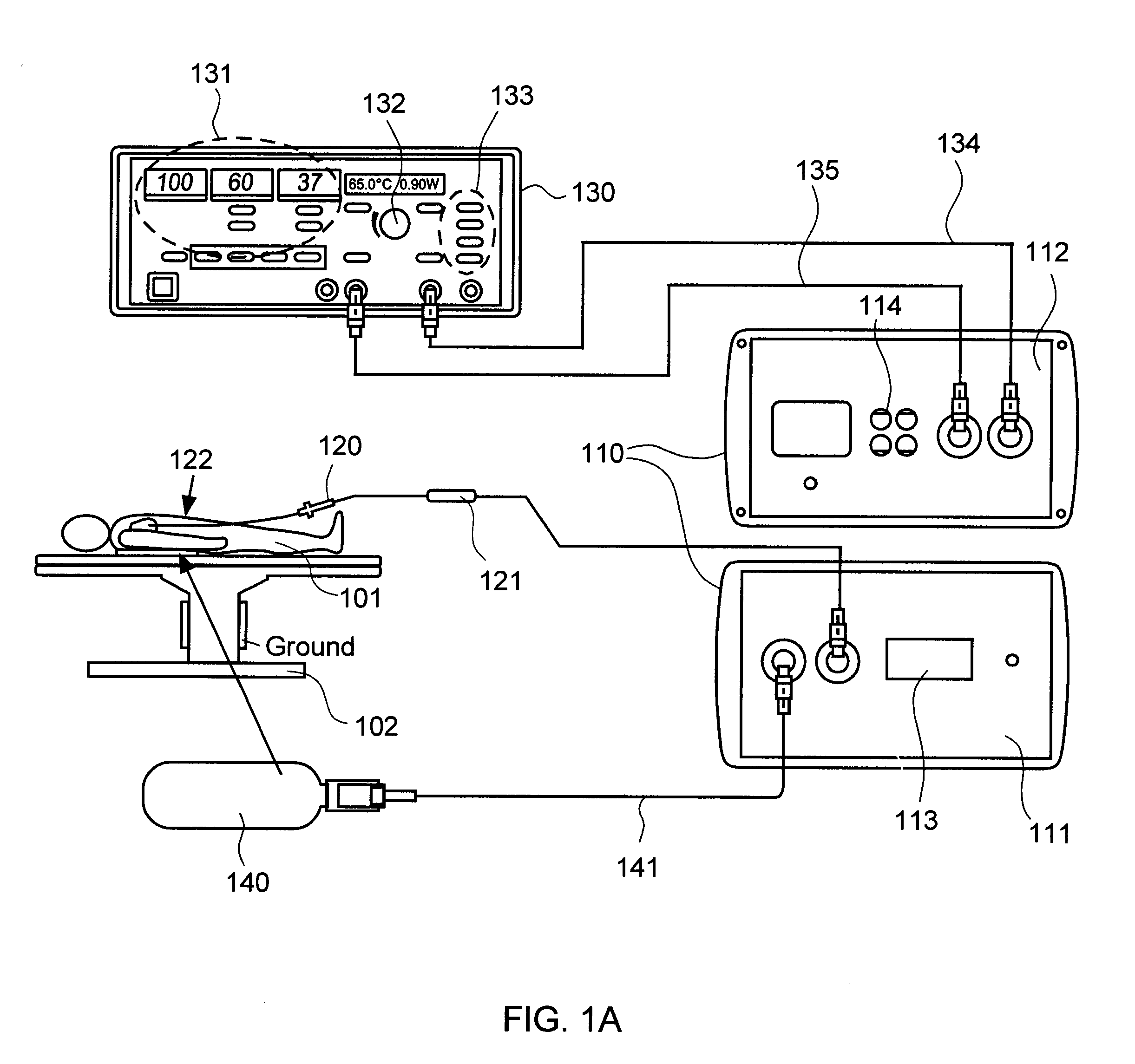
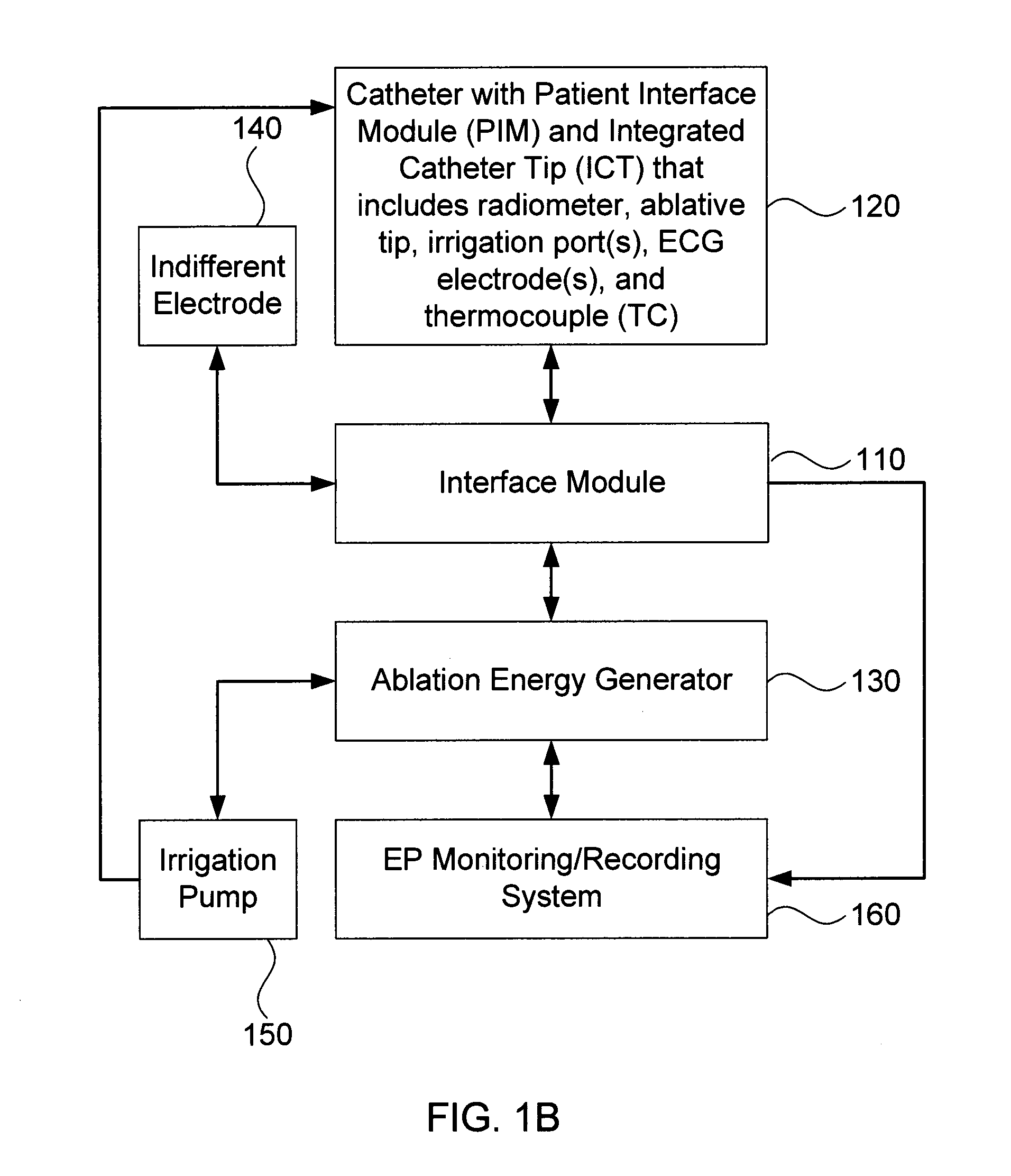
[0029]Embodiments of the present invention provide systems and methods for radiometrically measuring temperature during ablation, in particular cardiac ablation. As noted above, commercially available systems for cardiac ablation may include thermocouples for measuring temperature, but such thermocouples may not adequately provide the clinician with information about tissue temperature. Thus, the clinician may need to make an “educated guess” about whether a given region of tissue has been sufficiently ablated to achieve the desired effect. By comparison, calculating a temperature based on signal(s) from a radiometer is expected to provide accurate information about the temperature of tissue at depth, even during an irrigated procedure. The present invention provides a “retrofit” solution that includes an interface module that works with existing, commercially available ablation energy generators, such as electrosurgical generators. In accordance with one aspect of the present inven...
PUM
 Login to View More
 Abstract
Description
Claims
Application Information
 Login to View More