In the field of health care, many medical conditions are difficult to diagnose.
In many cases, this results in high rates of misdiagnosis.
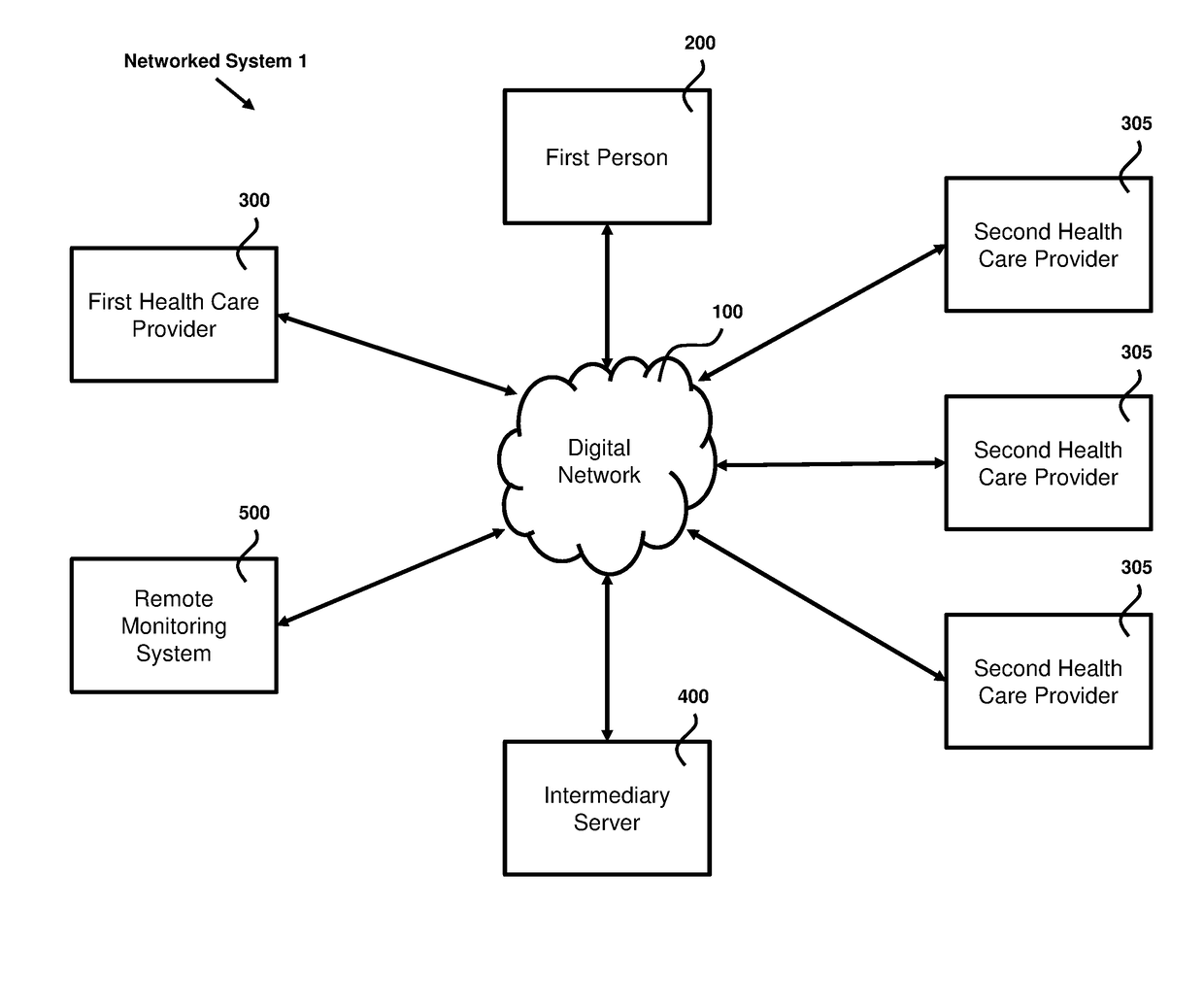
However, obtaining second opinions from second health care providers is burdensome.
There are also additional expenses associated with each appointment with each second health care provider, such as travel expenses and professional fees.
Because of the
high rate of misdiagnosis and the diversity of recommended treatments among different health care providers, a person's decision to not seek and obtain one or more second medical opinions may be detrimental to the person's health.
Even if a person does decide to seek and obtain one or more second opinions from one or more second health care providers, it often takes a significant amount of time before the person can receive each second opinion.
In particular, there is often a time
delay associated with scheduling an appointment with each second health care provider.
For many medical conditions, this time
delay may be detrimental to the person's health.
Because of the problems associated with seeking and obtaining second opinions, the person may decide to not seek and obtain one or more second opinions.
As a result, the person may go many months, and even years, without a correct diagnosis and appropriate recommended treatment.
This may be detrimental to the person and, in particular, may lead to a decrease in the person's health.
Even if the person decides to seek and obtain one or more second medical opinions, the person may be burdened with the time and expense associated with obtaining the one or more second opinions, and may be harmed by the
delay that occurs before obtaining the correct diagnosis and appropriate recommended treatment.
In other cases, first health care providers may not be competent in a particular health care field to diagnose a person's medical condition, let alone provide a proper diagnosis and recommended treatment.
Moreover, in many cases, there still may be high rates of misdiagnosis by second health care providers that are specialists, and the recommended treatments provided by each specialist may vary.
The first health care provider may provide their medical opinion, and, in many cases, may misdiagnose the person.
Few providers have attempted to overcome the problems described above by utilizing technology to facilitate the
receipt of second opinions from one or more second health care providers.
However, these systems do not create a third health care record based on at least a portion of a plurality of second health care records, for example, by testing for significant differences among the plurality of second health care records including a plurality of diagnoses and recommended treatments.
Accordingly, these systems do not allow a person to efficiently and effectively review a plurality of second opinions in order to properly obtain a correct diagnosis and
treatment plan.



 Login to View More
  Login to View More