
Coating apparatus and coating method for granular bodies
a coating apparatus and coating technology, applied in the direction of coatings, granule coatings, sweetmeats, etc., to achieve the effect of improving quality
- Summary
- Abstract
- Description
- Claims
- Application Information
AI Technical Summary
Benefits of technology
Problems solved by technology
Method used
Image

Examples
Embodiment Construction
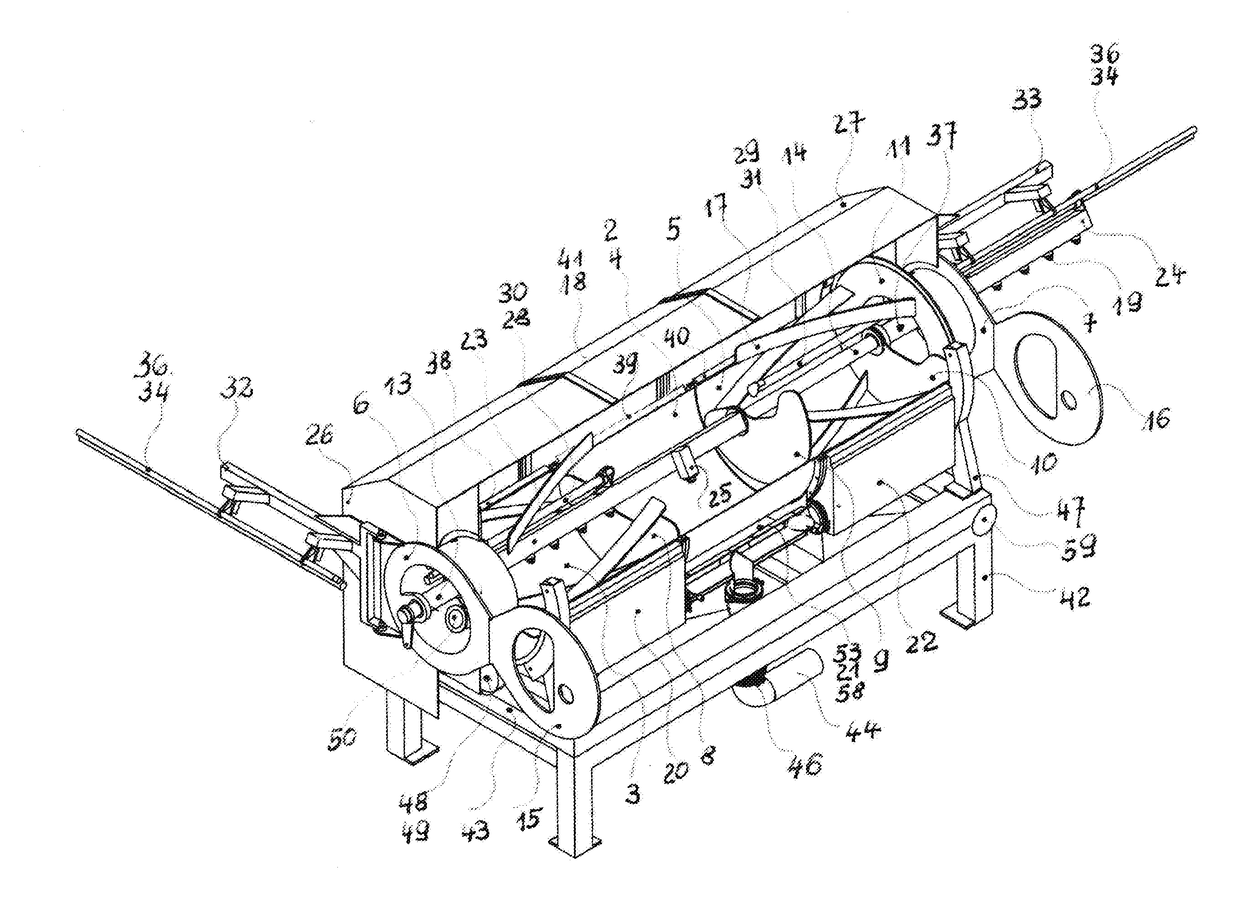
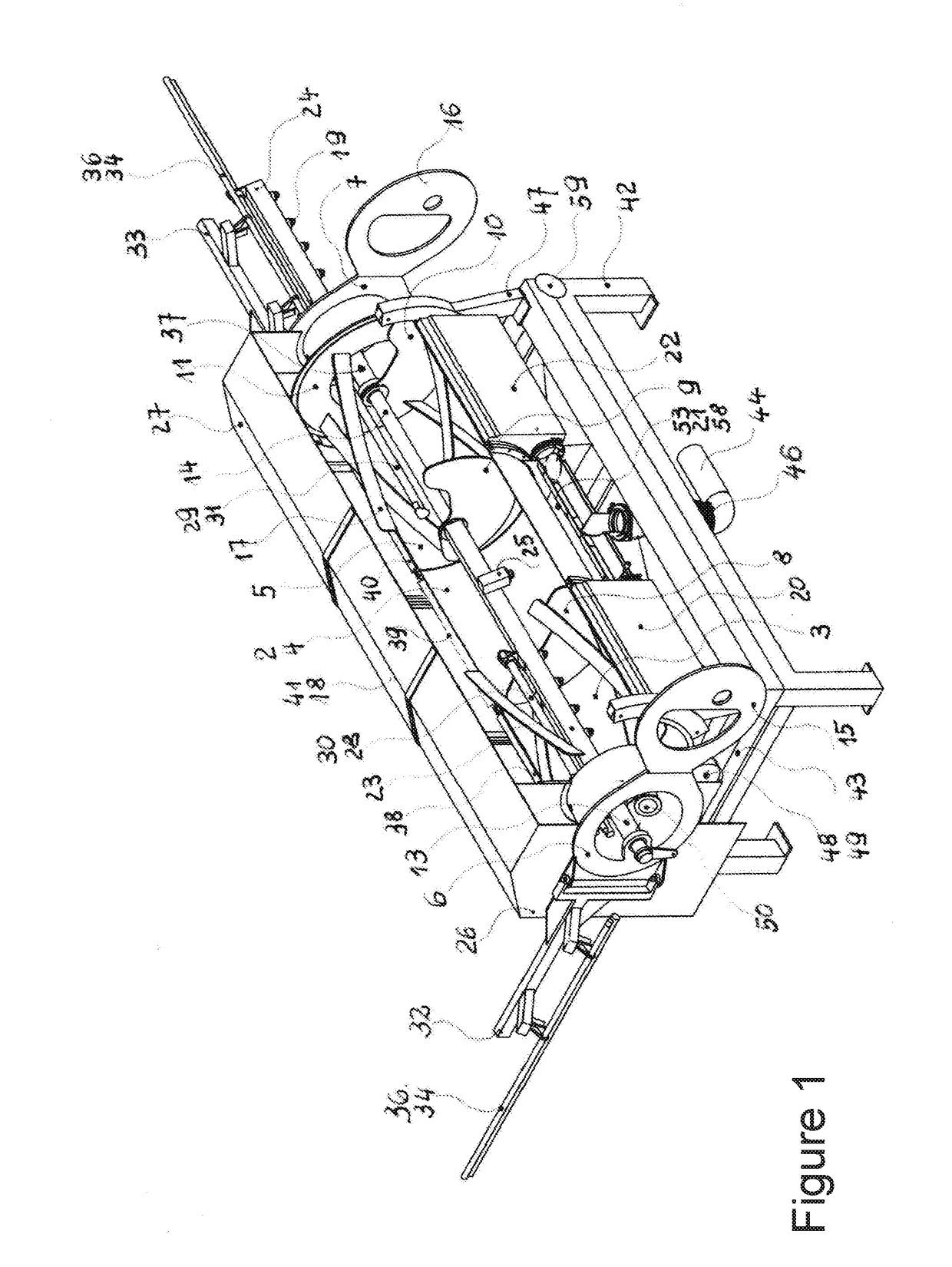
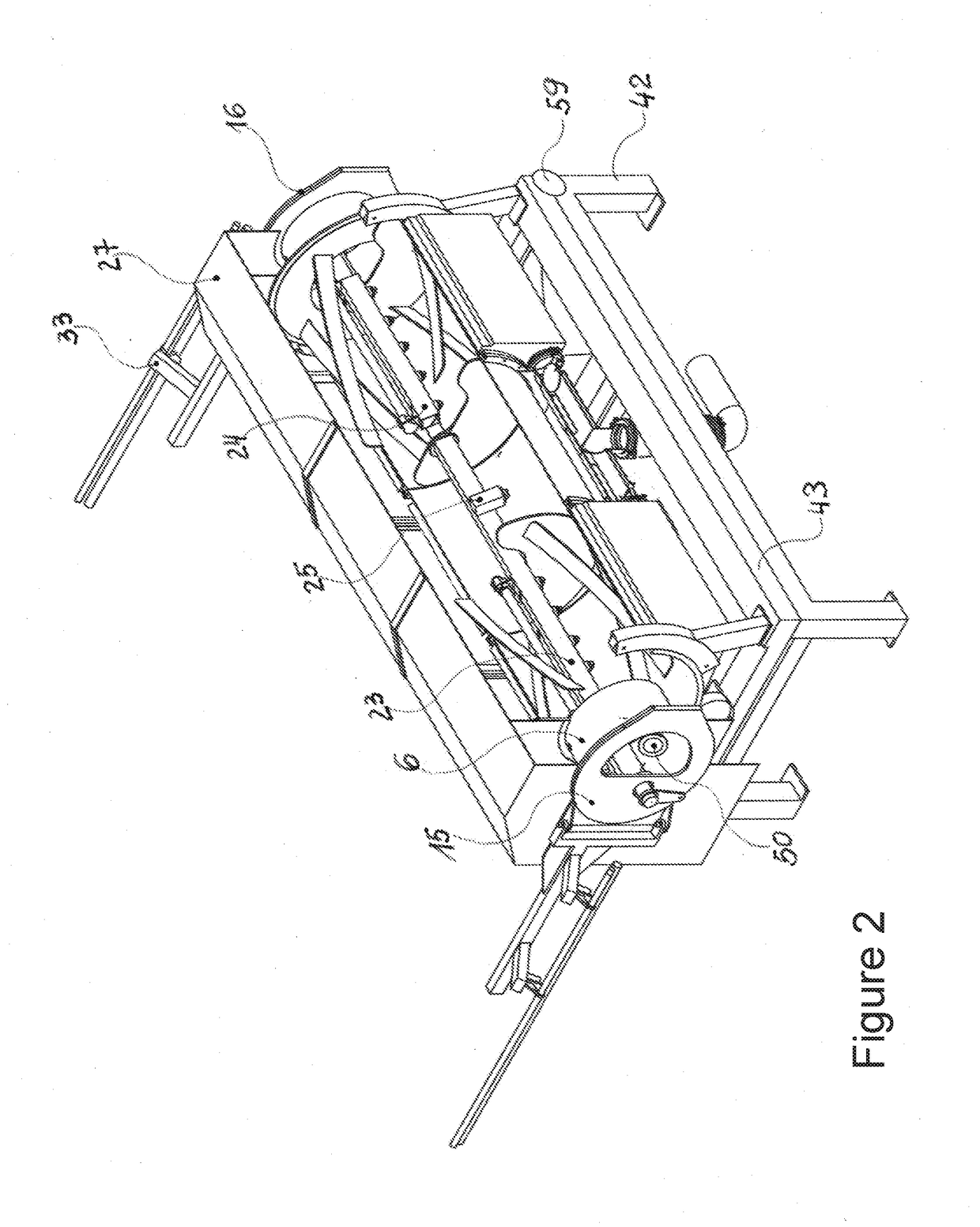
[0043]FIG. 1 shows, in a perspective view, an example of a coating apparatus of the invention with three cycle zones arranged in succession. The embodiment shown in FIG. 1 can be used, for example, for film coating of granular bodies (tablet cores) 1.
[0044]In this example, the hollow cylindrical drum 2 consists of three hollow cylindrical, perforated drum elements: a spray section 3, a middle section 4 for measuring the layer thickness achieved so far therein, and a section 5 in which the final spraying and emptying takes place. The three drum elements 3, 4 and 5 are axially connected to one another to form a drum 2. For reasons of improved clarity, the drum 2 is shown in horizontal half-section in FIGS. 1-3. The drum elements 3, 4 and 5 each form a cycle zone.
[0045]At each end of the assembled drum 2 there is a coater door housing 6 and 7 at the end; it uses sealing rings present in between to prevent the granular bodies (tablet cores) 1 from getting out of the drum 2 in an unwante...
PUM
| Property | Measurement | Unit |
|---|---|---|
| wavelength | aaaaa | aaaaa |
| wavelength | aaaaa | aaaaa |
| wavelength | aaaaa | aaaaa |
Abstract
Description
Claims
Application Information
 Login to View More