
Adaptive content delivery network
a content delivery network and content technology, applied in the field of encoded data delivery, can solve problems such as excessive playback delay, and achieve the effects of reducing the number of versions of data that need to be stored, managed and sent within the content delivery network, reducing transmission overhead, and reducing the quality of video conten
- Summary
- Abstract
- Description
- Claims
- Application Information
AI Technical Summary
Benefits of technology
Problems solved by technology
Method used
Image

Examples
first embodiment
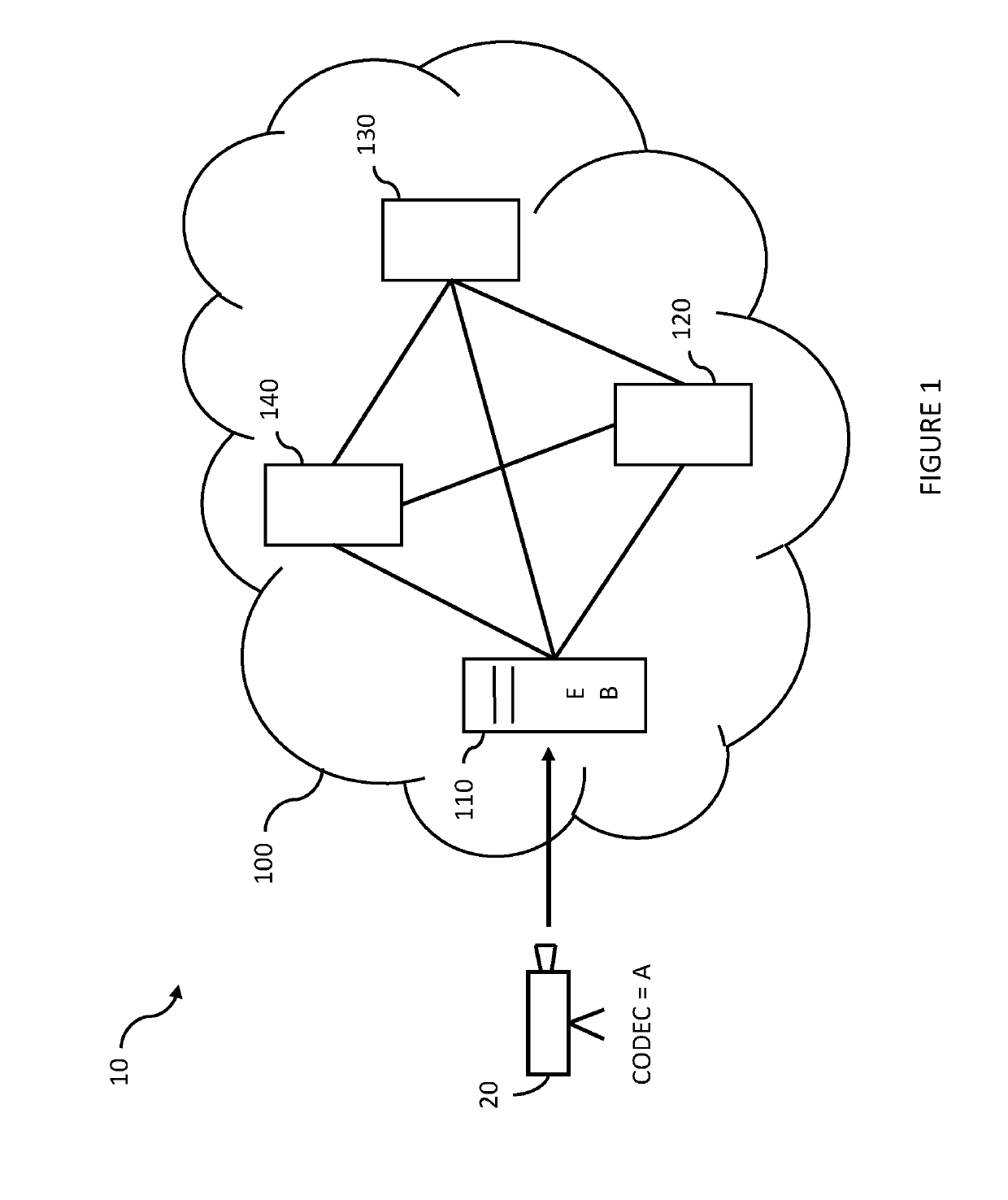
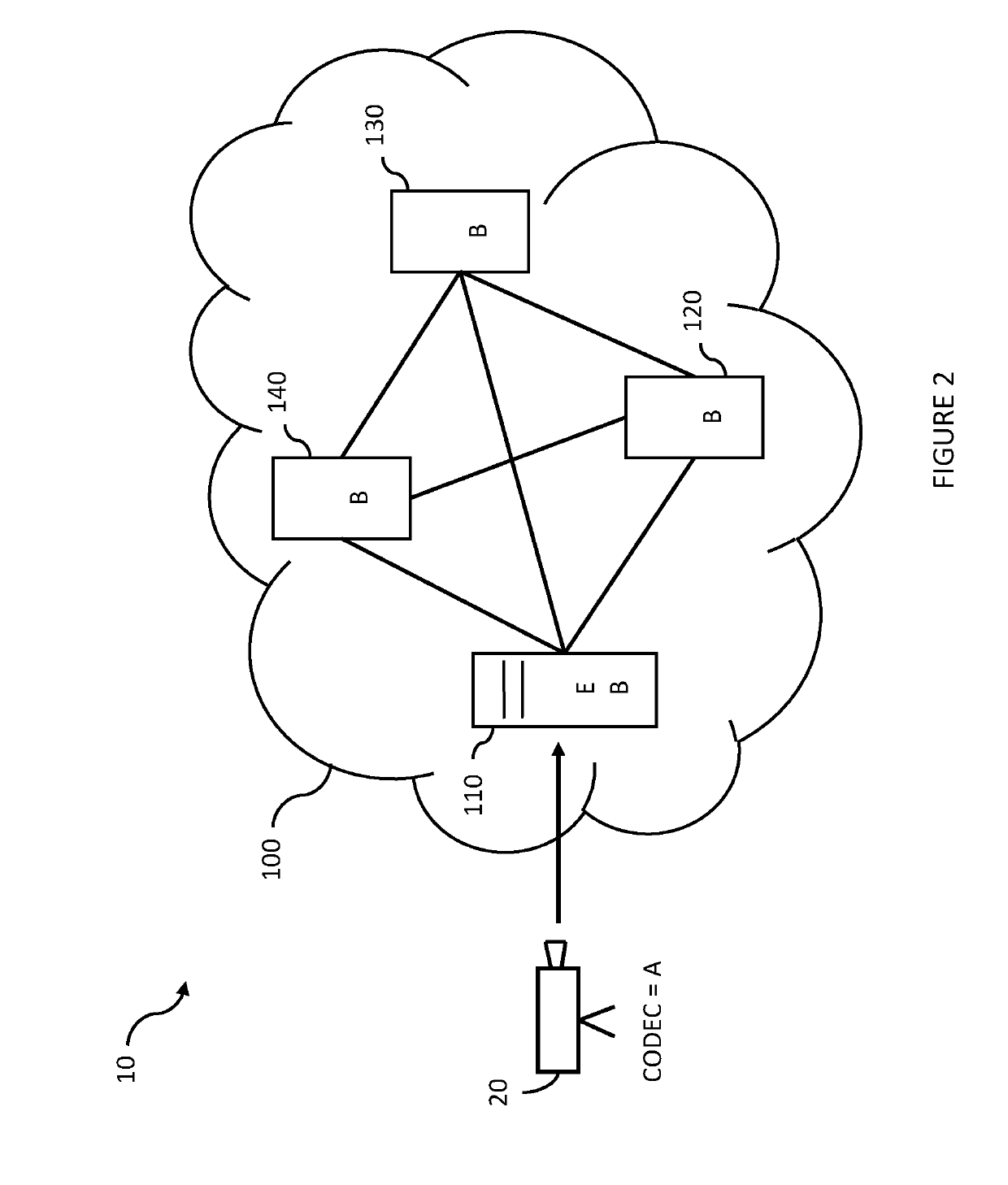
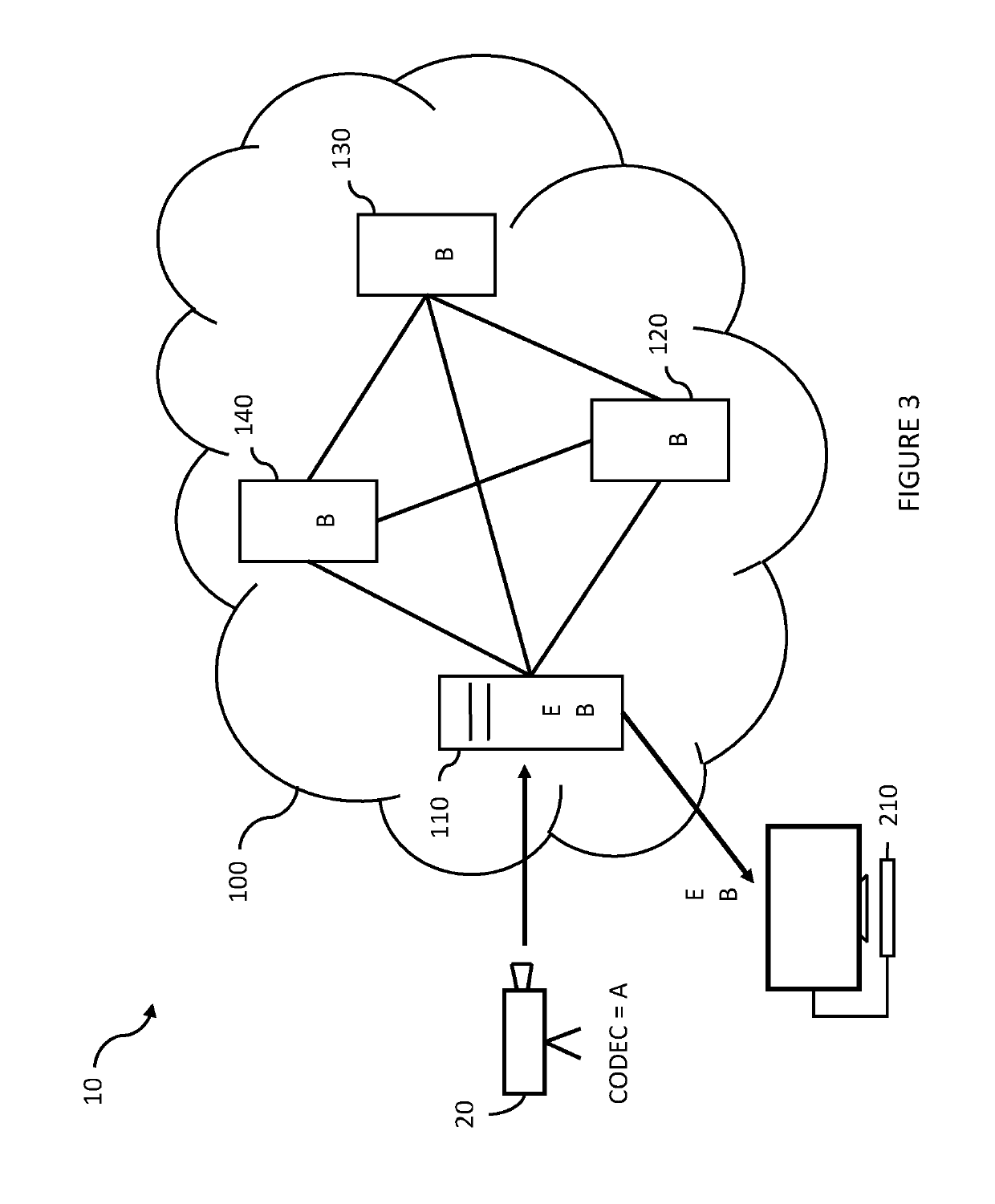
[0053]FIG. 1 is a block diagram showing a simplified system 10 for delivering digital video content to video clients 210, 220, 230, 235, 240 (shown in later figures). The system 10 comprises a video source 20 which produces or provides digital video content to the system 10, and a content delivery network 100 which manages and delivers the video content to the video clients 210, 220, 230, 235, 240.
[0054]The video source 20 can be any video source, such as a digital video camera or a computer file system or server which is arranged to contribute digitised or digital video content to the content delivery network 100. The digital video content is either “on demand” content for consumption at a future point in time, or is “live” content which is for immediate consumption.
[0055]The content delivery network 100 comprises a number of servers which are arranged to deliver the video content to the video clients 210, 220, 230, 235, 240, typically when requested to do so by the video clients ...
second embodiment
[0100]FIG. 9 is a block diagram showing a system 10 for delivering digital video content. The system 10 comprises a video source 20 which produces or provides digital video content to the system 10, a content delivery network 100 which manages and delivers the video content, and a separate server 200.
[0101]The video source 20 can be any video source, such as a digital video camera or a computer file system or server which is arranged to contribute digitised or digital video content to the content delivery network 100. The digital video content is either “on demand” content for consumption at a future point in time, or is “live” content which is for immediate consumption.
[0102]The content delivery network 100 comprises a number of servers which are arranged to deliver the video content, typically when requested to do so. In a typical implementation, the content delivery network 100 is arranged to have an origin server 110 which receives and stores the digital video content from the ...
PUM
 Login to View More
 Abstract
Description
Claims
Application Information
 Login to View More