
Aircraft with electric batteries, in particular a hybrid aircraft
a hybrid aircraft and electric battery technology, applied in the field of aircraft, can solve the problems of noise pollution, serious problems for airway companies, and the performance level of energy storage systems that cannot yet be similar, and achieve the effect of maximizing the amount of energy
- Summary
- Abstract
- Description
- Claims
- Application Information
AI Technical Summary
Benefits of technology
Problems solved by technology
Method used
Image

Examples
Embodiment Construction
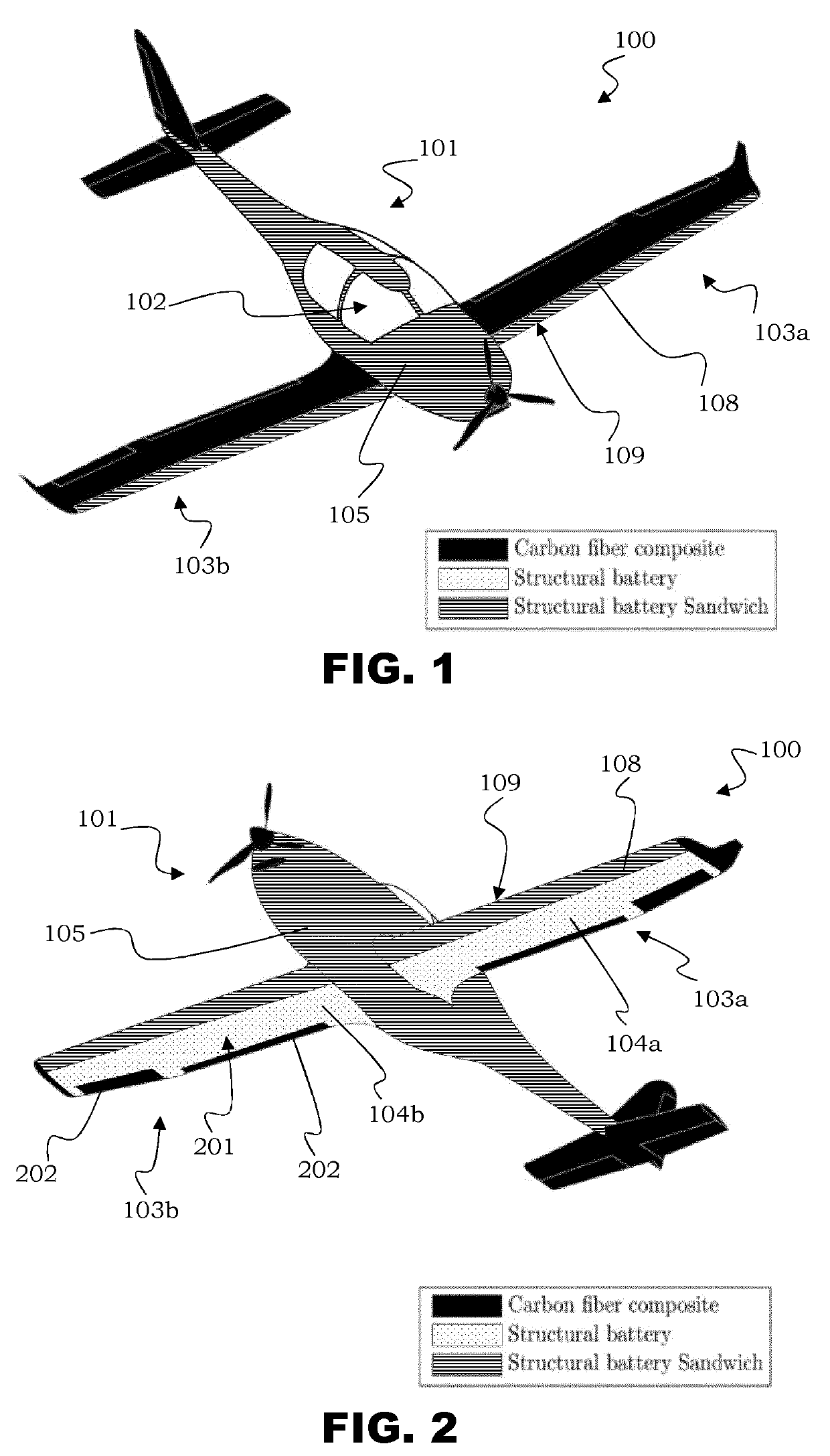
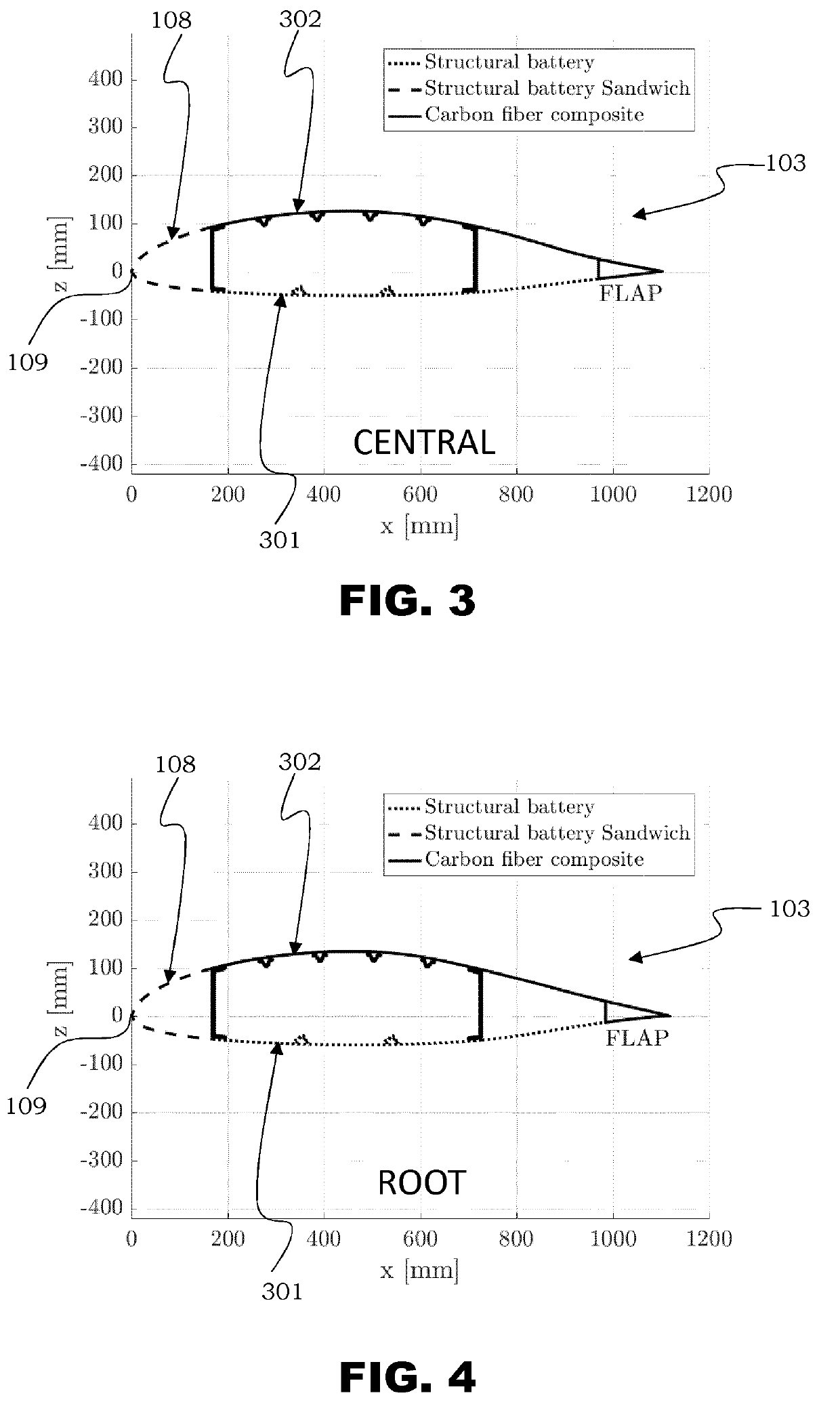
[0043]FIGS. 1 and 2 show respectively an upper and a lower view of an aircraft 100 according to the present invention.
[0044]The aircraft 100 comprises a fuselage 101 comprising a plurality of panels adapted to define an aerodynamic shape for a cockpit 102 of the aircraft 100. Alternatively, or in addition, the aircraft can host a cargo hold for the transport of payload. In particular, the aircraft can be of a kind piloted by a human operator, as well as of an autopiloted or remotely-piloted kind.
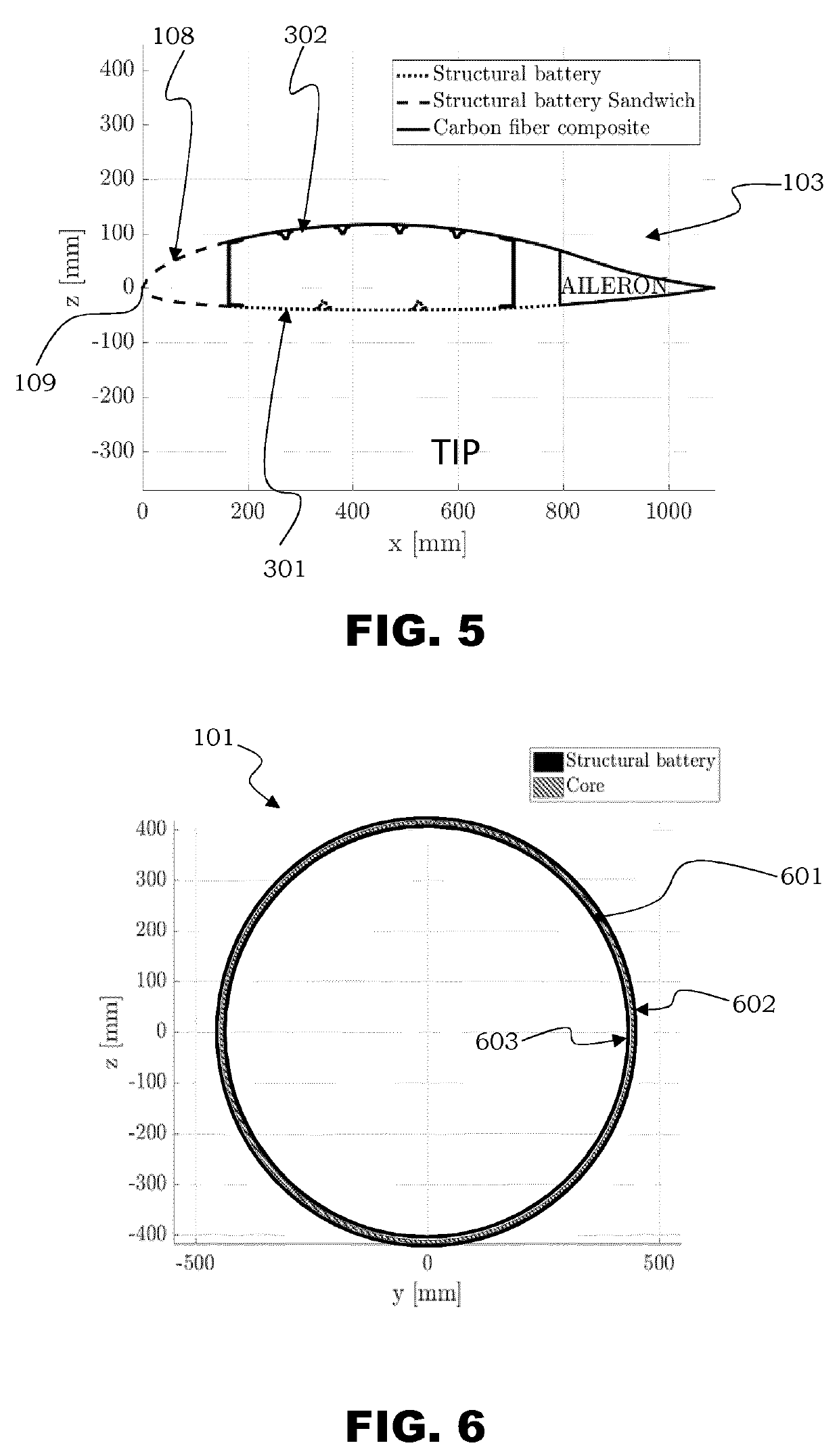
[0045]The fuselage 101 preferably presents a configuration so-called “tadpole-like”, characterising most of the aircrafts belonging to the general aviation category. This configuration presents a wetted surface reduced of 30-40% with respect to other configurations. The production of such fuselages is normally more expensive than other configurations, but allows to obtain remarkable savings in case of adoption of composite materials, in particular by using structural batteries, as will be be...
PUM
| Property | Measurement | Unit |
|---|---|---|
| take-off weight | aaaaa | aaaaa |
| take-off weight | aaaaa | aaaaa |
| take-off weight | aaaaa | aaaaa |
Abstract
Description
Claims
Application Information
 Login to View More