
Transition metal compound for olefin polymerization catalyst, olefin polymerization catalyst comprising same, and polyolefin polymerized using same
a technology of transition metal compound and olefin polymerization catalyst, which is applied in the direction of bulk chemical production, etc., to achieve the effects of high activity, excellent physical properties, and high copolymerization ability
- Summary
- Abstract
- Description
- Claims
- Application Information
AI Technical Summary
Benefits of technology
Problems solved by technology
Method used
Image

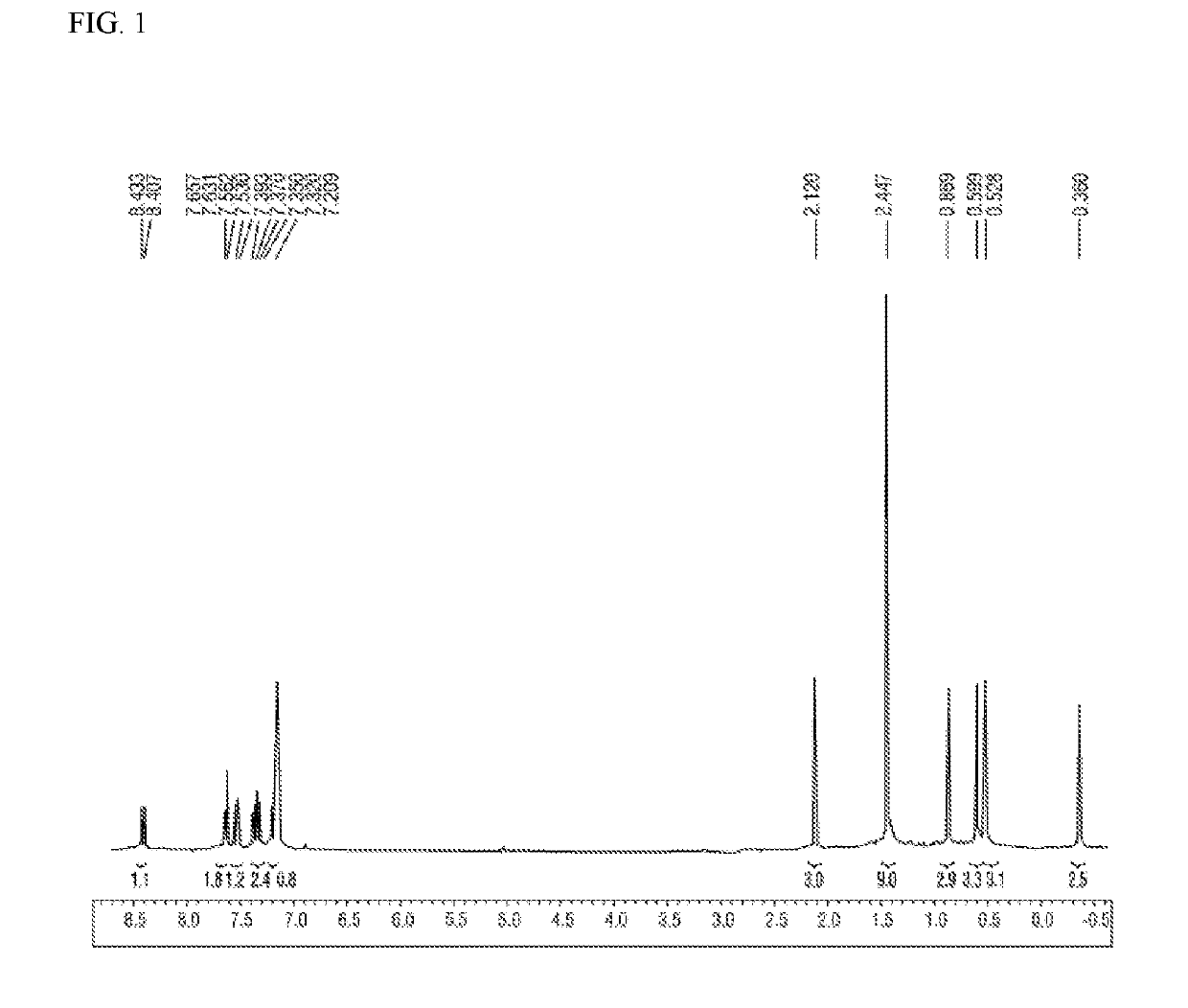
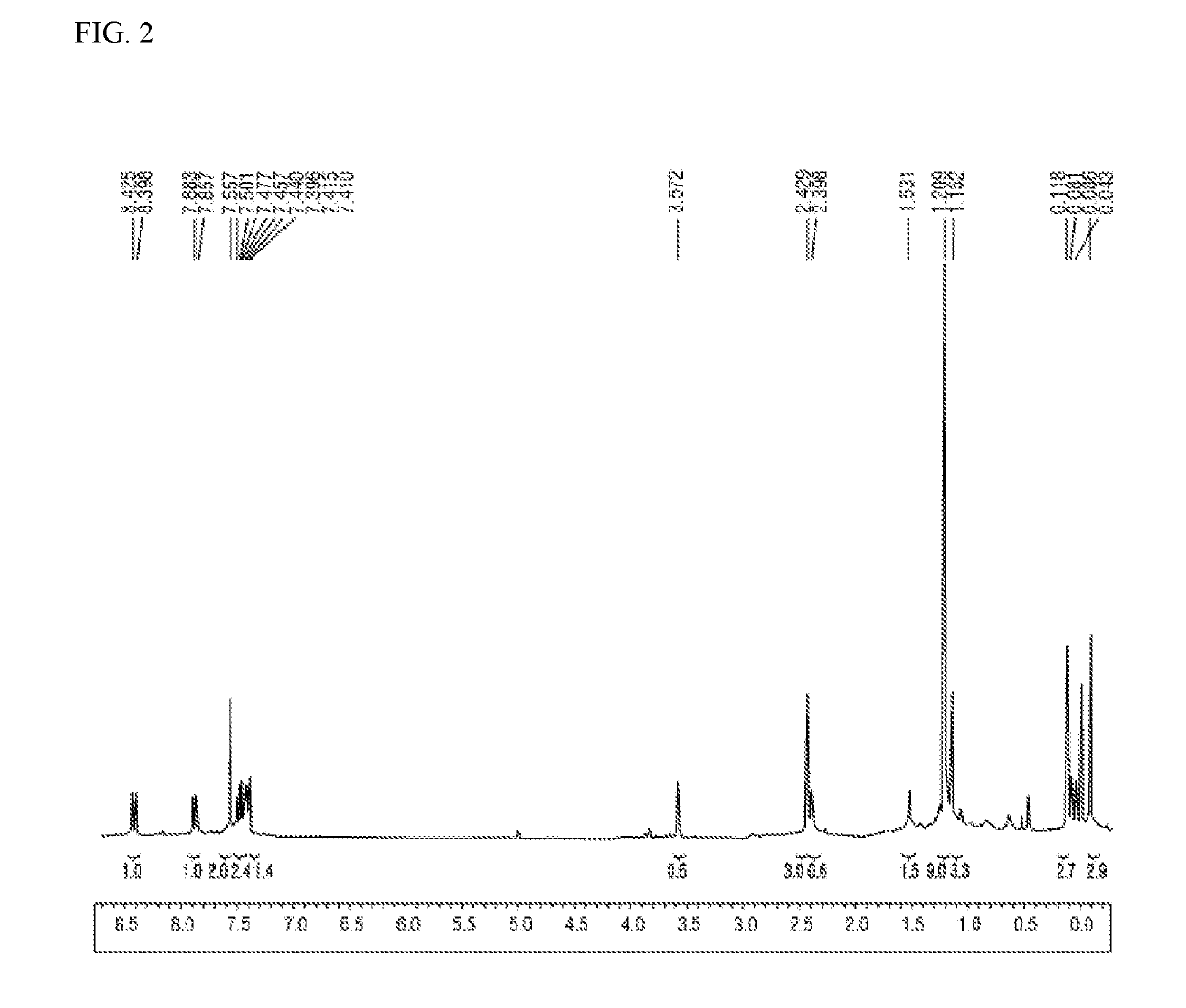
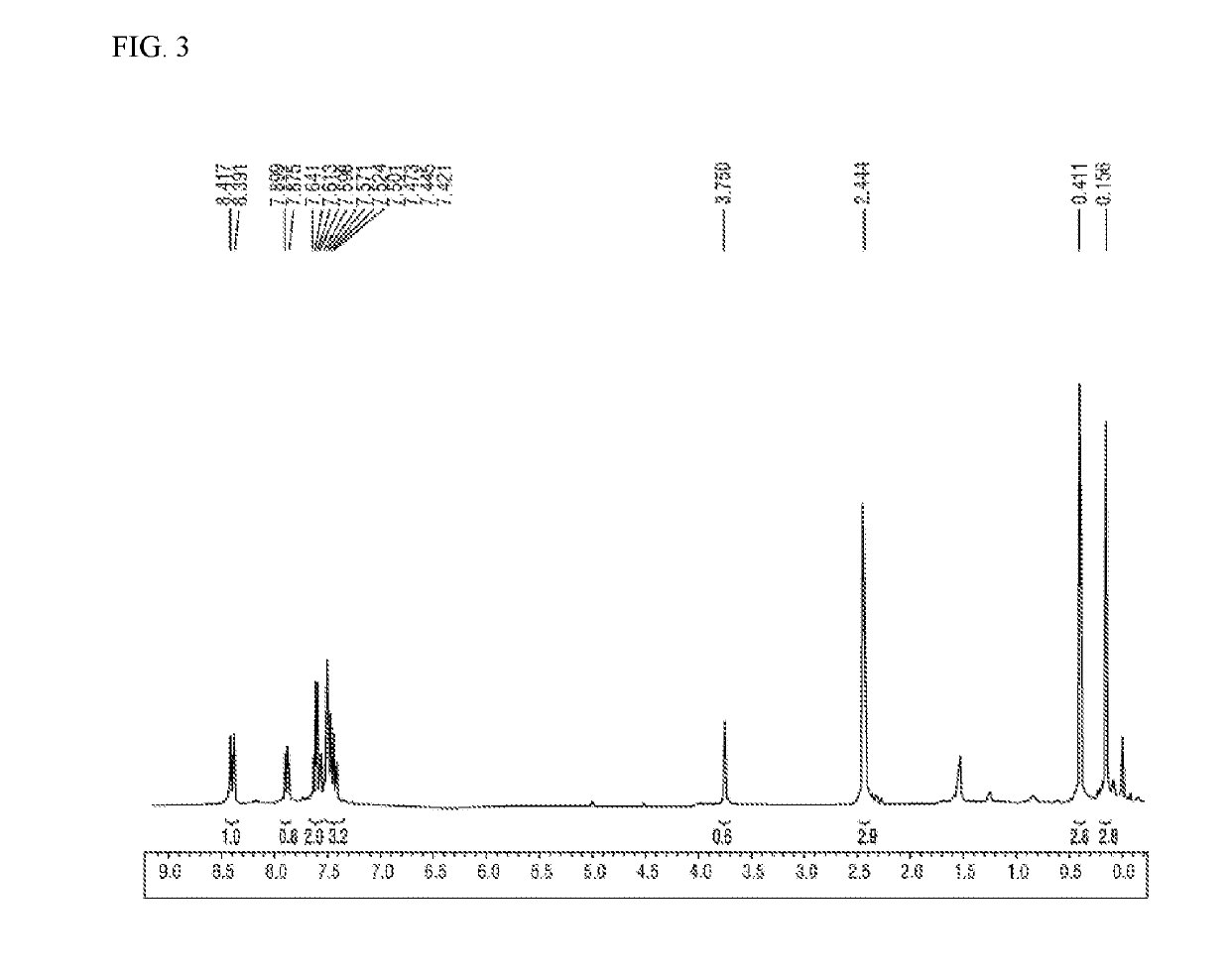
Examples
preparation example 1
Preparation of Compound of Chemical Formula 2
preparation example 1-1
Preparation of 1,2-dihydro-2-methyl-3H-benzo[b]indeno[4,5-d]thiophen-3-one
[0064]Methacryloyl chloride (2.8 g, 27 mmol) and a solution prepared by diluting dibenzothiophene (5.0 g, 27 mmol) in dichloromethane (50 mL) were added, at −78° C., to a solution prepared by dispersing AlCl3 (7.2 g, 54 mmol) in dichloromethane (150 mL). After completion of the addition, the mixture was stirred at room temperature for 12 hours, and then water was added at 0° C. to terminate the reaction. Afterward, the organic layer was extracted, the solvent was removed in vacuo, the resultant was subjected to column chromatography, and thereby 4.2 g (61%) of 1,2-dihydro-2-methyl-3H-benzo[b]indeno[4,5-d]thiophen-3-one having the following 1H-NMR spectrum was obtained.
[0065]1H-NMR (CDCl3, 300 MHz): 8.25 (m, 1H), 7.92 (m, 1H), 7.83 (m, 2H), 7.53 (m, 2H), 3.93 (m, 1H), 3.21 (m, 1H), 2.88 (m, 1H), 1.43 (d, 3H).
preparation example 1-2
Preparation of 2,3-dihydro-2-methyl-1H-benzo[b]indeno[4,5-d]thiophen-3-ol
[0066]Sodium borohydride (NaBH4) (624 mg, 17 mmol) was added, at 0° C., to a solution prepared by dissolving the 1,2-dihydro-2-methyl-3H-benzo[b]indeno[4,5-d]thiophen-3-one (4.2 g, 17 mmol) obtained in Preparation Example 1-1 in a 1:9 (v / v) solvent mixture (50 mL) of THF and methanol. The temperature was gradually raised to room temperature, and thereafter the mixture was stirred for one hour. After completion of the reaction, all the solvent was removed in vacuo, and the organic layer was extracted with dichloromethane. Afterward, moisture was removed from the organic layer using magnesium sulfate, the solvent was subsequently removed in vacuo, and thereby 3.4 g (81%, diastereomeric alcohols) of 2,3-dihydro-2-methyl-1H-benzo[b]indeno[4,5-d]thiophen-3-ol having the following 1H-NMR spectrum was obtained.
[0067]1H-NMR (CDCl3, 300 MHz): 8.19 (m, 1H), 7.87 (m, 1H), 7.76 (d, 1H), 7.44-7.56(m, 3H), 4.91 and 5.17 (2s,...
PUM
| Property | Measurement | Unit |
|---|---|---|
| density | aaaaa | aaaaa |
| temperature | aaaaa | aaaaa |
| temperature | aaaaa | aaaaa |
Abstract
Description
Claims
Application Information
 Login to View More