Method of cooling an organ

a technology of organs and cooling methods, applied in medical science, surgery, diagnostics, etc., can solve the problems of ineffective treatment respect, inability to eliminate the time required for proper diagnosis and treatment of the organ, and critical treatment tim

a technology of organs and cooling methods, applied in medical science, surgery, diagnostics, etc., can solve the problems of ineffective treatment respect, inability to eliminate the time required for proper diagnosis and treatment of the organ, and critical treatment tim

US6972028B2Inactive Publication Date: 2005-12-06ORIGIN MEDSYST

Image

Smart Image Click on the blue labels to locate them in the text.
Viewing Examples
Smart Image
  • Method of cooling an organ
  • Method of cooling an organ
  • Method of cooling an organ

Examples

Experimental program
Comparison scheme
Effect test

Embodiment Construction

[0023]While embodiments of the present invention are described with reference to certain cooling methods, devices, and mechanisms, embodiments of the invention are applicable to any cooling system where an organ of a body is to be cooled. This would include organ cooling methods, devices, and systems directed toward cooling organs such as the brain, lungs and heart. The invention is particularly useful when the body organ to be cooled is bathed in a body fluid.

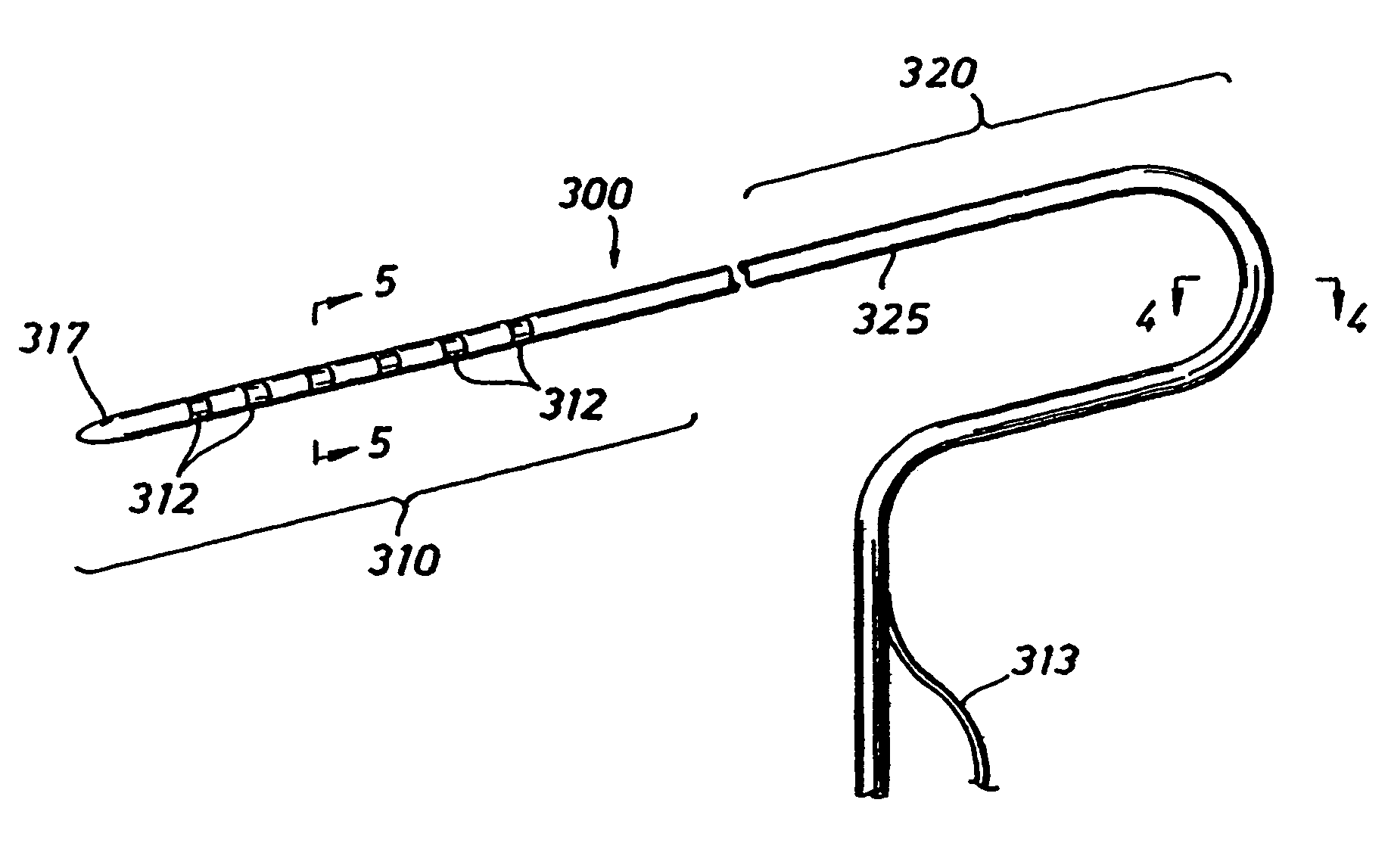
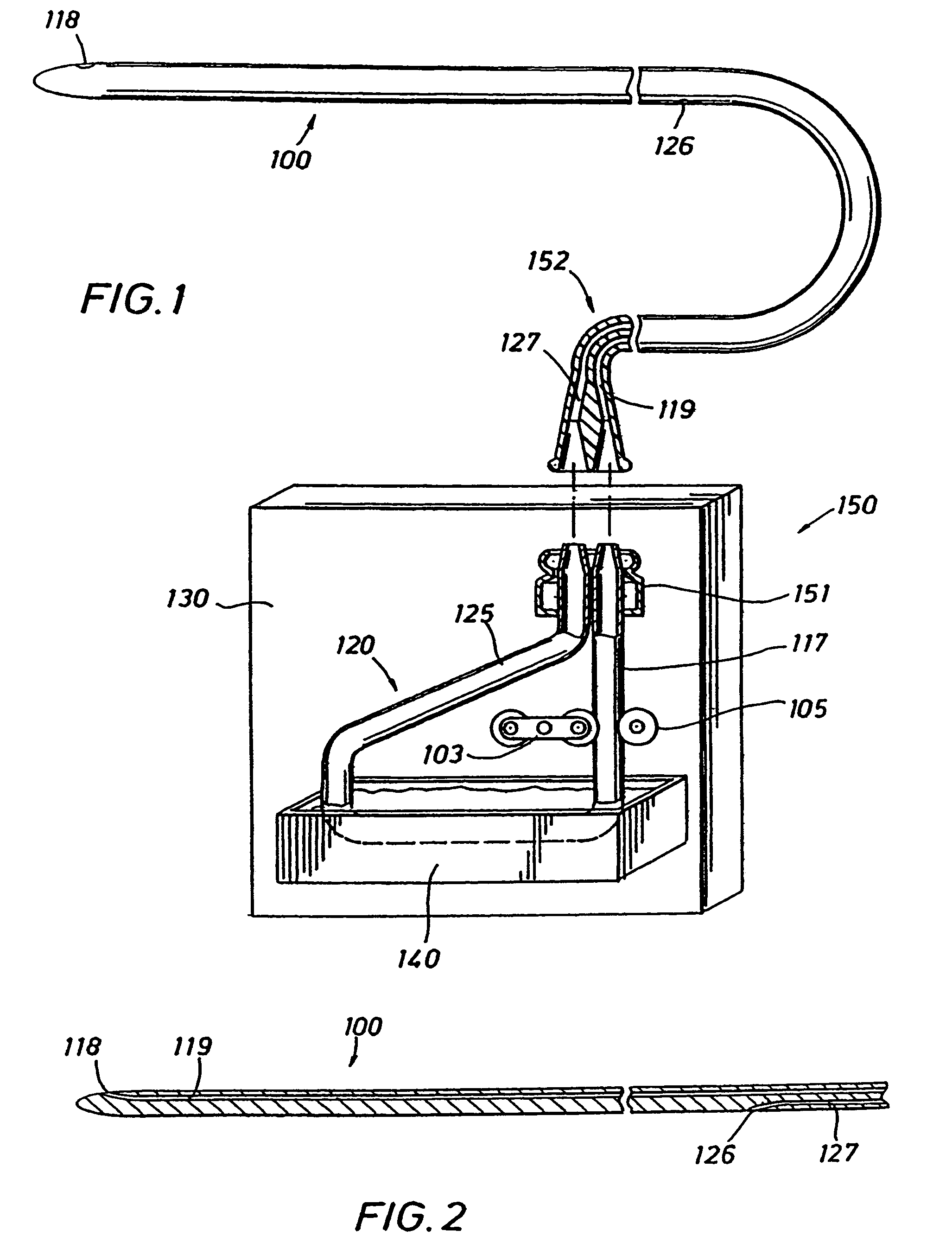
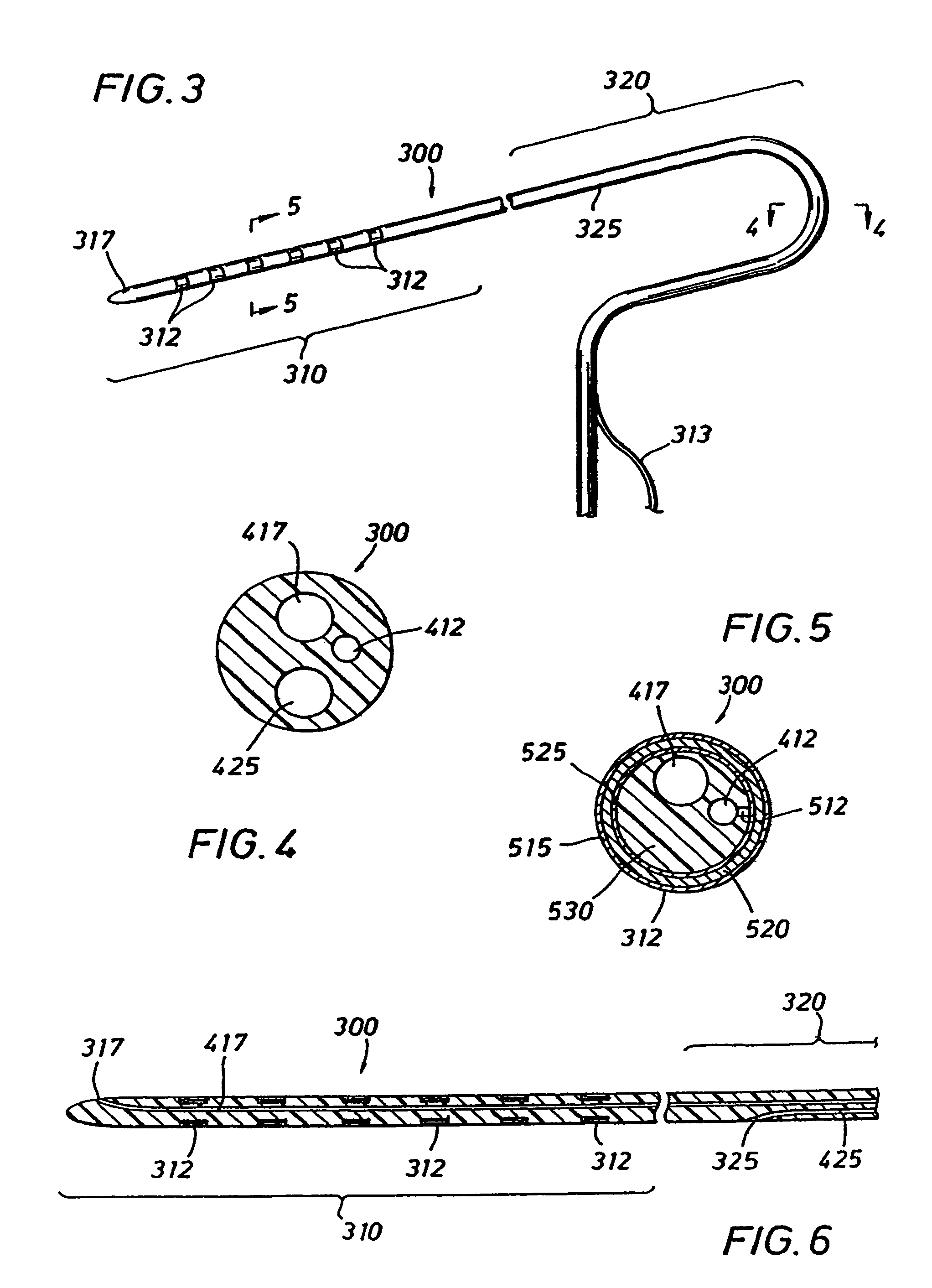
[0024]Referring to FIG. 1, a catheter 100 and pump assembly 150 are shown. Embodiments of the catheter 100 can be constructed of flexible plastic materials such as polyvinyl chloride, polyethylene, nylon, polytetrafluoroethylene, and other such materials. In the embodiment shown, the catheter 100 is configured to be positioned to contact a body fluid bathing an organ. A body fluid bathing an organ is distinguished from other body fluids, such as blood, which are channeled throughout the body and not generally isolated in a reg...

the structure of the environmentally friendly knitted fabric provided by the present invention; figure 2 Flow chart of the yarn wrapping machine for environmentally friendly knitted fabrics and storage devices; image 3 Is the parameter map of the yarn covering machine
Login to View More

PUM

No PUM Login to View More

Abstract

A method of cooling an organ. A portion of a body fluid bathing an organ is withdrawn while a cool fluid is infused. A separate portion of the body fluid can be cooled during the withdrawing. A volume of up to about 5% of the body fluid can be withdrawn. A catheter is provided with a cooling mechanism to contact and cool the body fluid. The catheter can have an inlet port to withdraw body fluid and an outlet port to allow infusion of a cool fluid. Additionally, an organ cooling pump assembly is provided including a pump and a catheter.

Description

BACKGROUND OF THE INVENTION[0001]This application is a continuation application of U.S. patent application Ser. No. 09 / 920,194, filed Aug. 1, 2001, now U.S. Pat. No. 6,623,514.[0002]The present invention relates to treatment of organs. In particular, the present invention relates to treatment of organs that have been subjected to trauma or ischemia.BACKGROUND OF THE RELATED ART[0003]When an organ has been injured or its blood supply compromised, timeliness of treatment can be critical. Organ tissue necrosis, or death, begins when the organ's blood supply is compromised and treatment is ineffective with respect to organ tissue that has died prior to treatment. Nevertheless, the time required for proper diagnosis and treatment of the organ cannot be eliminated.[0004]The brain is no exception. Injury to the brain may result from increased pressure due to swelling of brain tissue. For example, swelling may result from internal bleeding such as from a ruptured aneurysm. Alternatively, ge...

Claims

the structure of the environmentally friendly knitted fabric provided by the present invention; figure 2 Flow chart of the yarn wrapping machine for environmentally friendly knitted fabrics and storage devices; image 3 Is the parameter map of the yarn covering machine
Login to View More

Application Information

Patent Timeline
06 Dec 2005
Publication
US6972028B2
IPC
A61F7/00; A61F7/12
CPC
A61F7/12; A61F2007/0063; A61F2007/126
Inventors
CHIN, ALBERT K.