
Corneal surgery apparatus and correction data determining methods
- Summary
- Abstract
- Description
- Claims
- Application Information
AI Technical Summary
Benefits of technology
Problems solved by technology
Method used
Image

Examples
Embodiment Construction
[0020]The following detailed description of preferred embodiments consistent with the present invention will now be given referring to the accompanying drawings.
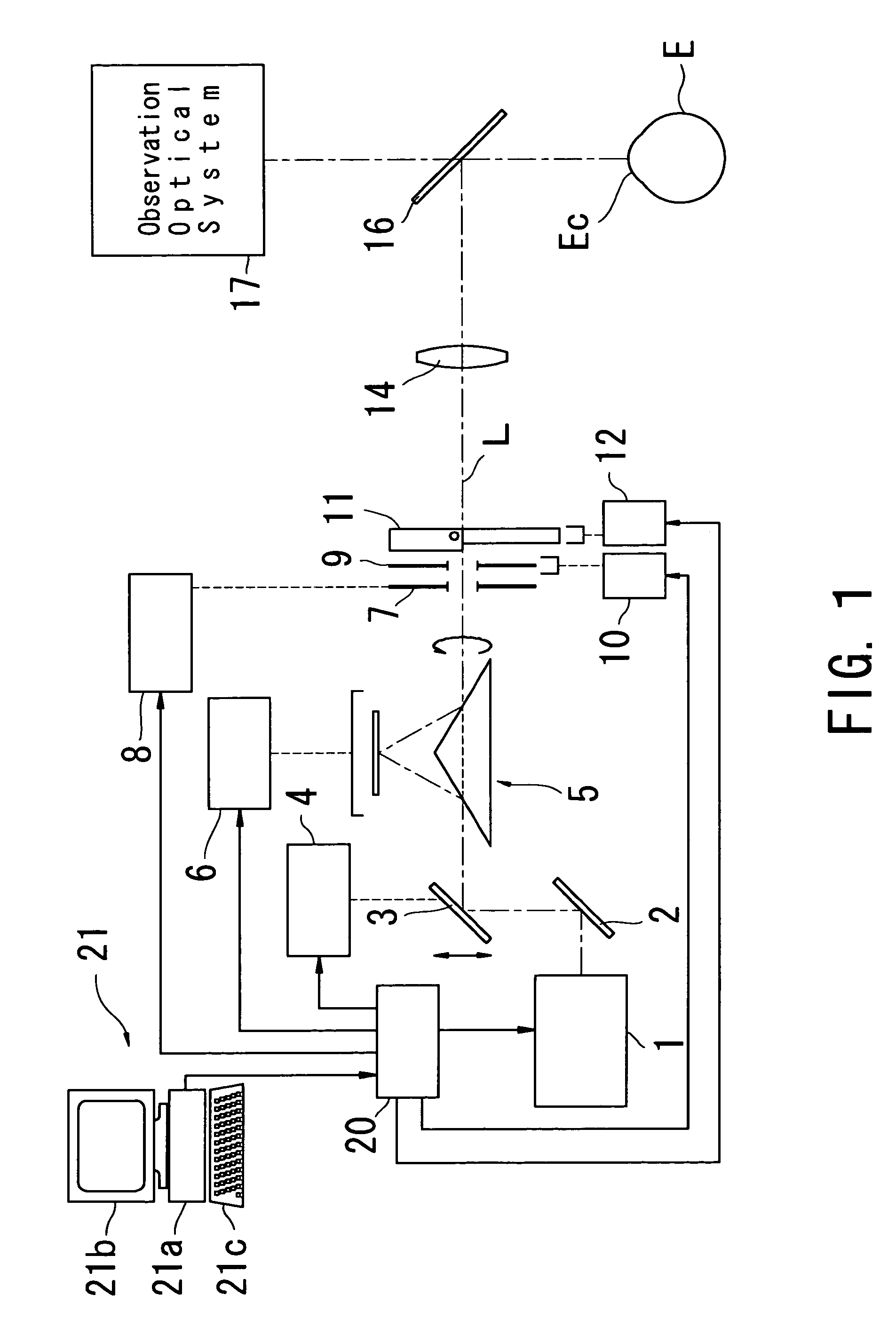
[0021]FIG. 1 is a view showing a schematic configuration of an optical system and a control system in a corneal surgery apparatus as one of the preferred embodiments.
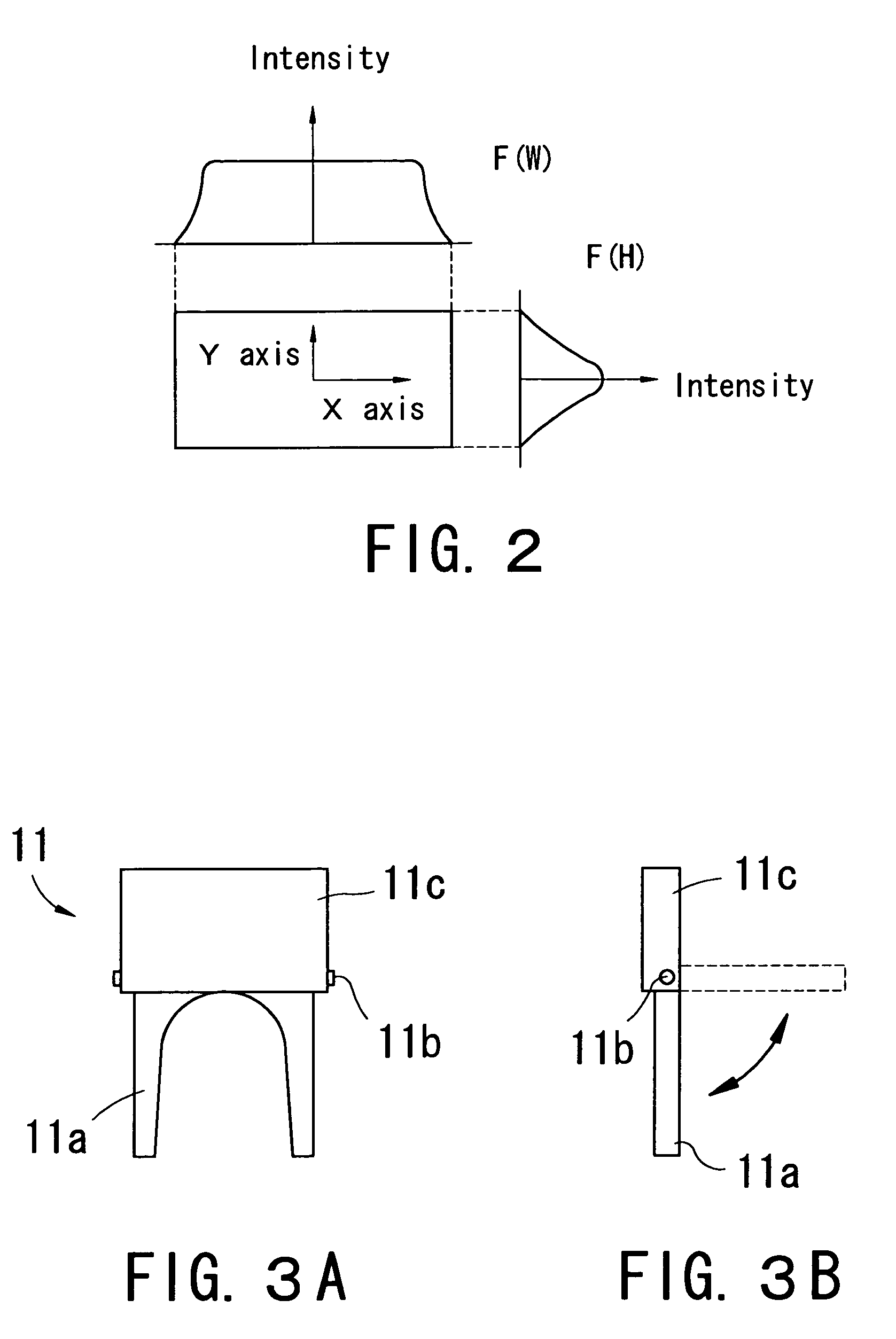
[0022]A laser light source 1 emits a laser beam, and in the present embodiment, a laser light source which emits an excimer laser beam with a wavelength of 193 nm (preferably within 200 nm) may be used. The excimer laser beam emitted from the laser light source 1 is a pulse wave. Typically, the wave takes a shape of top hat distribution F(W) in which intensity distribution of a beam is approximately uniform in the horizontal direction (the direction of the X axis), and it takes a shape of the Gaussian distribution F(H) in the vertical direction (the direction of the Y axis)(see FIG. 2).
[0023]The laser beam emitted from the laser light source 1 is deflected 90 de...
PUM
 Login to View More
 Abstract
Description
Claims
Application Information
 Login to View More