
Rationally designed heparinases derived from heparinase I and II and methods of sequencing therewith
a technology of heparinase and sequence, applied in the field of heparinases, can solve the problems of hlgags thwarting attempts to determine sequence-function relationships, severely limited understanding of the functional roles of heparin and heparan-sulfate, and so as to reduce the symptoms of psoriasis and the effect of reducing the symptoms of eye diseas
- Summary
- Abstract
- Description
- Claims
- Application Information
AI Technical Summary
Benefits of technology
Problems solved by technology
Method used
Image

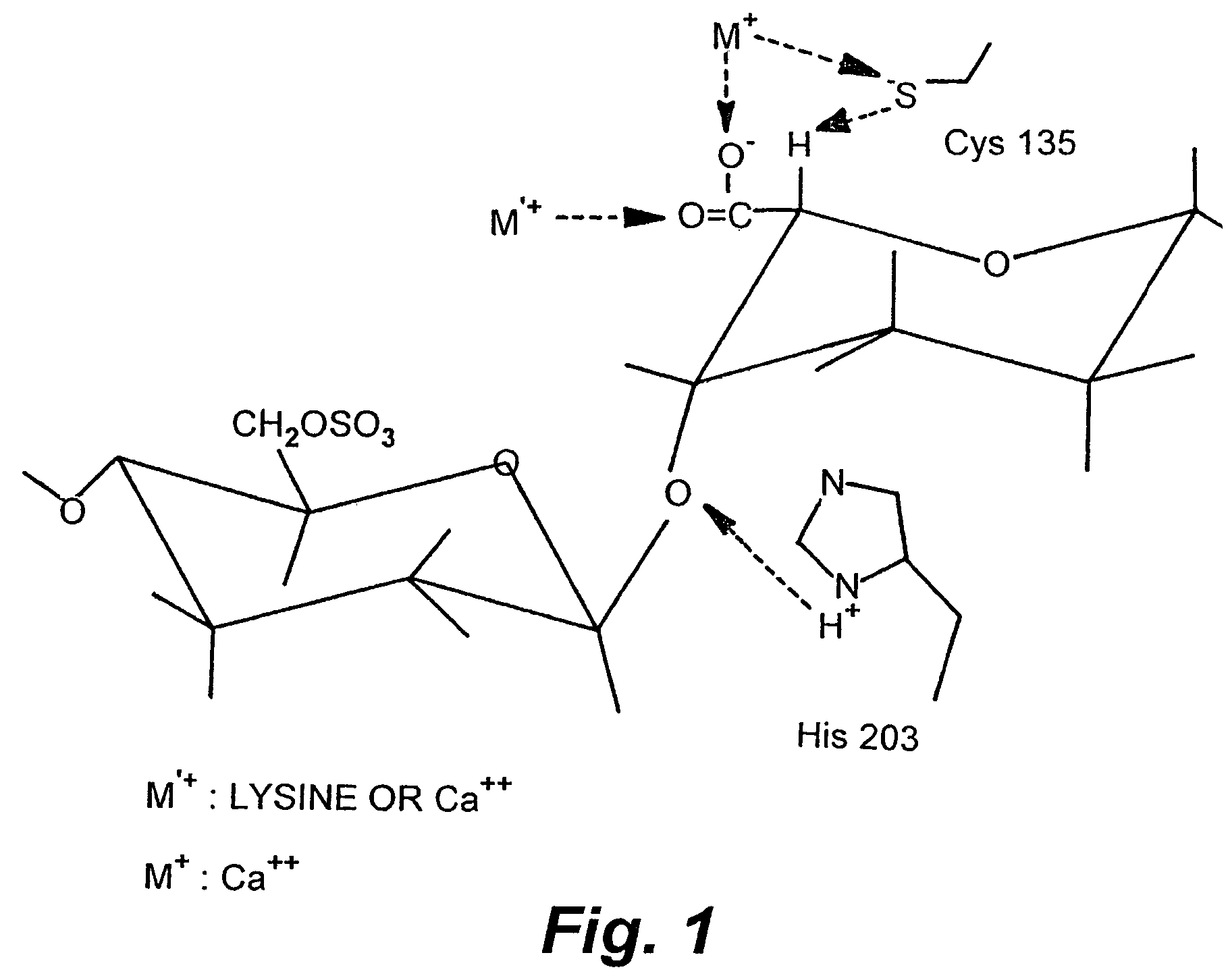
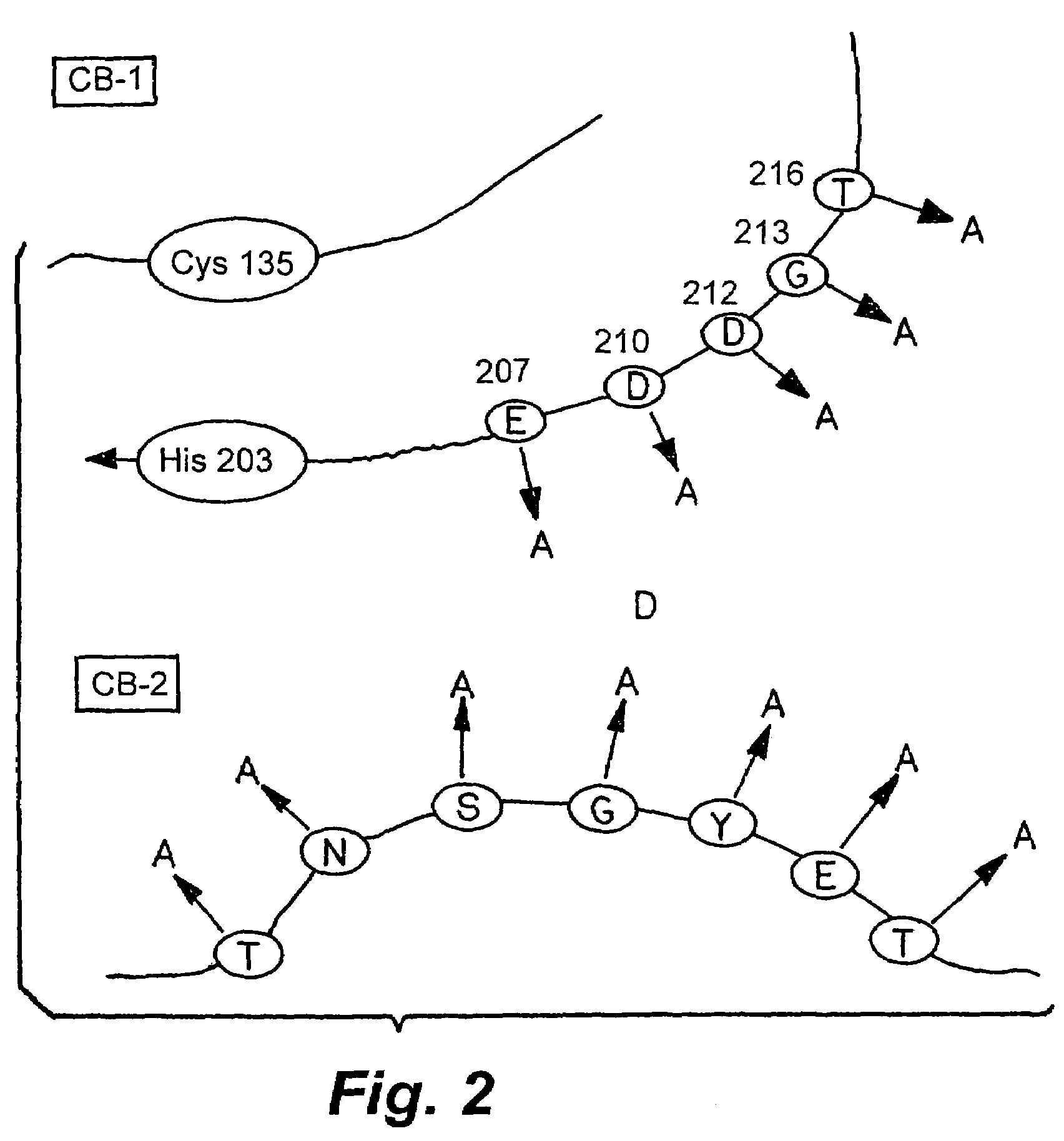
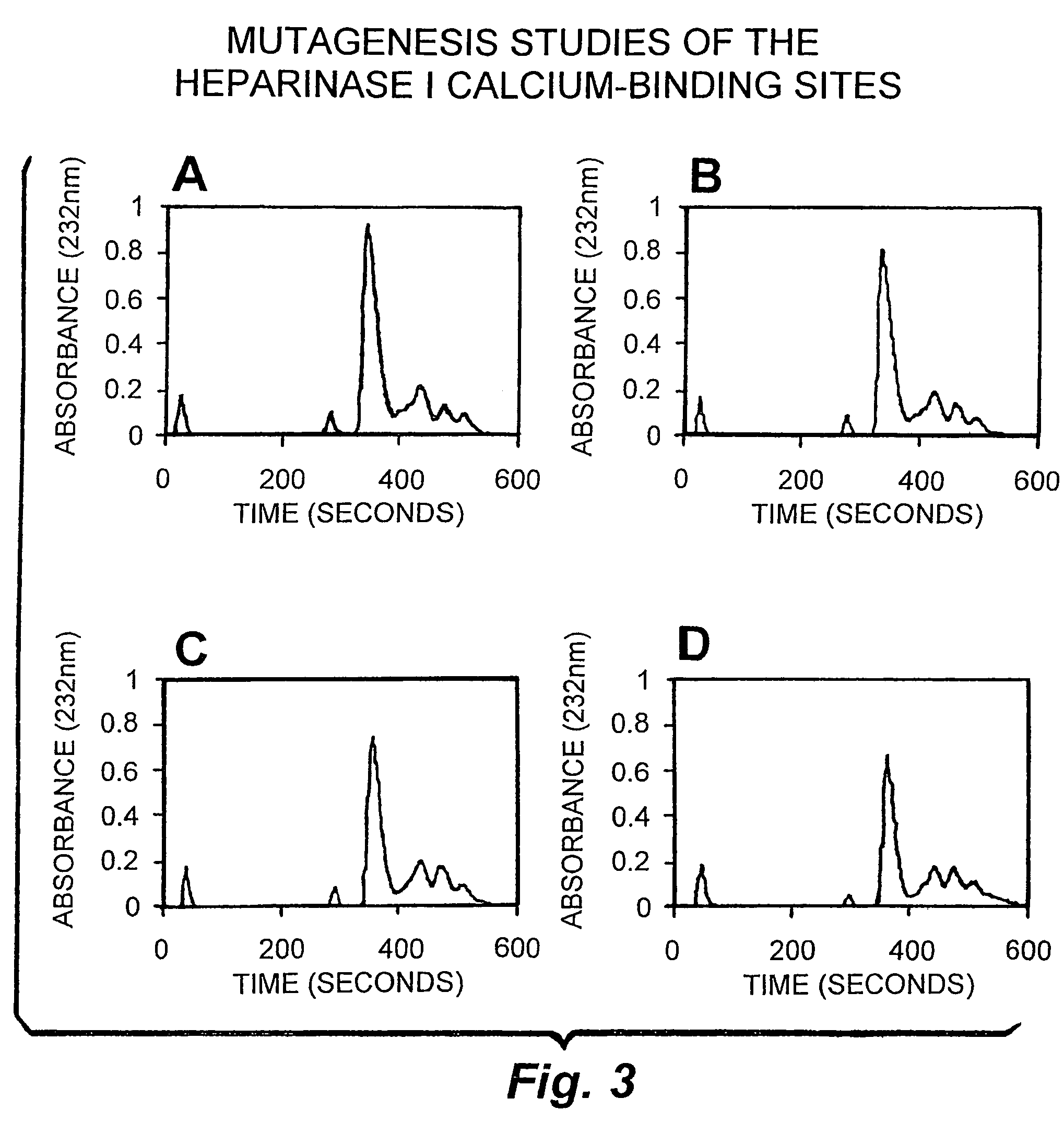
Examples
example 1
Modification of Cysteine Residues Using pCMB and DTNB Inactivates Heparinase II
Methods:
[0145]Chemicals and Materials. Urea, Tris, and TFA were from J T Baker (Phillipsburg, N.J.). DTT was obtained from Sigma. Sodium phosphate monobasic and dibasic and acetonitrile were from Mallinckrodt (Chesterfield, Mo.). Hydroxyapatite and BSA were purchased from Bio-RAD. The chemical modification reagents: IAA, IAM, 4-VP, NEM, pCMB, and DTNB were all purchased from Aldrich. 4-VP, NEM, and pCMB were used as received. IAA, IAM, and DTNB were recrystallized prior to use. All reagents were stored under nitrogen. Lys-C from Achomobacter lyticus (EC 3.4.21.50) was obtained from Wako Bioproducts (Richmond, Va.). [3H]NEM was from New England Nuclear (Boston, Mass.). Heparin, from porcine intestinal mucosa with an average molecular weight of 12 kDa, was obtained from Hepar (Franklin, Ohio). Heparan sulfate, also derived from porcine intestinal mucosa, was from Celsus Laboratories (Cincinnati, Ohio). Esch...
example 2
The Chemical Environment in the Active Site Affects Thiol Reactivity
[0167]One mechanism by which a surface exposed reactive cysteine may exist in heparinase II at physiological pH is that the presence of nearby basic clusters serves to lower the pKa of the cysteine by stabilizing its mercaptide anion form through ionic interactions. To determine the effect, if any, of the ionic environment on the reactivity of the cysteine residue, inactivation of heparinase II by pCMB was investigated as a function of salt concentration. Heparinase II was incubated with 5 μM pCMB in 50 mM sodium phosphate pH 7.0 at 4° C. with increasing concentrations of salt (i.e., 0, 30, 60, 110, 180, 300, and 500 mM NaCl). After 1, 4, 7 and 10 minutes of incubation with pCMB, aliquots were withdrawn for activity measurements. Controls that contained only salt were run at the same time to account for loss of heparinase II activity solely due to increasing salt concentration. The first order rate constant of inact...
example 3
Lys-C Mapping of the Cysteines of Heparinase II
Methods:
[0168][3H]NEM Labeling and Lys-C Digest of Heparinase II. To determine which cysteine residues were modified by NEM and pCMB, mapping studies using the protease Lys-C were completed. In one study, heparinase II (1 nmole) was incubated with [3H]NEM for thirty minutes. Unreacted [3H]NEM was separated from the modified heparinase II by reverse phase HPLC (RPHPLC), the protein was concentrated by lyophilization, and digested with Lys-C under denaturing, nonreducing conditions.
[0169]In another study, heparinase II (3 nmol) was reacted with a stoichiometric amount of pCMB for 15 minutes. Less than 2% of total heparinase II enzymatic activity remained after this time interval. The protein was then denatured under strictly nonreducing conditions and reacted with an excess of IAM (4 mM). Modified heparinase II was separated and concentrated. pCMB was removed via addition of DTT. [3H]NEM was added to the reaction mixture; unreacted tritiu...
PUM
 Login to View More
 Abstract
Description
Claims
Application Information
 Login to View More