
Remote virtualization of mobile apps
a mobile app and virtualization technology, applied in the field of virtualization, can solve the problems of significant hurdles, download and installation of mobile apps, and lack of availability of certain mobile apps on particular mobile platforms
- Summary
- Abstract
- Description
- Claims
- Application Information
AI Technical Summary
Benefits of technology
Problems solved by technology
Method used
Image

Examples
Embodiment Construction
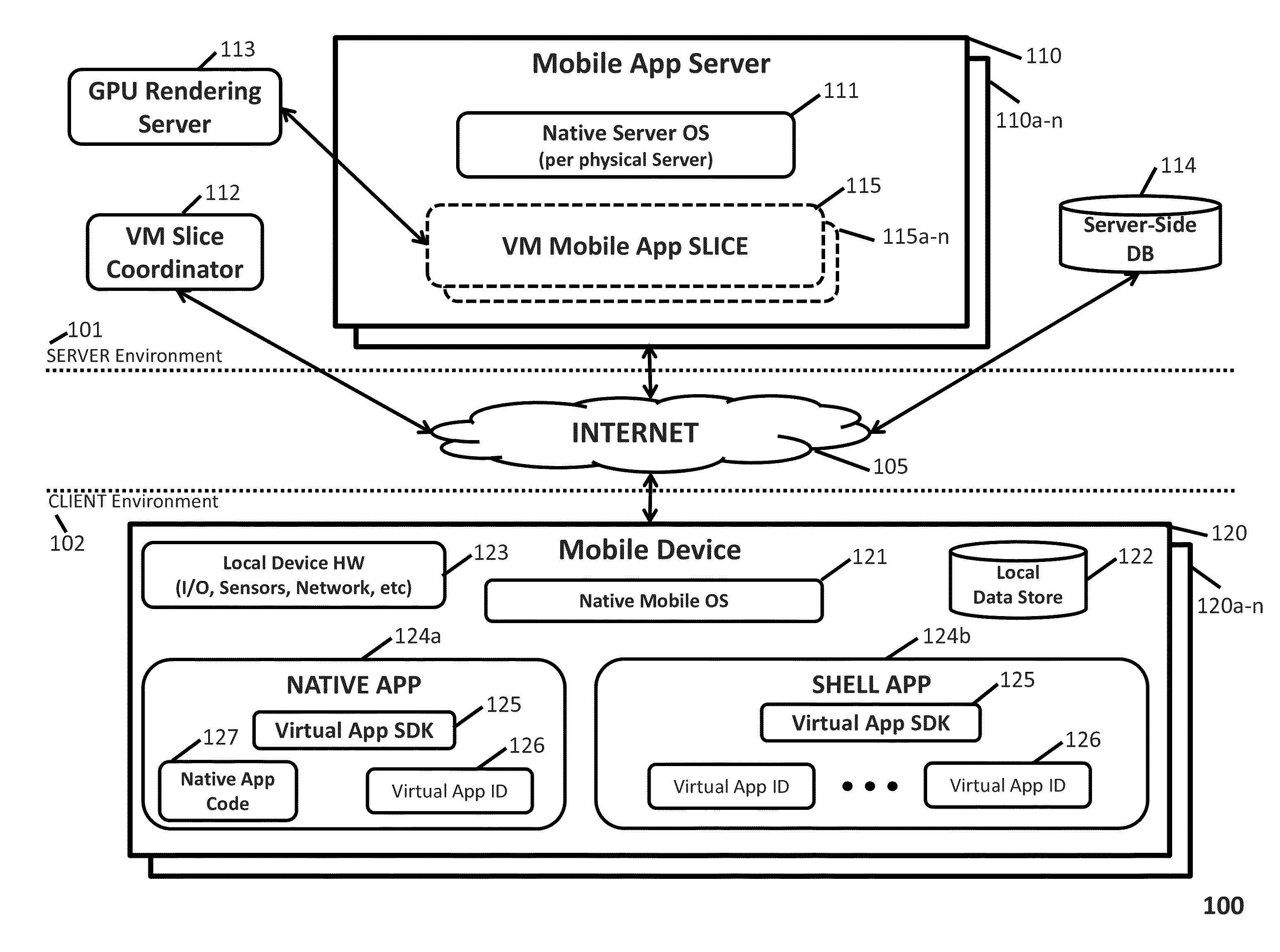
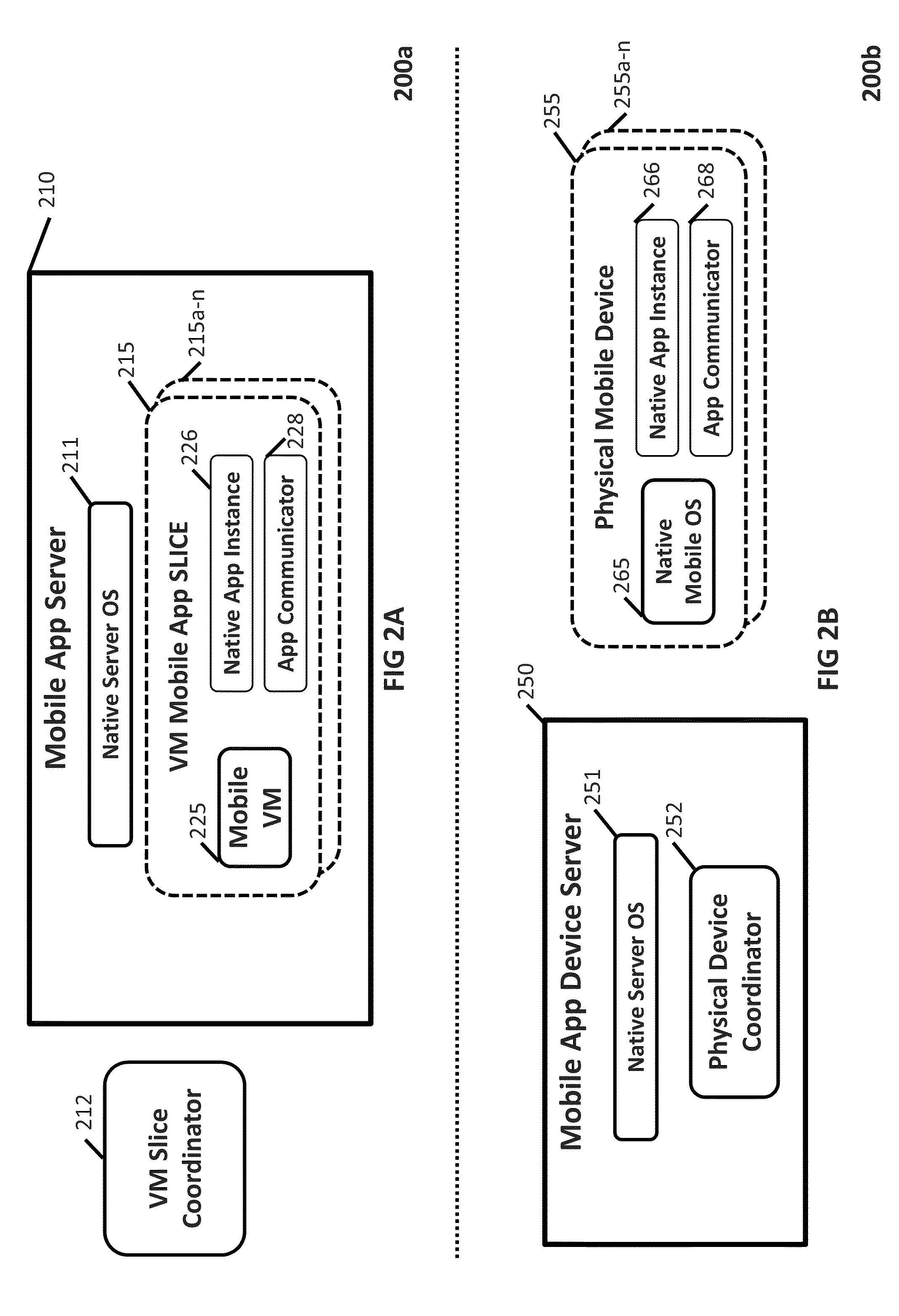
[0059]In accordance with the present invention, various embodiments of a novel architecture and methods are disclosed for a mobile app remote virtualization system that enables users of remote client devices to control mobile apps running in a host server environment, while providing a user experience that is practically equivalent to running native mobile apps, even when such mobile apps require access to local client device resources, as well as when native versions of such mobile apps do not exist for the user's client device.
[0060]Standard hardware peripherals can be inferred where not illustrated, including CPUs, memory, keyboards, mice, touchscreens, networking hardware and common device sensors. Moreover, it will be apparent to one skilled in the art that the functional components described herein can be embodied in a myriad of different combinations of hardware and software without departing from the spirit of the present invention. Functionality embodied in one physical dev...
PUM
 Login to View More
 Abstract
Description
Claims
Application Information
 Login to View More