
Rapid Raman spectrum detection method for molecularly imprinted membrane
A technology of Raman spectroscopy and imprinting, which is applied in the field of rapid detection of Raman spectroscopy of molecularly imprinted membranes, can solve the problems of complicated steps and high cost of traditional methods, and achieve the effect of convenient detection
Patent Information
- Authority / Receiving Office
- CN · China
- Patent Type
- Applications(China)
- Current Assignee / Owner
- Publication Date
- 2015-03-25
- Estimated Expiration
- Not applicable · inactive patent
Smart Images
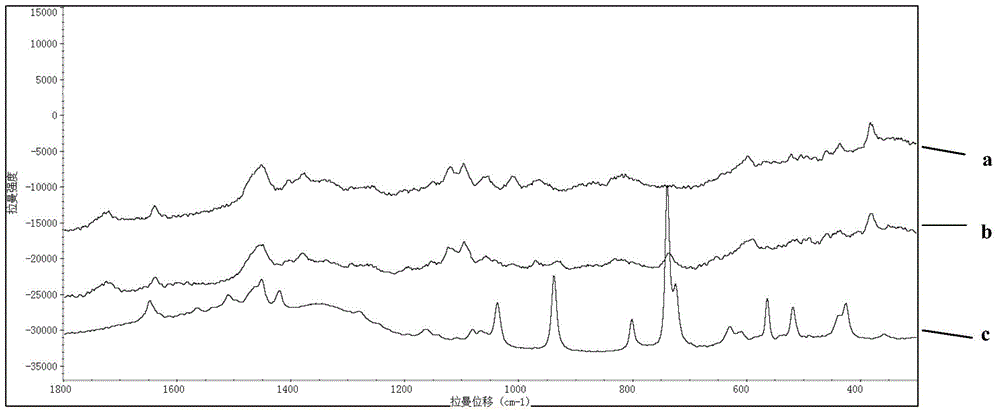
Figure 1 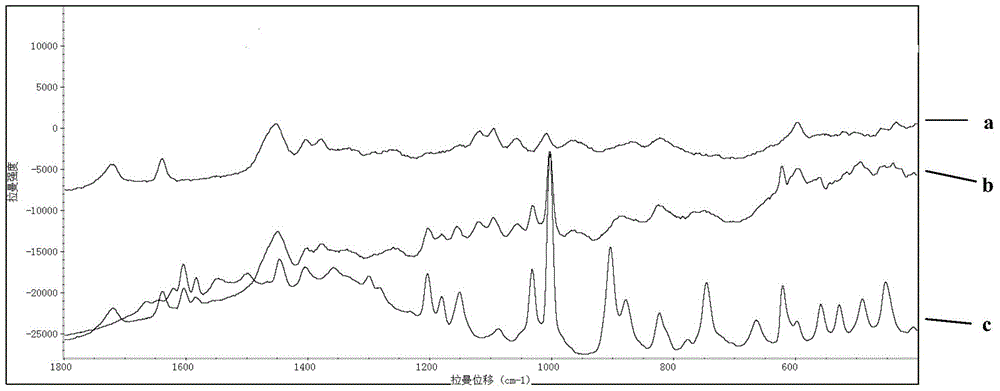
Figure 2 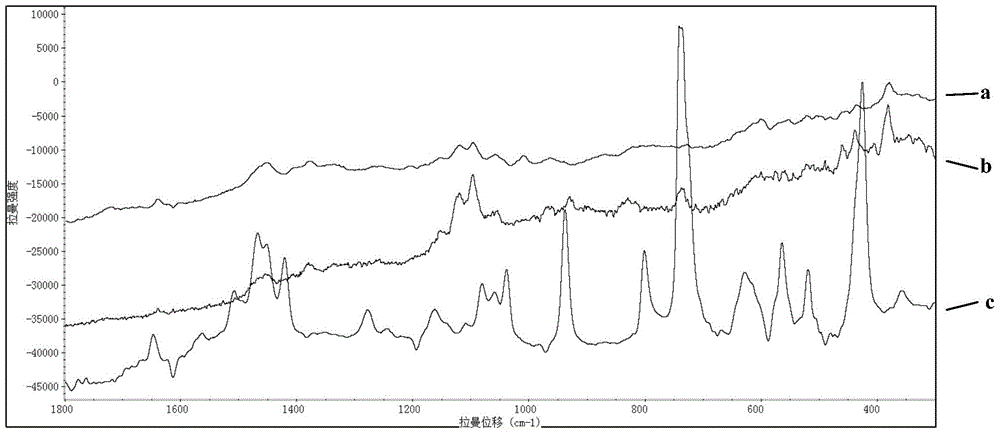
Figure 3
Abstract
Description
technical field
[0001] Invented a molecularly imprinted composite membrane, and uses Raman spectroscopy as a detection method, that is, a molecularly imprinted membrane (Molecularly-Imprinted Membrane, MIM) Raman spectroscopy detection system, which is used for real-time and rapid detection of illegal additives in medicines. The preparation of the molecularly imprinted composite film is based on the lens paper for optical lens. The paper for optical lens is thinner and more transparent, and the polymer is better attached, which can reduce the interference to the Raman signal of the target molecule. The nano-silver gel solution can enhance the response intensity of Raman, reduce the detection line of Raman spectrum, and reduce the interference of fluorescent signals. Background technique
[0002] Molecularly imprinted polymers (MIPs) are polymerized by adding functional monomers, crosslinkers and initiators in the presence of imprinted molecules (template molecules). After p...
Examples
example 1
[0019] Example 1 Weighed 0.0487g of guanidine hydrochloride, added 5ml of absolute ethanol to dissolve, then added 5ml of acetonitrile, 0.1g of azobisisoheptanonitrile, and ultrasonically dissolved. Then add 1 ml of nano-silver sol to the above solution. Finally, 0.416ml of acrylic acid, 3.527ml of TRIM and 5ml of toluene were added thereto, mixed evenly, and nitrogen gas flowed for 10min. Then soak the cut lens tissue into the above solution, and put it in a refrigerator at 4°C for 30 minutes. After soaking, put the lens cleaning paper between the two glass plates, and put it under the ultraviolet light for 12 hours. After taking out the lens-cleaning paper to dry, the film is cut into square paper sheets of 3×3mm, and the solution (solvent is methanol / acetonitrile=1 / 1) of actual samples (metformin hydrochloride enteric-coated tablets and phenformin hydrochloride tablets) After adsorbing for 15 minutes at room temperature, take out the square paper and dry it for Raman spec...
example 2
[0020] Example 2 Weigh 0.1011g of 4-(2-aminoethyl)benzenesulfonamide, add 5ml of absolute ethanol and 5ml of acetonitrile, and ultrasonically dissolve. 0.4352 g of acrylamide and 0.1 g of azobisisoheptanonitrile were added thereto. Finally, 3.527ml TRIM, 1ml ultrapure water and 5ml toluene were added to the above solution, mixed evenly, and nitrogen gas was passed for 10min. Then soak the cut lens tissue into the above solution, and put it in a refrigerator at 4°C for 30 minutes. After soaking, put the lens cleaning paper between the two glass plates, and put it under the ultraviolet light for 12 hours. After taking out the lens cleaning paper and drying it, cut the film into a square paper piece of 3╳3mm. After adsorbing for 15 minutes at room temperature, take out the square paper and dry it for Raman spectrum detection. Figure 2.1 , Figure 2.2 and Figure 2.3 ). Comparing their peak positions, it can be seen that the actual sample JC1012974 contains metformin hydroch...