
Peptide nucleic acid chip for detecting muatatonal site of hepatitis B virus and its preparing method
A hepatitis B virus, mutation site technology, applied in the field of gene chips
Patent Information
- Authority / Receiving Office
- CN · China
- Current Assignee / Owner
- Publication Date
- 2003-07-23
- Estimated Expiration
- Not applicable · inactive patent
Smart Images
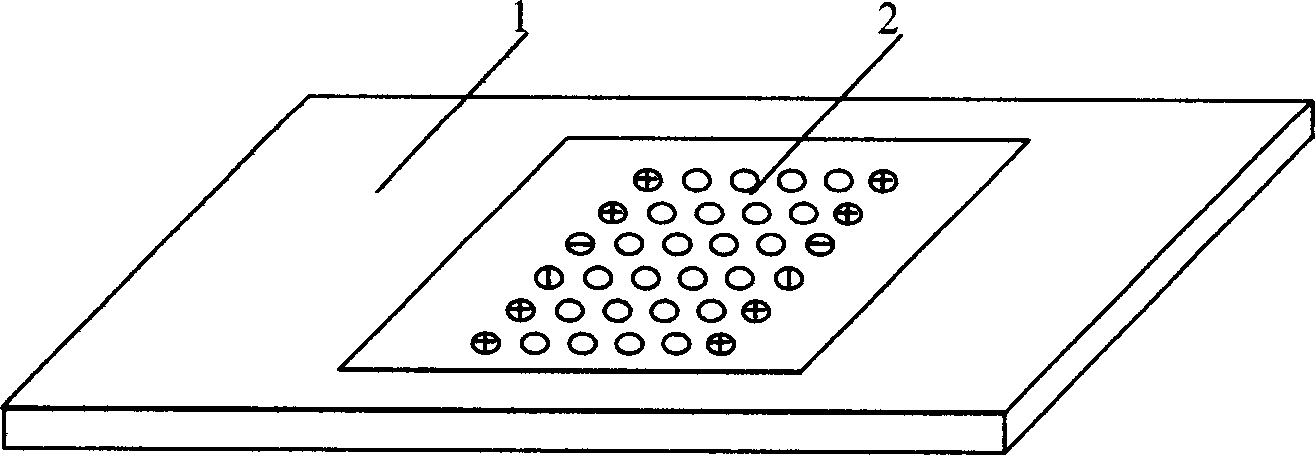
Figure 1 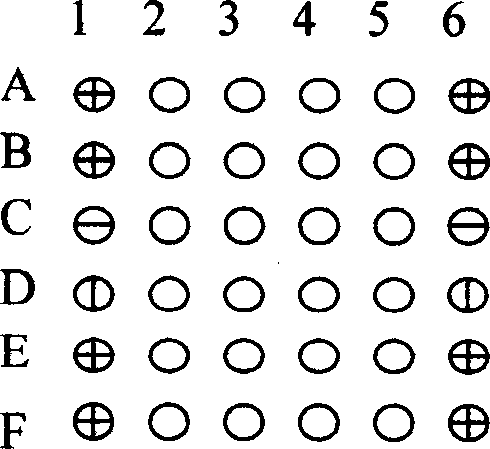
Figure 2 
Figure 3
Abstract
Description
(1) Technical field
[0001] The invention relates to the field of gene chips, in particular to a peptide nucleic acid low-density chip and a preparation method thereof, in particular to a peptide nucleic acid detection chip for mutation sites of hepatitis B and a preparation method thereof. (2) Background technology
[0002] Gene chip technology was first developed based on the requirements of high-throughput and parallel analysis. It is mainly divided into expression profile chips and oligonucleotide chips. Oligonucleotide chips have potential advantages in clinical diagnosis, disease drug resistance detection, genotyping, etc., such as the study of human mitochondrial 16.6kb genome polymorphism, BRCAI exon 11, CFTR gene, ATM gene, HIV -1 Mutation detection of reverse transcriptase and protease genes, identification of different species within the genus Mycobacteria, and detection of rifazyme resistance, etc. In view of the advantages of gene chips requiring fewer samples ...
Examples
Embodiment 1
[0047] Embodiment 1: structure as attached figure 1 Shown:
[0048] Peptide nucleic acid probes and control point coating 2 are evenly distributed in an array on the substrate 1, which contains 24 detection probes of known mutation sites and wild sites in the pre-C and S regions of hepatitis B, and 2 are positive Control probe, 1 negative control probe and blank sample solution control. Positive probes are located around the array, which not only serves as a positive control, but also serves as a positive signal to locate the array. The PCR amplified product of the hepatitis B DNA sample is labeled by in vitro transcription and hybridized with the peptide nucleic acid array, and the result is obtained by scanning with a laser confocal scanner, and analyzed and judged.
Embodiment 2
[0049] Example 2: Modification of slides and fixation of peptide nucleic acid probes
[0050] 1. Modification of slides
[0051] The blank glass slide was washed with 10% NaOH, then washed with 1% HCI acid solution, washed with water and then dried to obtain a clean glass bare chip. Treat with 95% acetone solution of 1% 3-aminopropyltrimethoxysilane for 30 minutes, then wash with acetone for 3 times, 5 minutes each time, and bake at 80°C for 15 minutes to obtain the aminated glass slide. Continue to treat with 10% glutaraldehyde aqueous solution for 30 minutes, then wash with double distilled water, and obtain an aldylation-modified glass slide after vacuum drying.
[0052] 2. Immobilization of peptide nucleic acid probes (take the formaldehyde slide as an example)
[0053] The design and selection of peptide nucleic acid probes are shown in Table 1.
[0054] Immobilization of peptide nucleic acid probes on aldylated slides with saturated NaHCO 3 solution as the sample sol...
Embodiment 3
[0061] Example 3: Extraction, PCR amplification and labeling of hepatitis B sample DNA
[0062] 1. Extraction of DNA from hepatitis B samples
[0063] 1) Take 100 μl of hepatitis B serum, add 3 times the volume of lysate (4M guanidine thiocyanate, mercaptoethanol, 0.1M Tris-CI, pH7.5), and mix well.
[0064] 2) Add an equal volume of chloroform and isoamyl alcohol solution (24:1), and mix well. Centrifuge at 12,000 rpm for 15 minutes at room temperature.
[0065] 3) Carefully transfer the supernatant into another 1.5ml centrifuge tube, and add 2 times the volume of absolute ethanol. Store at -20°C for 2 hours. Centrifuge at 12000 rpm for 15 minutes at 4°C.
[0066] 4) The precipitate obtained after centrifugation was washed twice with 70% ethanol, and centrifuged at 12000 rpm for 10 minutes at 4° C. each time.
[0067] 5) The precipitate was naturally dried and dissolved in 16 μl of pure water.
[0068] 2. Amplification and purification of PCR target fragment
[0069] 1...