
Halogen atom-containing bidentate ligand, its iridium complex and electrogenerated phosphorescence device
A technology of electroluminescent devices and bidentate ligands, which is applied in the direction of electroluminescent light sources, electric light sources, electrical components, etc., can solve the problems of shortened phosphorescent life, achieve excellent electrophosphorescent performance, and improve brightness and efficiency.
- Summary
- Abstract
- Description
- Claims
- Application Information
AI Technical Summary
Problems solved by technology
Method used
Image

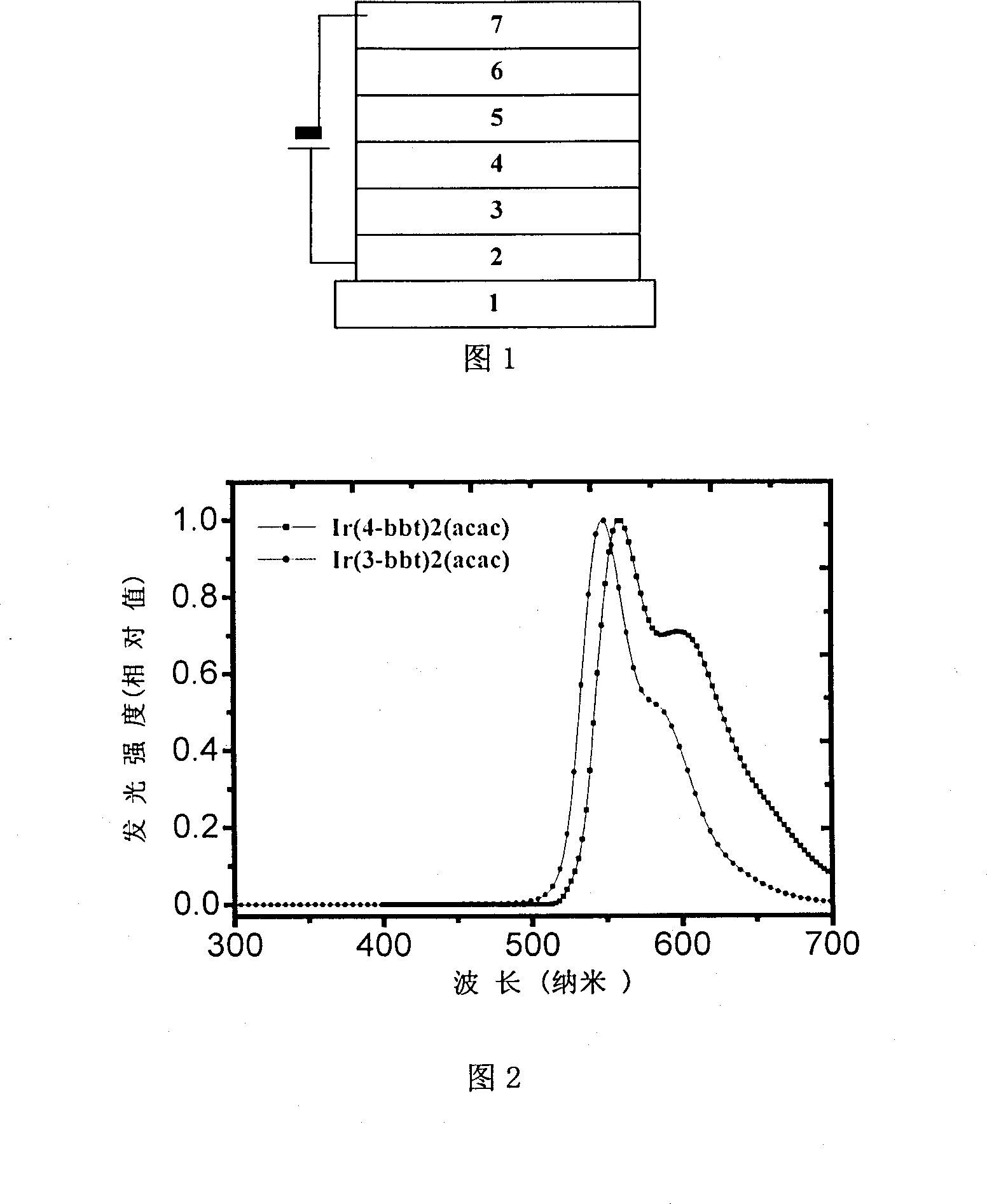
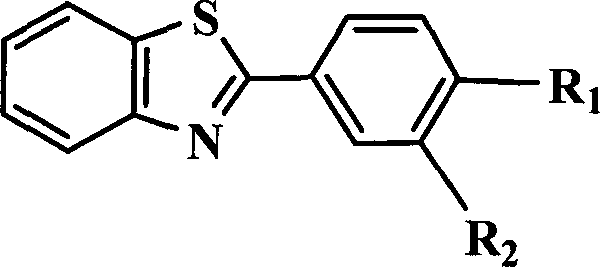
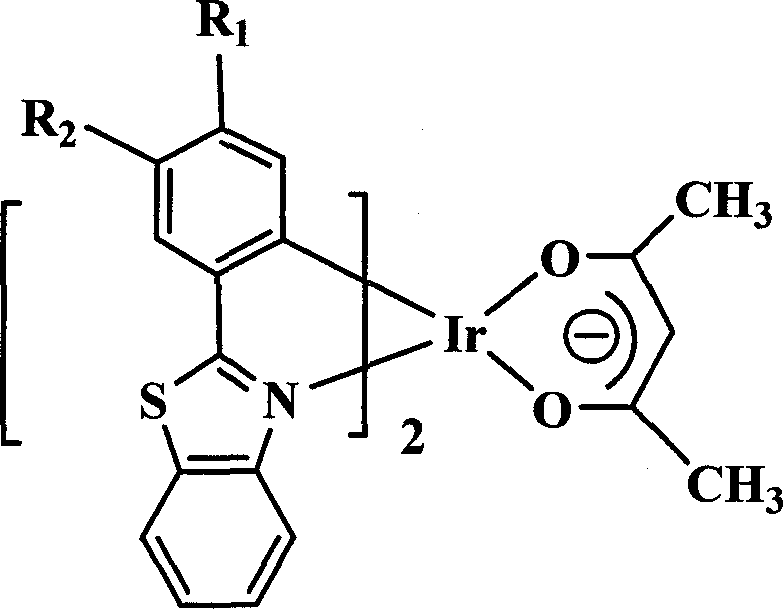
Examples
Embodiment Construction
[0026] The present invention is further illustrated by specific examples below, but these specific embodiments do not limit the protection scope of the present invention in any way.
[0027] The raw materials used in this embodiment are known compounds, which can be purchased on the market, or can be synthesized by methods known in the art.
[0028] 1. Synthesis of ligand:
[0029] In a 25ml round-bottom flask, put 2-amino-o-mercaptophene (1.25g, 10mmol) and 4-halobenzaldehyde / 3-bromobenzaldehyde (10mmol), add 20ml dimethylsulfoxide (DMSO), protect with argon Reflux for 4 h. After cooling to room temperature, the reaction solution was poured into a large amount of ice water, filtered with suction, the crude product was washed with a large amount of water, dried in a vacuum drying oven, and then recrystallized with absolute ethanol (18.6ml).
[0030] 4-chloro-2-phenylbenzothiazole (4-cbt), white crystals, yield 80.3%. 1 H NMR(CDCl 3 , 300MHz) δ [ppm]: 8.03 (t, J = 8.4 Hz, 3H), 7.89...
PUM
| Property | Measurement | Unit |
|---|---|---|
| current efficiency | aaaaa | aaaaa |
| wavelength | aaaaa | aaaaa |
| current efficiency | aaaaa | aaaaa |
Abstract
Description
Claims
Application Information
 Login to View More