
Long-life fuel-saving engine oil composition
A technology of composition and engine oil, applied in lubricating compositions, petroleum industry, additives, etc., can solve the problems of disappearance, deterioration of MoDTC, deterioration of fuel saving effect, etc., and achieve good mileage, reduce fuel consumption, and excellent high temperature. Effects of Oxidative Stability
- Summary
- Abstract
- Description
- Claims
- Application Information
AI Technical Summary
Problems solved by technology
Method used
Image


Examples
Embodiment
[0043] The present invention will be described below by way of examples.
[0044] The following was used as the base oil: Mineral base oil (kinematic viscosity: 20.3 mm 2 / sec (40°C), 4.34mm 2 / sec (100°C); viscosity index: 124).
[0045] The phenolic antioxidant A, amine antioxidant B, MoDTC and other additives described below were mixed into the base oil at the ratio shown in Table 1 to prepare the engine oils of Example 1 and Comparative Examples 1-3. Table 1 also shows the ratio of the nitrogen content (N) of the amine antioxidant to the oxygen content (O) of the phenolic antioxidant (mass ratio: N / O) and the Mo content. The additional additive is an additive mixture comprising zinc alkyl dithiophosphates (ZnDTP), calcium sulfonate, alkenyl succinimide, viscosity index improver, pour point depressant and antifoam. In Examples and Comparative Examples, the additives were added in equal amounts.
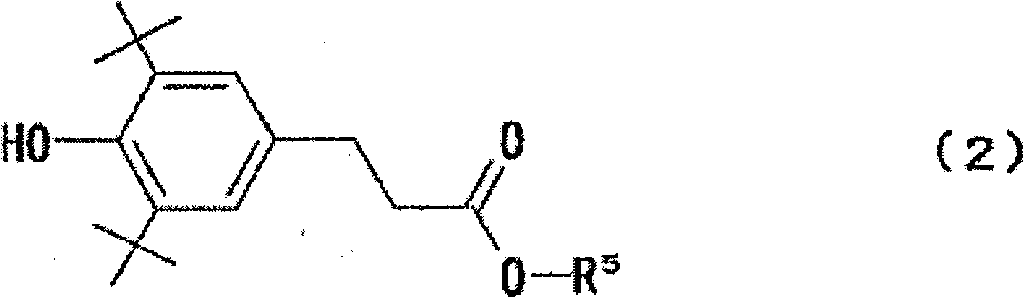
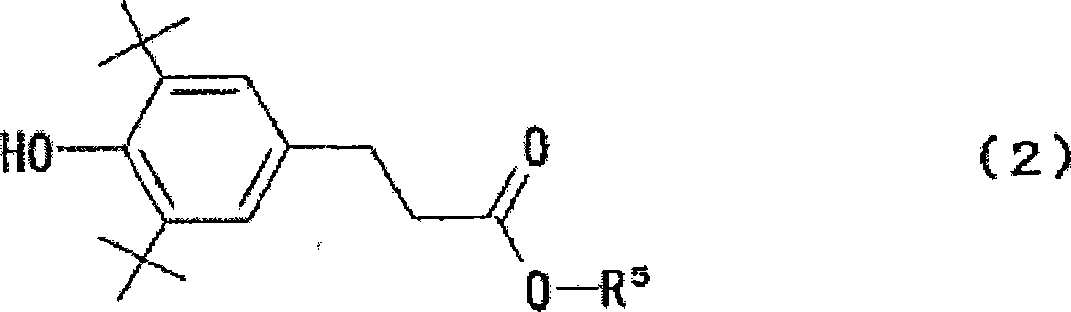
[0046] Use the phenolic antioxidant represented by general formula (2) (wh...
PUM
| Property | Measurement | Unit |
|---|---|---|
| boiling point | aaaaa | aaaaa |
| pour point | aaaaa | aaaaa |
| boiling point | aaaaa | aaaaa |
Abstract
Description
Claims
Application Information
 Login to View More