
Micron bubble-generating device and special cyclone thereof
A technology of micro-bubbles and cyclones, which is applied in the direction of sustainable biological treatment, chemical instruments and methods, biological water/sewage treatment, etc., can solve the problems of easy clogging of micropores, difficult processing, high material strength requirements, etc., to improve activity , avoid large energy loss, equipment cost and low energy consumption
- Summary
- Abstract
- Description
- Claims
- Application Information
AI Technical Summary
Problems solved by technology
Method used
Image

Examples
Embodiment 1
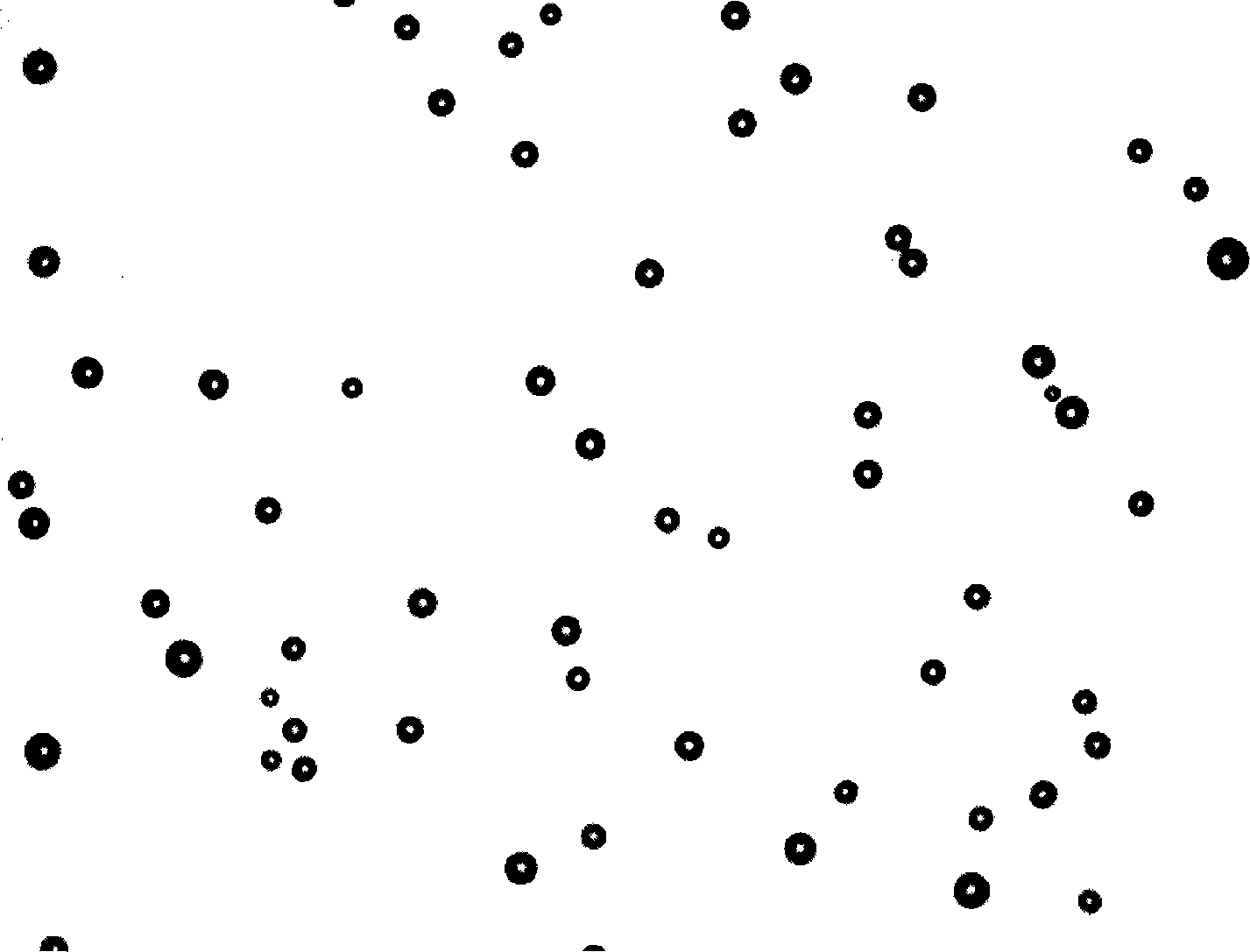
[0040] Embodiment 1, utilize the particle diameter of the microbubble that described device produces
[0041] 1. Micro bubble generating device
[0042] 1. Cyclone
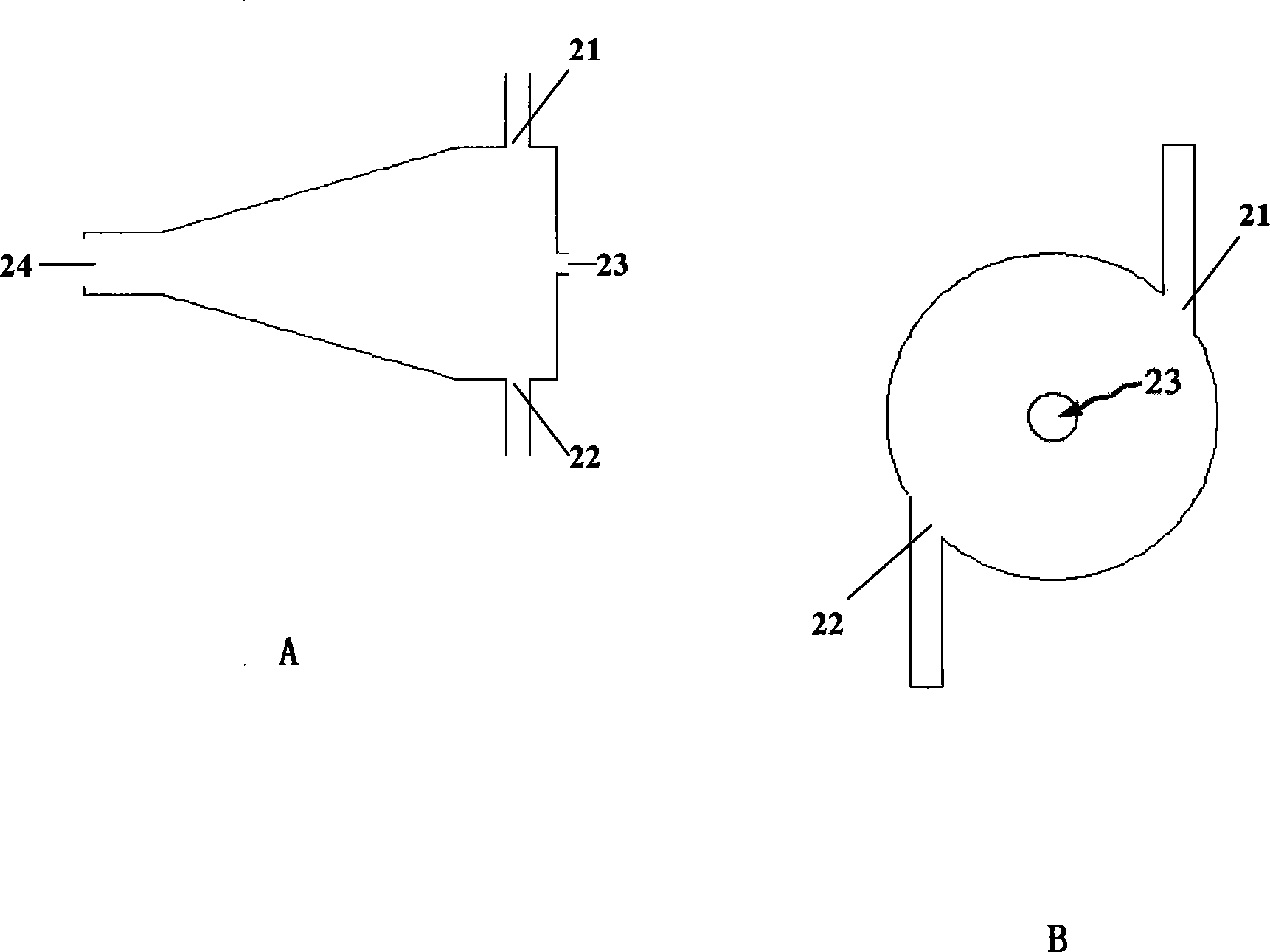
[0043] The structure of the cyclone is as figure 1 shown.
[0044] The above-mentioned cyclone is made of plastic.
[0045] In the cyclone, the height of the frustum-shaped cavity is 75mm, the diameter of the upper bottom is 16mm, the diameter of the lower bottom is 60mm, and the height of the cylindrical cavity is 25mm; the volume of the inner cavity of the cyclone is about 170mL; the through hole The inner diameter of 21 and 22 is 10 mm; the inner diameter of through hole 23 is 6 mm; the inner diameter of through hole 24 is 16 mm.
[0046] Pipes are connected to the through holes 21 and 22, and the inner diameter of the pipes is 10 mm. A pipe is connected to the through hole 23, and the inner diameter of the pipe is 6 mm.
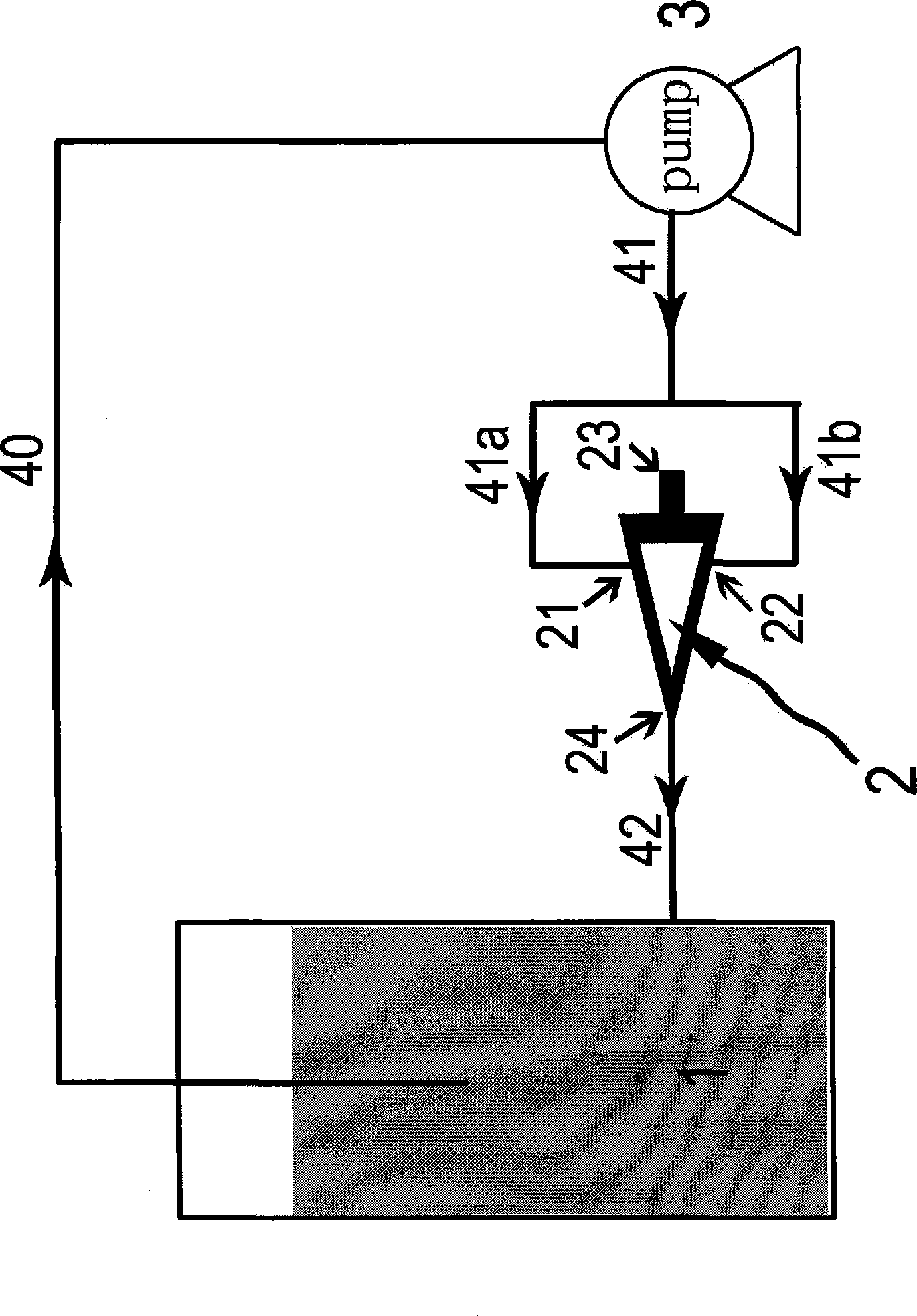
[0047] 2. Micro bubble generating device
[0048] The structure of the micro-bubbl...
Embodiment 2
[0069] Embodiment 2, the mensuration of the oxygen mass transfer performance of micro-bubble generating device
[0070] The device of the present invention is tested by using a general test method for oxygen mass transfer performance in the field of water treatment. The indicators of oxygen mass transfer performance include overall mass transfer coefficient, oxygen charging capacity and oxygen transfer efficiency.
[0071] Overall mass transfer coefficient K L a is calculated according to the following formula:
[0072] dC dt = K L a ( C * - C )
[0073] In the formula, C is the measured dissolved oxygen concentration, C* is the saturated dissolved oxygen concentration, and t is the reaction time.
[0074] Oxygenation capacity R=K L a×C *
[0075] Oxygen transfer efficiency E A =R 0 / S
[007...
Embodiment 3
[0099] Embodiment 3, the influence of temperature on the mass transfer performance of device
[0100] 1. Micro bubble generating device
[0101] Same as Step 1 of Example 1.
[0102] Insert a thermometer in the reactor.
[0103] 2. Micro bubbles are generated under different temperature conditions
[0104] Reactor 1 was filled with water to 15L, and 70mg CoCl was weighed 2 and 0.9g Na 2 SO 3 Add water to remove dissolved oxygen; turn on the water pump after the reading of the dissolved oxygen meter is zero, and adjust the temperature, liquid flow and gas flow of the water in the reactor, as follows:
[0105] Test One: Q L =65,Q g =26,T 0 = 22.5°C;
[0106] Test Two: Q L =65,Q g =26,T 0 = 30.1°C;
[0107] Trial Three: Q L = 45, Q g =20,T 0 = 22.5°C;
[0108] Test Four: Q L = 45, Q g =20, T 0 = 30.8°C;
[0109] Test Five: Q L =30,Q g =9, T 0 = 22.5°C;
[0110] Test Six: Q L =30,Q g =9, T 0 = 30.8°C;
[0111] Among them, Q L Represents liquid flow; Q...
PUM
| Property | Measurement | Unit |
|---|---|---|
| height | aaaaa | aaaaa |
| height | aaaaa | aaaaa |
| diameter | aaaaa | aaaaa |
Abstract
Description
Claims
Application Information
 Login to View More