
Bacterial strain for generating rhamnolipid biosurfactant and generated microbial inoculum thereof
A biological surface, rhamnolipid technology, applied in the field of biological high, can solve the problems of instability of plasmids, introduction of antibiotic markers, etc., to achieve the effect of protecting the ecological environment, promoting degradation and stable quality
- Summary
- Abstract
- Description
- Claims
- Application Information
AI Technical Summary
Problems solved by technology
Method used
Image

Examples
Embodiment Construction
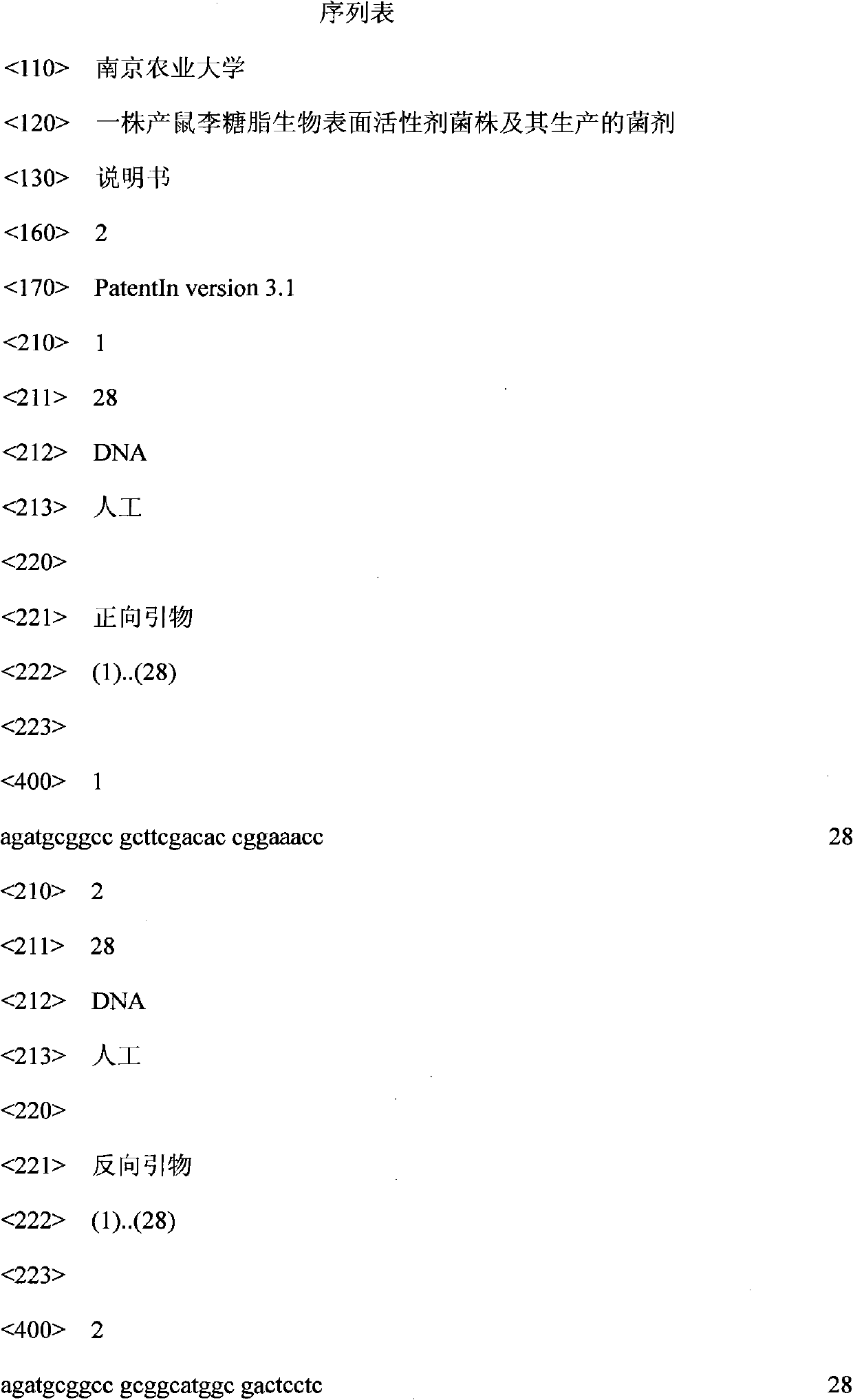
[0014] Primers were designed according to the sequence of the gene cluster related to rhamnolipid synthesis (rhlABRI), and the forward primer was 5′-AGAT GCGGCCGC TTCGACACCGGAAACC-3′; reverse primer is 5′-AGAT GCGGCCGC For GGCATGGCGACTCCTC-3', a NotI restriction site was introduced at both ends of the primer (the restriction site is underlined). Using the genomic DNA of Pseudomonas aeruginosa BSFD5 as a template, the complete sequence of the gene cluster related to rhamnolipid synthesis was amplified. It was sequenced and registered in GenBank (accession number: HM190303). and connect it to the vector pUTTns to construct pUTTns-rhlABRI, and transform it into E.coli DH5α λpir E.coli DH5α λpir -pUTTns-rhlABRI. The rhlABRI gene cluster was integrated into the chromosome of Pseudomonas putida KT2440 by triparental conjugation, and the resistance gene was lost by screening the zygote in LB medium supplemented with 10% (w / v) sucrose. A genetically engineered bacterium KT2440-...
PUM
 Login to View More
 Abstract
Description
Claims
Application Information
 Login to View More