Phase-change constant-temperature material and pad body
What is AI technical title?
AI technical title is built by Patsnap AI team. It summarizes the technical point description of the patent document.
A phase change constant temperature and pad body technology is applied in the field of phase change constant temperature materials and pad bodies including phase change constant temperature materials, which can solve the problems of large subcooling and easy phase separation.
Active Publication Date: 2011-08-24
JIANGSU YISHUN MEDICAL DEVICES CO LTD
View PDF5 Cites 30 Cited by
Summary
Abstract
Description
Claims
Application Information
AI Technical Summary
This helps you quickly interpret patents by identifying the three key elements:
Problems solved by technology
Method used
Benefits of technology
Problems solved by technology
At the same time, inorganic hydrated salts have the disadvantages of large undercooling and easy phase separation, which limit their use.
Method used
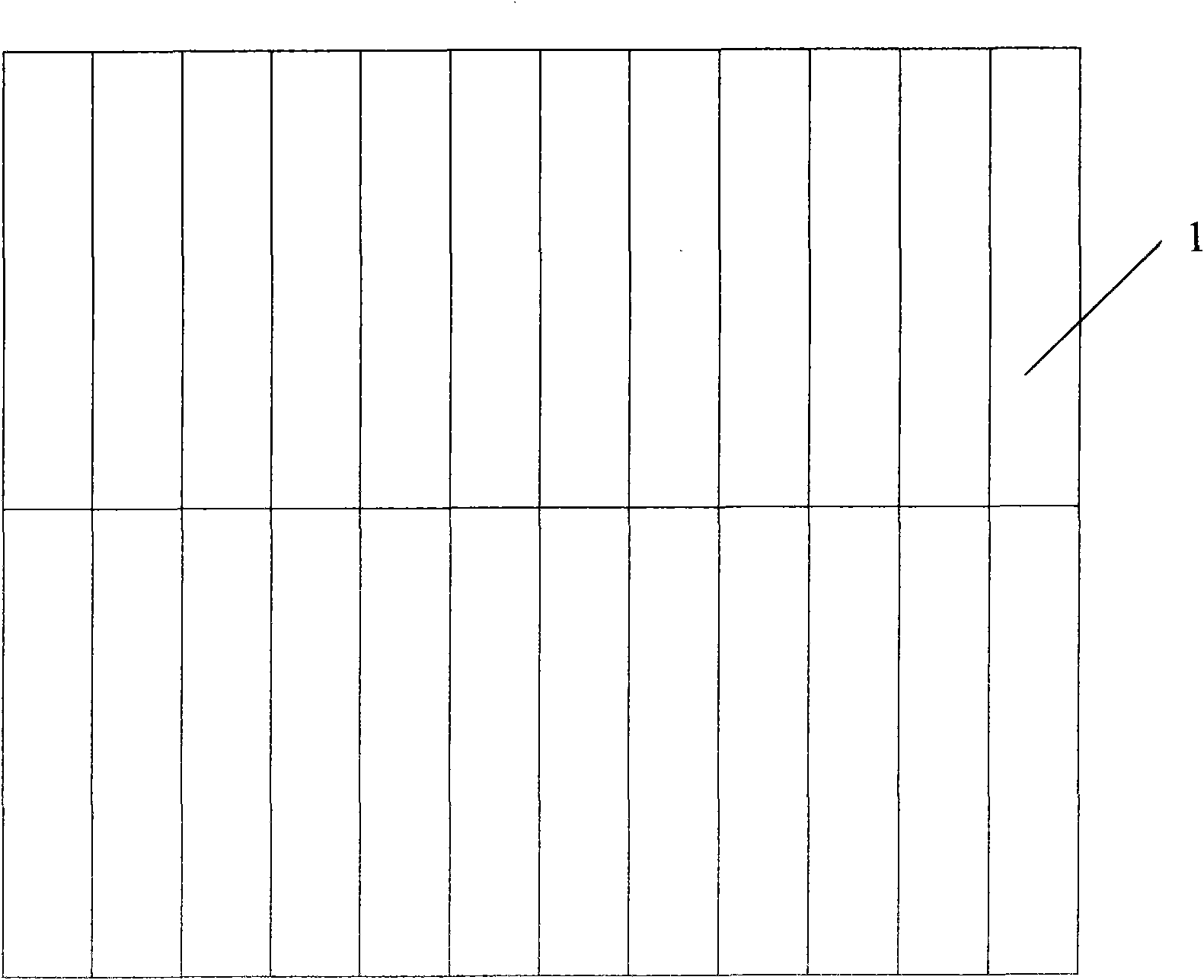
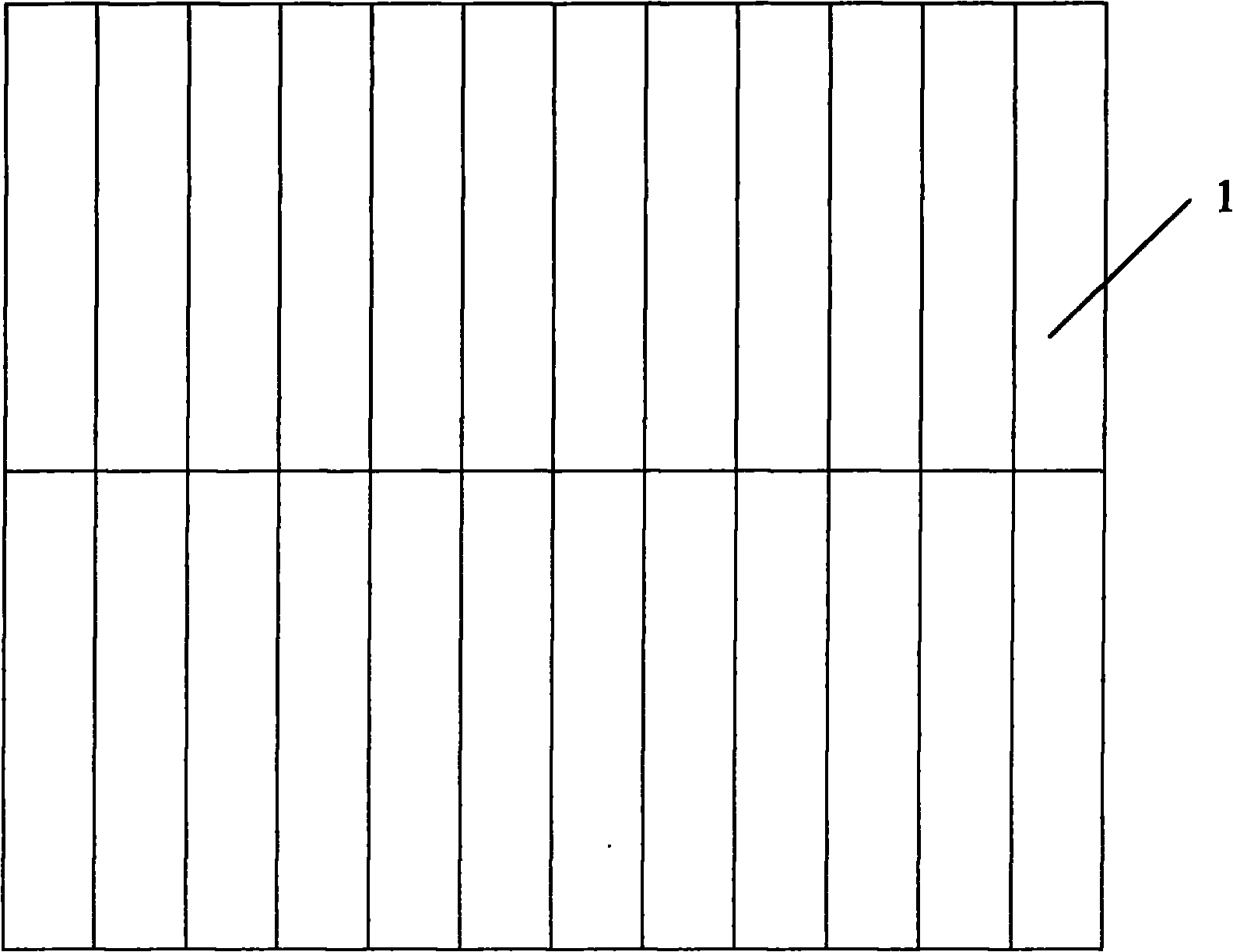
the structure of the environmentally friendly knitted fabric provided by the present invention; figure 2 Flow chart of the yarn wrapping machine for environmentally friendly knitted fabrics and storage devices; image 3 Is the parameter map of the yarn covering machine
View more
Image
Smart Image Click on the blue labels to locate them in the text.
Viewing Examples
Smart Image
Click on the blue label to locate the original text in one second.
Reading with bidirectional positioning of images and text.
Smart Image
Examples
Experimental program
Comparison scheme
Effect test
Embodiment 1
[0028] It contains 78% of Glauber's salt, 16% of water, 4% of nucleating agent, 1% of dispersant and 1% of thickener. The preparation method is as follows:
[0029] (1) Add water, thickener, nucleating agent, and dispersant into a clean plastic bucket, and stir evenly. At this time, the mixture becomes uniform and viscous.
[0030] (2) Grind and sieve Glauber's salt to make it into a uniform fine sand, add it to the above mixture, and stir evenly to disperse the components evenly.
[0033] It contains 75% of Glauber's salt, 20% of water, 3% of nucleating agent, 1% of dispersant and 1% of thickener. The preparation method is as follows:
[0034] (1) Add water, thickener, nucleating agent, and dispersant into a clean plastic bucket, and stir evenly. At this time, the mixture becomes uniform and viscous.
[0035] (2) Grind and sieve Glauber's salt to make it into a uniform fine sand, add it to the above mixture, and stir evenly to disperse the components evenly.
[0036] The latent heat of phase change of the phase change material prepared by this method is 218KJ / KG, and the phase change temperature is 28°C.
[0037] The phase change material made according to the above method is poured into the pad body, and the making method is as follows:
[0038] (1) Material preparation: select and cut the mat material according to the dimensions and material requirements of the mat;
[0039] (2) Bag making: A bag is formed by pressing two pieces of cloth or silk com...
the structure of the environmentally friendly knitted fabric provided by the present invention; figure 2 Flow chart of the yarn wrapping machine for environmentally friendly knitted fabrics and storage devices; image 3 Is the parameter map of the yarn covering machine
Login to View More
PUM
Property
Measurement
Unit
Latent heat of phase change
aaaaa
aaaaa
Phase transition temperature
aaaaa
aaaaa
Latent heat of phase change
aaaaa
aaaaa
Login to View More
Abstract
The invention relates to a phase-change material, in particular relating to a phase-change constant-temperature material. The invention also relates to a pad body, in particular relating to a pad body containing the phase-change constant-temperature material. The phase-change material can ensure constant temperature within a certain period of time, is large in latent heat and stable in property, and can be repeatedly used. The phase-change material is fine and smooth like sand as compared with the original phase-change material. The phase-change material is prepared through the following steps: evenly mixing 16wt%-20wt% of water, 1wt% of thickener, 3wt%-4wt% of nucleating agent and 1wt% of dispersing agent, so that the mixture is of a uniform thickness shape; adding 75wt%-78wt% of mirabilite; and evenly mixing so that the components are evenly dispersed. The phase-change material can be added in the pad body to serve as a cold-hot bag, and insulation is durable. The pad body containing the phase-change material consists of small grids which are of strip shapes, the grids are tightly distributed, and a pouring material port is reserved on each grid and used for pouring the phase-change material.
Description
technical field [0001] The invention relates to a phase change material, in particular to a phase change constant temperature material. [0002] The present invention also relates to a pad body, in particular to a pad body containing a phase change constant temperature material. Background technique [0003] Phase change material (PCM-Phase Change Material) refers to a substance that changes shape with temperature and can provide latent heat. The process of a phase change material changing from solid to liquid or from liquid to solid is called a phase change process. At this time, the phase change material will absorb or release a large amount of latent heat. Phase change materials can actually act as energy storage. This feature is of great significance in the fields of energy saving and temperature control. [0004] The existing phase-change low-temperature energy storage materials mainly use Na 2 SO 4 10H 2 O is the main raw material, and its energy storage calorifi...
Claims
the structure of the environmentally friendly knitted fabric provided by the present invention; figure 2 Flow chart of the yarn wrapping machine for environmentally friendly knitted fabrics and storage devices; image 3 Is the parameter map of the yarn covering machine
Login to View More
Application Information
Patent Timeline
Application Date:The date an application was filed.
Publication Date:The date a patent or application was officially published.
First Publication Date:The earliest publication date of a patent with the same application number.
Issue Date:Publication date of the patent grant document.
PCT Entry Date:The Entry date of PCT National Phase.
Estimated Expiry Date:The statutory expiry date of a patent right according to the Patent Law, and it is the longest term of protection that the patent right can achieve without the termination of the patent right due to other reasons(Term extension factor has been taken into account ).
Invalid Date:Actual expiry date is based on effective date or publication date of legal transaction data of invalid patent.



 Login to View More