
Risk assessment method for thermal pipeline system
A technology of risk assessment and heat pipe, applied in the direction of instruments, data processing applications, calculations, etc., can solve problems such as gas pipeline leakage
Patent Information
- Authority / Receiving Office
- CN · China
- Current Assignee / Owner
- Publication Date
- 2012-09-12
- Estimated Expiration
- Not applicable · inactive patent
Smart Images
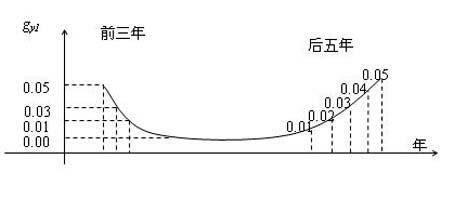
Figure 1 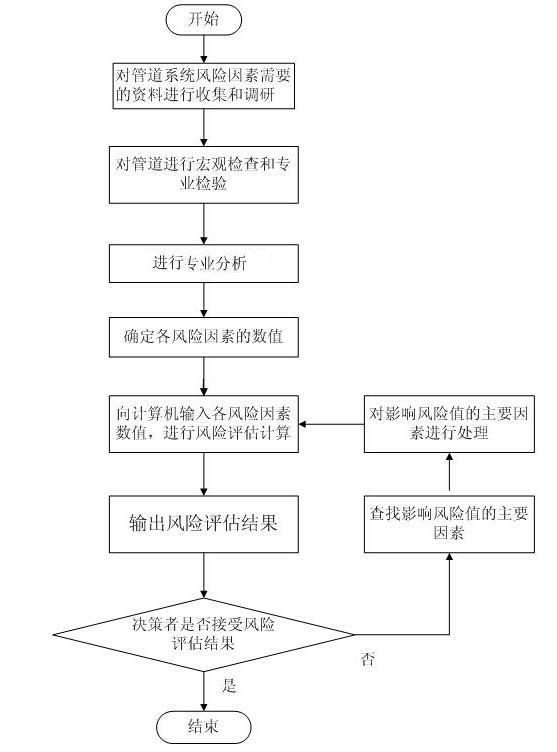
Figure 2 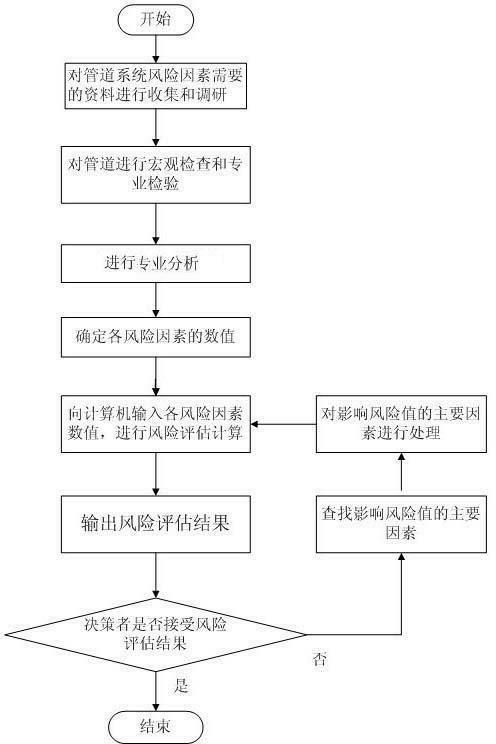
Figure 3
Abstract
Description
technical field
[0001] The technical field of risk assessment of the present invention specifically relates to a risk assessment method for a thermal piping system. Background technique
[0002] The thermal pipeline system of power plants is prone to fracture, collapse and burst accidents. The pipeline material will become more and more brittle with the prolongation of operation time, and the toughness of the new heat-resistant steel will decrease rapidly. Accidents not only reduce the service life of pipeline systems and equipment, but also cause heavy losses to people's lives and property. The development of society and economy requires risk assessment of heat pipe system. Risk assessment refers to the work of quantitatively assessing the impact and possibility of loss on people's lives, lives, and property in various aspects before or after the occurrence of risk events. Risk assessment is to quantitatively evaluate the possible degree of impact or loss caused by an ev...
Examples
Embodiment Construction
[0026] The present invention will be described in detail below in conjunction with the accompanying drawings.
[0027] The risk assessment method of the thermal piping system of the present invention is as follows: figure 1 shown, including the following steps:
[0028] ⑴ Collect and investigate the data required for the risk factors of the pipeline system. The data include drawings, equipment materials, manufacturing data, installation data, operation data and maintenance data. Drawings include pipeline diagrams, parts diagrams, locations and types of lifting points, design drawings and installation drawings. Regarding the material of the equipment, draw the direction diagram of the pipeline to mark the material distribution and specification distribution of the pipeline, and record different material properties, including specific gravity, elastic modulus, linear expansion coefficient, aging curve, maximum allowable temperature and allowable stress. The operating data in...