
Polarizing plate using photocurable adhesive and laminate optical member
A photocurable, optical component technology, used in polarizing elements, optical elements, polyether adhesives, etc., can solve the problems of low moisture permeability, insufficient adhesive strength, high moisture permeability, and achieve excellent coating applicability, The effect of reducing bubble defects and good adhesion
- Summary
- Abstract
- Description
- Claims
- Application Information
AI Technical Summary
Problems solved by technology
Method used
Image

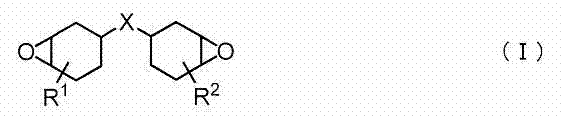

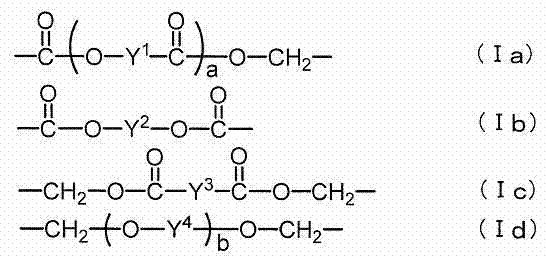
Examples
Embodiment 1-4 and comparative example 1-3
[0178] (1) Preparation of photocurable adhesive
[0179] According to the proportion shown in Table 1 (the unit is part), the above-mentioned photocation curable components and photocation polymerization initiator were mixed, and then defoamed to prepare a photocurable adhesive liquid. It should be noted that the photocationic polymerization initiator (b1) was blended in the form of a 50% propylene carbonate solution, and Table 1 indicated its solid content.
[0180] (2) Determination of the viscosity of the adhesive liquid at 25°C
[0181] The viscosity at a temperature of 25° C. was measured for each of the adhesive liquids prepared above using a rotary viscoelasticity measuring device “Physica MCR 301 ” manufactured by Anton Paar. The results are shown in Table 1.
[0182] (3) Solubility of protective film
[0183] A retardation film [trade name "N-TAC KC4FR-1", manufactured by Konika Minolta Opto Co., Ltd.] made of an acetylcellulose-based resin and having a thickness o...
PUM
| Property | Measurement | Unit |
|---|---|---|
| viscosity | aaaaa | aaaaa |
| adhesion strength | aaaaa | aaaaa |
| thickness | aaaaa | aaaaa |
Abstract
Description
Claims
Application Information
 Login to View More