
Cowherb seed flavonoid glycoside/bacterial cellulose dressing for treating diabetic foot ulcers and preparation method thereof
A technology for flavonoid glycosides and diabetic foot ulcers of Wangbuliuxing, which is applied in the field of biomedical materials and their preparation, can solve the problems of lack of competitiveness, single variety, and lack of functionality in skin repair wounds, and achieves accelerated wound healing and convenient operation. , the effect of low cost
- Summary
- Abstract
- Description
- Claims
- Application Information
AI Technical Summary
Problems solved by technology
Method used
Image

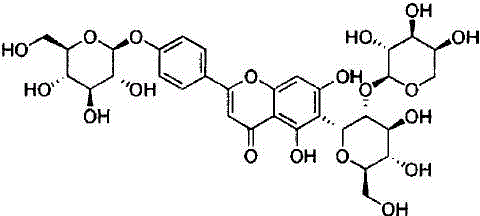
Examples
Embodiment 1
[0024] 1. Dissolve 3 g of PVA-SbQ in 30 mL of deionized water, add 2.0 mg of flavonoid glycosides into the PVA-SbQ solution to obtain a PVA-SbQ / flavonoid glycoside solution.
[0025] 2. Immerse the separated and purified bacterial cellulose film produced by Acetobacter xylinum in PVA-SbQ solution for 24 hours, and irradiate with 400W ultraviolet light for 1 hour to obtain the vacciola flavone glycoside / bacterial cellulose composite film. After drying at room temperature, a wet antibacterial hydrogel dressing capable of treating diabetic foot ulcers is obtained. The dressing is a composite hydrogel film composed of bacterial cellulose hydrogel and PVA-SbQ solution containing wangbuliuxing flavonoid glycoside.
Embodiment 2
[0027] 1. Dissolve 3 g of PVA-SbQ in 30 mL of deionized water, add 1.8 mg of flavonoid glycosides into the PVA-SbQ solution to obtain a PVA-SbQ / flavonoid glycoside solution.
[0028]2. Immerse the separated and purified bacterial cellulose film produced by Acetobacter xylinum in PVA-SbQ solution for 24 hours, and irradiate with 400W ultraviolet light for 1 hour to obtain the vacciola flavone glycoside / bacterial cellulose composite film. After drying at room temperature, a wet antibacterial hydrogel dressing capable of treating diabetic foot ulcers is obtained. The dressing is a composite hydrogel film composed of bacterial cellulose hydrogel and PVA-SbQ solution containing wangbuliuxing flavonoid glycoside.
Embodiment 3
[0030] 1. Dissolve 3 g of PVA-SbQ in 30 mL of deionized water, add 1.6 mg of flavonoid glycosides into the PVA-SbQ solution to obtain a PVA-SbQ / flavonoid glycoside solution.
[0031] 2. Immerse the separated and purified bacterial cellulose film produced by Acetobacter xylinum in the PVA-SbQ solution for 24 hours, and irradiate with 400W ultraviolet light for 1 hour to obtain the flavonoid glycoside / bacterial cellulose composite film . After drying at room temperature, a wet antibacterial hydrogel dressing capable of treating diabetic foot ulcers is obtained. The dressing is a composite hydrogel film composed of bacterial cellulose hydrogel and PVA-SbQ solution containing wangbuliuxing flavonoid glycoside.
PUM
 Login to View More
 Abstract
Description
Claims
Application Information
 Login to View More