[0016] Defect of existing technology-1: Bradley et al. only studied the calibration characteristics of some traditional calibration bodies and their applicability in bi-
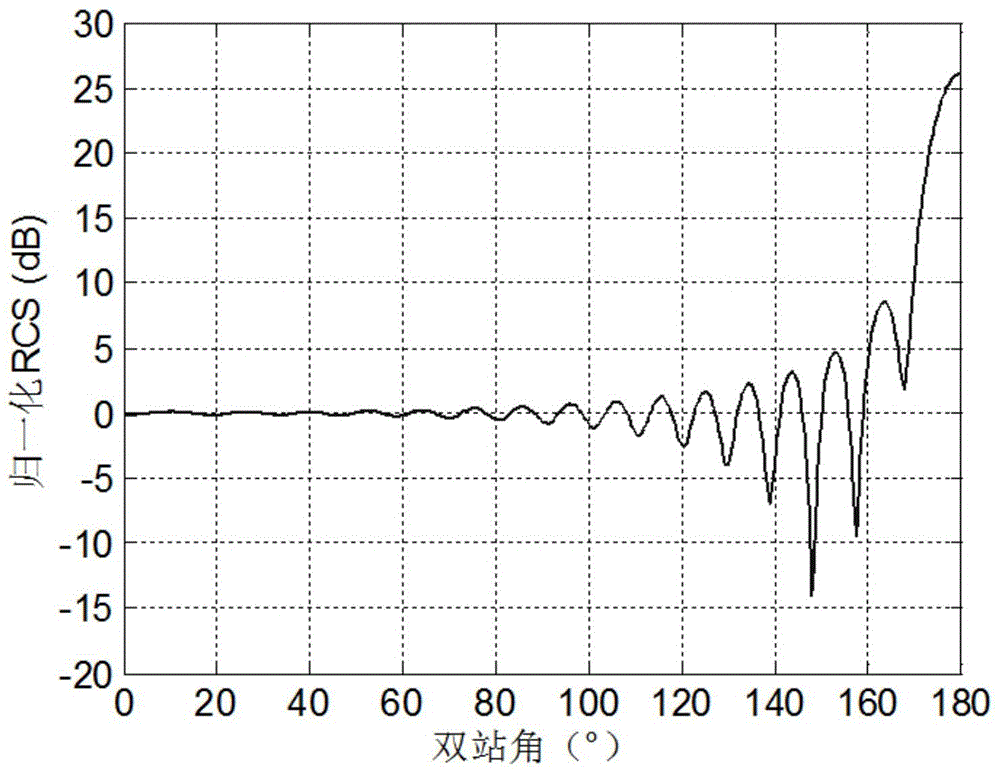
station measurement calibration, but did not solve the problem of calibration body with the increase of bi-
station angle The bistatic scattering of the bistatic scatter fluctuates with the bistatic angle, causing large calibration errors.
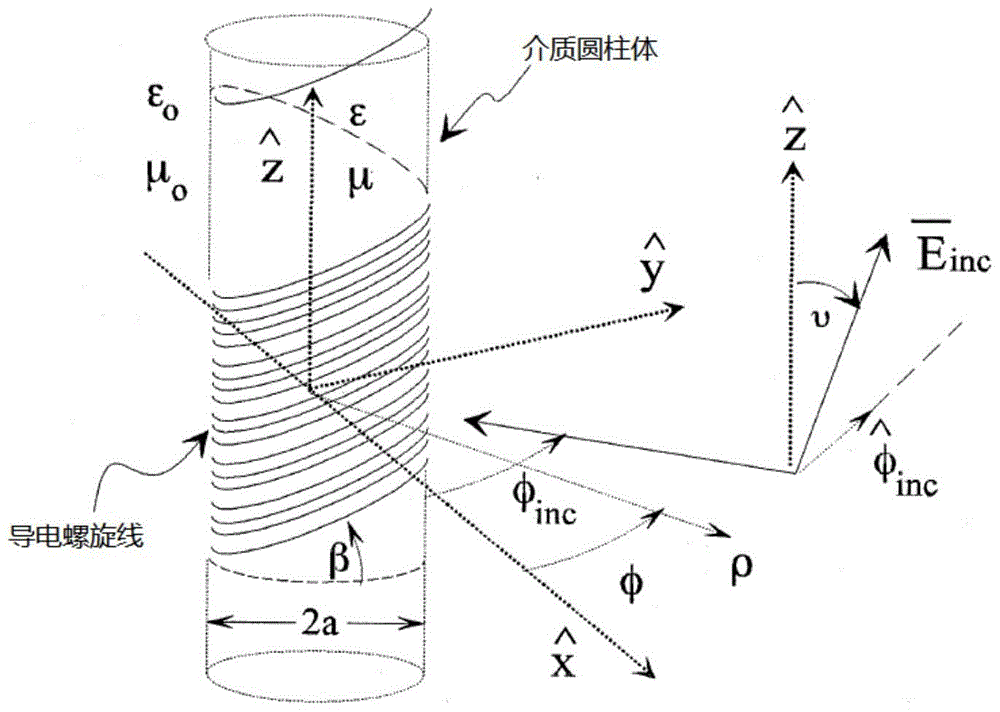
[0019] Defects of the prior art-2: the main technical defects that cause this calibrator design to be practically put into practice so far include three aspects: (1) due to the need to wind the
metal conductive wire in strict accordance with a certain inclination angle On the medium cylinder, it is difficult to process and manufacture the entity; (2) there are certain difficulties in the accurate calculation of the theoretical scattering value of this calibration device; (3) it is difficult to analyze how the
processing error affects the calibration accuracy
[0023] The main defect of prior art-3: (1) common two-station RCS measurement only needs a
transmitter and a
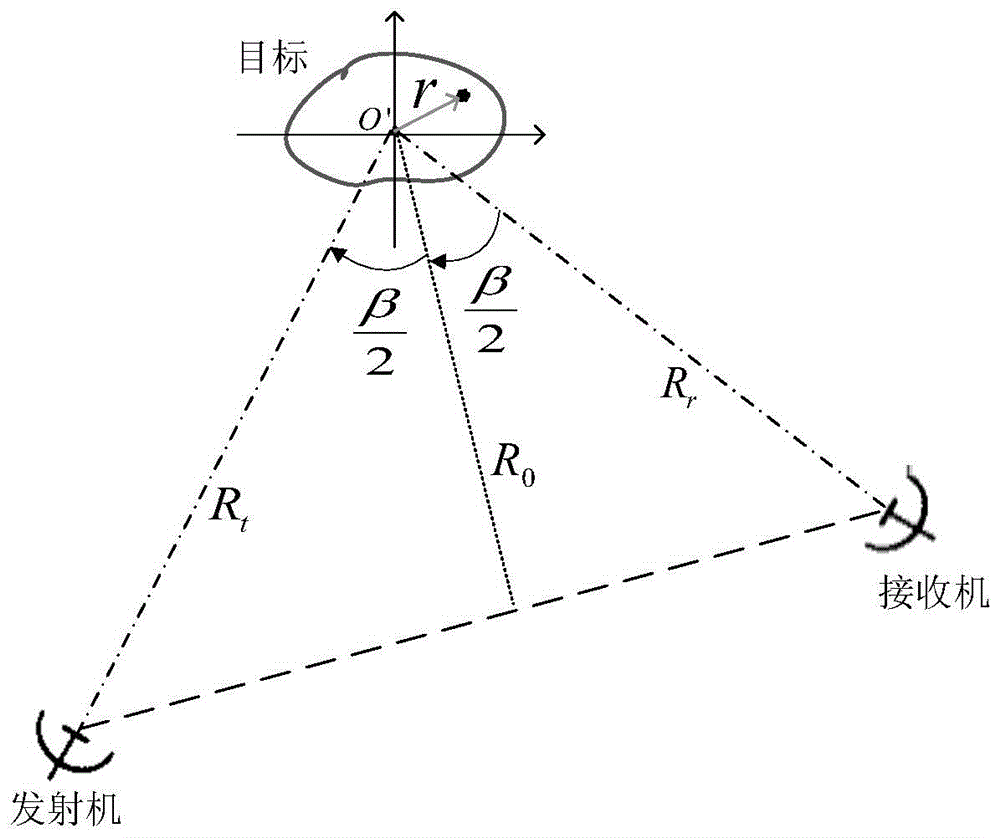
receiver, be placed in the required position (such as figure 1 shown), while using this calibration technique, it is necessary to use two RCS measurement radars (including
transmitter and
receiver) with basically the same performance, resulting in a multiplied increase in
system cost; (2) due to the need to The
calibration function can only be derived from two single-station measurements and two double-station measurements, which increases the factors affecting the
calibration error. Compared with the calibration method using a single
transmitter and
receiver, the RCS calibration uncertainty is increased. Spend
[0051] (1) The receive polarization and transmit polarization of the PARC antenna are always orthogonal to each other, and the polarization of the transmit and receive antennas cannot be combined arbitrarily, which greatly reduces the form of its theoretical
polarization scattering matrix, and many special forms of polarization scattering The matrix cannot be obtained by this single-antenna PARC, such as the
identity matrix, which limits its application range;
[0052] (2) Since the solution is to measure the PARC of several antenna rotation angles to obtain the measured data, when there is a small rotation angle error in the measurement, it will affect the calibration accuracy;
[0053] (3) The robustness of the polarization calibration parameter
extraction algorithm using this PARC is poor: once there is an abnormal value or a large error in the
system measurement value at a certain moment during the calibration process, the accuracy of the extracted calibration parameters will be greatly reduced;
[0054] (4) Since a pair of orthogonally polarized feed sources work at the same time, it is impossible to use a polarization filter device to improve the polarization isolation of the antenna, which greatly affects the polarization calibration accuracy
This kind of digital PARC has very high requirements on the sampling rate of A / D and D / A. The timing logic of the
digital radio frequency memory circuit is complex, and the writing and reading of signals and
delay processing and other operations need to be controlled by clocks. In the running circuit, it is easy to have competition and risk, so that the whole
system cannot work stably and normally;
[0063] (2) The calibration parameter solution process and
algorithm are complex;
[0064] (3) The cost is high, the reliability and stability need to be verified, and there are no real products and practical application reports.
[0065] Defect of prior art-4: The two PARC devices designed with the above-mentioned single antenna or dual antenna are both single-station polarization calibration PARC devices, and cannot be used for dual-station measurement RCS calibration and dual-station measurement polarization calibration, so there is no Solve the problem of RCS calibration and polarization calibration in dual-station measurement


 Login to View More
  Login to View More