
Micron nickel phosphide electro-catalytic material used for hydrogen evolution/oxygen evolution double functions
A catalytic material and dual-function technology, applied in physical/chemical process catalysts, chemical instruments and methods, circuits, etc., can solve environmental pollution and other problems, and achieve the effect of controlling the release rate
- Summary
- Abstract
- Description
- Claims
- Application Information
AI Technical Summary
Problems solved by technology
Method used
Image

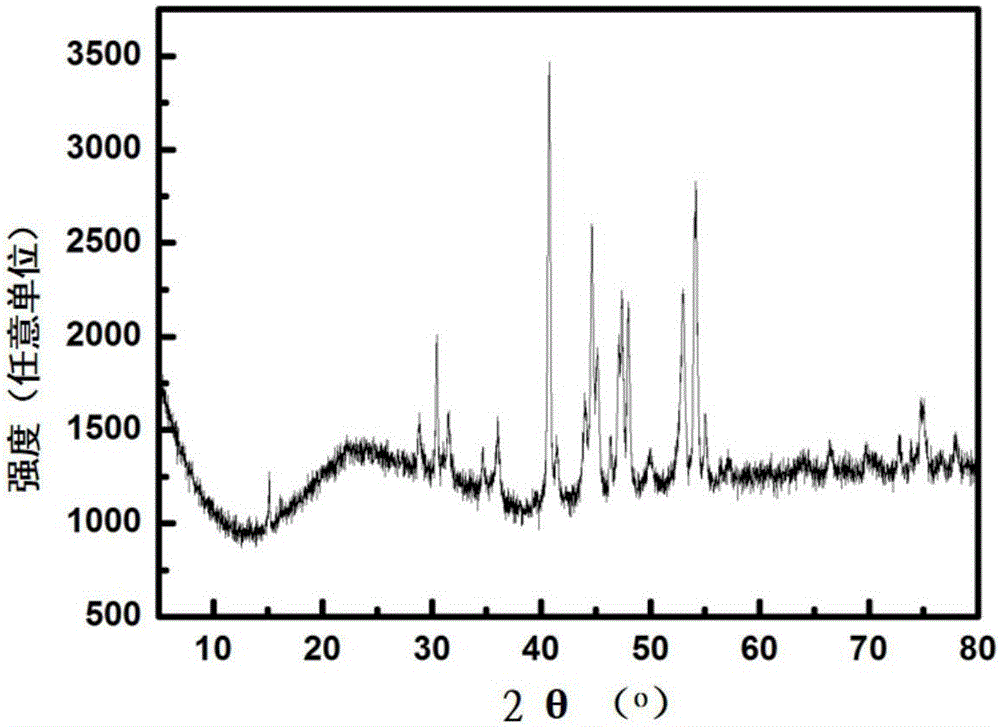
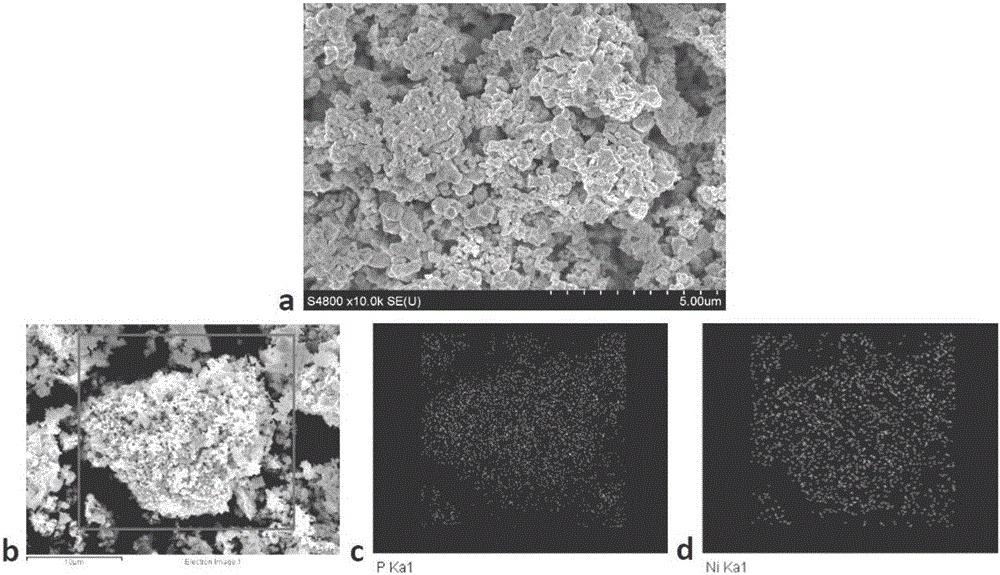
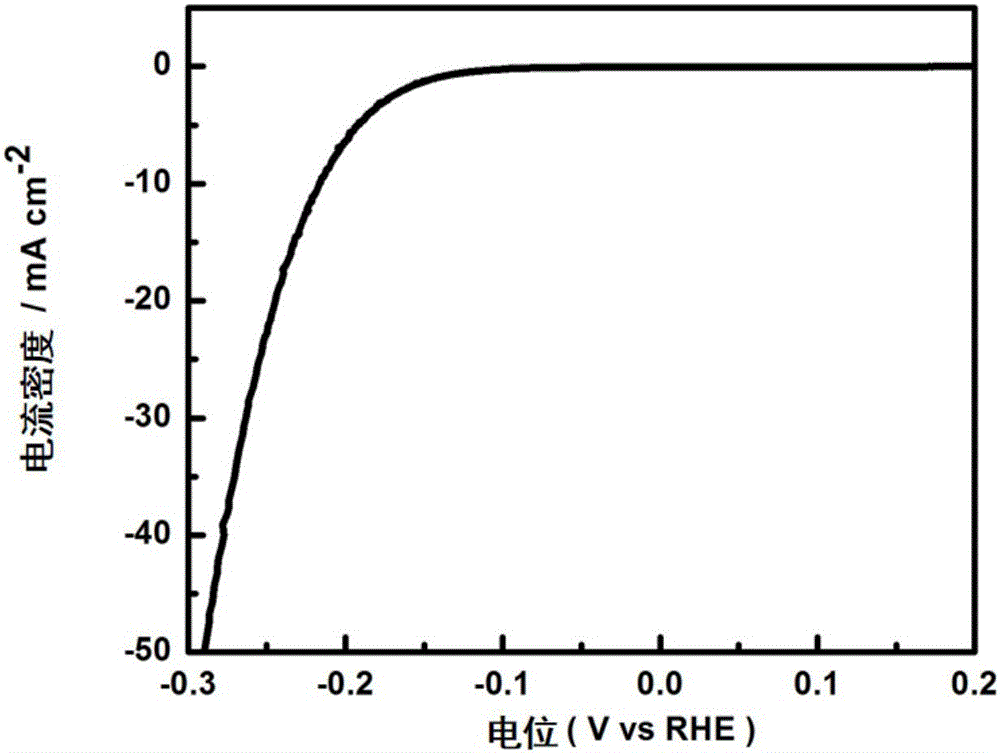
Examples
Embodiment 1
[0022] (1) Add nickel acetate tetrahydrate (0.13g, 0.5mmol), pyromellitic acid (0.13g, 0.5mmol), NaOH (0.04g, 1.0mmol) into 8.0mL deionized water, stir well and place in the reaction The kettle was sealed, hydrothermally reacted at 160°C for 6 days, cooled naturally to room temperature, filtered, washed with water, and dried to obtain 0.62 g of green powder, which was the precursor of the nickel complex.
[0023] (2) Under nitrogen protection, weigh 0.5g (2.33mmol) of nickel complex as a precursor, 2.68g (10.65mmol) of octadecene as a surfactant, and take oleylamine (7.0mL, 21.3mmol) as a high boiling point The solvent was placed in a four-cornered flask, and the temperature was raised to 120°C under stirring. Continue to blow nitrogen and stir for 30 minutes to remove the oxygen in the solvent. Quickly inject 2mL of trioctylphosphine through a syringe, control the reaction temperature at 220°C, and keep warm for 110°C. minute. Then it was lowered to room temperature, and the...
PUM
| Property | Measurement | Unit |
|---|---|---|
| diameter | aaaaa | aaaaa |
| thickness | aaaaa | aaaaa |
| particle diameter | aaaaa | aaaaa |
Abstract
Description
Claims
Application Information
 Login to View More