
Iron-based magnetic nano-particles regionally modified intraocular lens and preparation method and application thereof
A technology of magnetic nanoparticles and intraocular lenses, applied in prosthetics, pharmaceutical formulations, medical science, etc., can solve problems such as not being able to prevent post-developmental disorders well
- Summary
- Abstract
- Description
- Claims
- Application Information
AI Technical Summary
Problems solved by technology
Method used
Image

Examples
Embodiment 1
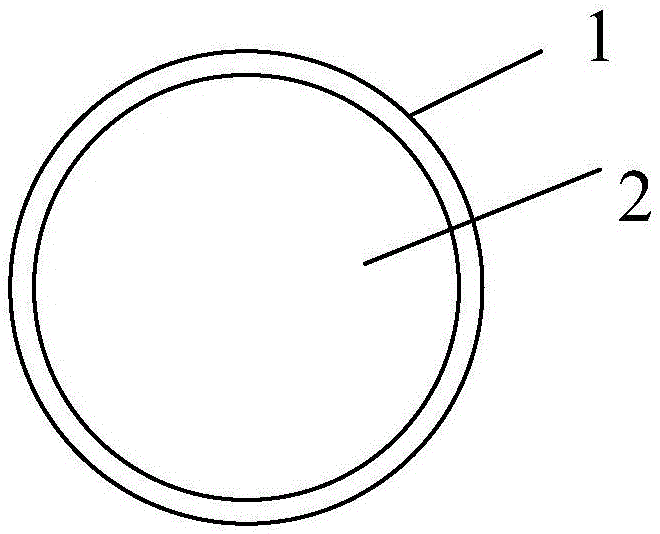
[0063] an intraocular lens such as figure 1 shown. The intraocular lens includes an intraocular lens body and ferric oxide nanoparticles coated with a silicon dioxide layer on the surface, and the silicon dioxide layer is bonded to the equatorial part of the intraocular lens body; the particles of the ferric oxide nanoparticles are The diameter is 8nm; the thickness of the silicon dioxide layer is 22nm; the material of the intraocular lens body is hydrophilic acrylate polymer.
[0064] The preparation method of described intraocular lens comprises the steps:
[0065] (1) Cover the surface outside the equatorial part of the intraocular lens body with 3M adhesive tape, and use plasma surface treatment to modify the equatorial part of the intraocular lens body with hydroxyl groups, wherein the discharge gas source for the plasma surface treatment is argon , the discharge power is 29.6W, and the plasma treatment time is 5min;
[0066] (2) Soak the intraocular lens body with the...
Embodiment 2
[0092] an intraocular lens such as figure 1 shown. The intraocular lens includes an intraocular lens body and ferric oxide nanoparticles coated with a silicon dioxide layer on the surface, and the silicon dioxide layer is bonded to the equatorial part of the intraocular lens body; the particles of the ferric oxide nanoparticles are The diameter is 3nm; the thickness of the silicon dioxide layer is 5nm; the material of the intraocular lens body is silicone gel.
[0093] The preparation method of described intraocular lens comprises the steps:
[0094] (1) Cover the surface outside the equatorial part of the intraocular lens body with 3M tape, and use plasma surface treatment to modify the equatorial part of the intraocular lens body with hydroxyl groups, wherein the discharge gas source of the plasma surface treatment is nitrogen, The discharge power is 14W, and the plasma treatment time is 600min;
[0095] (2) Soak the intraocular lens body modified with hydroxyl groups at ...
Embodiment 3
[0101] an intraocular lens such as figure 1 shown. The intraocular lens includes an intraocular lens body and ferric oxide nanoparticles coated with a silicon dioxide layer on the surface, and the silicon dioxide layer is bonded to the equatorial part of the intraocular lens body; the particles of the ferric oxide nanoparticles are The diameter of the silicon dioxide layer is 30nm, and the thickness of the silicon dioxide layer is 25nm; the material of the intraocular lens body is hydrogel.
[0102] The preparation method of described intraocular lens comprises the steps:
[0103] (1) Cover the surface outside the equatorial part of the intraocular lens body with 3M adhesive tape, and use plasma surface treatment to modify the equatorial part of the intraocular lens body with hydroxyl groups, wherein the discharge gas source of the plasma surface treatment is volume ratio Nitrogen and oxygen are 1:1, the discharge power is 200W, and the plasma treatment time is 1min;
[010...
PUM
| Property | Measurement | Unit |
|---|---|---|
| Particle size | aaaaa | aaaaa |
| Thickness | aaaaa | aaaaa |
| Discharge power | aaaaa | aaaaa |
Abstract
Description
Claims
Application Information
 Login to View More